
Pure Aromatherapy for Body, Mind & Spirit
DIY Facial Toner Sprays Using Essential Oils
DIY Facial Toner Sprays Using Essential Oils
Simple DIY facial toner ideas with essential oils, hydrosols and witch hazel for a refreshing natural skin care routine.
DIY facial toner sprays using essential oils are an easy way to personalize your natural skin care routine while enjoying the aromas of pure essential oils and botanical waters.
Facial toners are typically used after cleansing and before applying a moisturizer, facial oil or serum. Depending on the ingredients, a toner can help remove traces of cleanser or makeup, refresh the skin, provide light hydration and leave the complexion feeling clean and comfortable.
When essential oils are included in a facial toner, however, proper formulation matters. Essential oils are highly concentrated and do not dissolve in water, so they should not simply be dropped into water or hydrosol and shaken before use.
Below, you’ll learn about essential oils and hydrosols commonly used in natural facial care, along with safer ways to create a simple DIY facial toner at home.

Benefits of Using a Facial Toner
A facial toner can serve several purposes within a skin care routine.
Depending on its formulation, a toner may:
- Help remove residual cleanser, makeup or surface impurities after cleansing.
- Leave skin feeling fresh and clean.
- Provide light hydration when formulated with hydrating ingredients.
- Temporarily reduce the appearance of pores through the use of astringent ingredients such as witch hazel.
- Prepare the skin for a moisturizer, facial oil or serum.
- Add an enjoyable botanical or aromatherapy element to your daily skin care ritual.
Your skin type and the ingredients in the toner matter more than simply using a product labeled “toner.”
If your skin tends to be dry or sensitive, for example, you may prefer a gentle hydrosol-based toner. Someone who prefers a more astringent skin feel may enjoy a formulation containing witch hazel.
Essential Oils for DIY Facial Toner Sprays
Essential oils can add beautiful natural aromas to DIY skin care, but the face is not the place to use high concentrations.
Use essential oils conservatively and choose them according to their individual safety considerations as well as your skin’s sensitivity.
German Blue Chamomile Essential Oil
German Blue Chamomile has a distinctive herbaceous, sweet aroma and deep blue color due primarily to the presence of chamazulene.
It is frequently selected for gentle and soothing-oriented aromatic skin care formulations.
Formulation tip: German Blue Chamomile’s intense natural color can tint a finished product and may stain fabrics, so use it very sparingly.
Lavender Essential Oil
Lavender is one of the most versatile essential oils for natural skin care.
Its familiar floral-herbal aroma blends well with many other essential oils and makes it a lovely choice when you want your facial care ritual to feel gentle, fresh and relaxing.
We also offer Organic Bulgarian Lavender Essential Oil, which has a rich floral lavender aroma with a soft, fruity character.
Tea Tree Essential Oil
Tea Tree has a fresh, medicinal-herbaceous aroma and is commonly incorporated into cleansing-oriented cosmetic formulations.
Its distinctive scent makes it particularly well suited to fresh, herbaceous skin care blends.
Tea Tree is also available in an organic version.
Geranium Essential Oil
Geranium has a rich floral-green aroma and is a popular aromatic ingredient in facial oils, toners and other natural beauty preparations.
It blends especially well with Lavender and many citrus, floral and woody essential oils.
Rosemary Essential Oil
Rosemary provides a strong, fresh, herbaceous aroma.
Because its aroma can easily dominate a facial blend, use Rosemary conservatively when combining it with softer floral essential oils.
How to Use Essential Oils in a DIY Facial Toner
This is an important part of making DIY facial toner sprays using essential oils safely.
Essential oils do not dissolve in water.
Adding drops of essential oil directly to distilled water, rose water or hydrosol creates droplets of concentrated essential oil rather than a true dilution. Shaking the bottle temporarily disperses those droplets but does not make the essential oil water-soluble.
For that reason, a properly formulated water-based essential oil toner requires an appropriate cosmetic solubilizer or other formulation system designed to disperse essential oils in water.
Water-containing homemade cosmetics also raise another consideration: preservation.
Distilled water, hydrosols, aloe and other water-based ingredients can support microbial growth. A product does not necessarily remain microbiologically safe simply because it looks and smells normal.
For beginners who don’t formulate with cosmetic preservatives and solubilizers, the easiest option is to make a simple essential-oil-free hydrosol facial toner and enjoy essential oils elsewhere in your skin care routine in an appropriately diluted oil-based product.
Easy DIY Hydrosol Facial Toner Spray
This is one of the simplest ways to begin making your own facial toner.
Ingredients
- 2 oz hydrosol of your choice
- 4 oz misting sprayer or another clean cosmetic spray bottle
You can use a single hydrosol or experiment with a combination of compatible hydrosols.
Directions
- Wash and thoroughly dry your hands and equipment.
- Pour the hydrosol into a clean spray bottle.
- Label the bottle with the ingredient and date.
- Follow the hydrosol manufacturer’s storage recommendations.
- Discard the product if you notice an unexpected change in aroma, color or appearance.
To use, close your eyes and lightly mist clean skin, or spray onto a clean cotton pad and gently apply to the face.
Follow with your usual moisturizer or facial oil.
Want to Formulate a Facial Toner With Essential Oils?
If you have experience making water-based cosmetics, essential oils can be incorporated using an appropriate cosmetic solubilizer and, when needed, a suitable broad-spectrum preservation system according to the suppliers’ usage instructions.
Formulation should account for:
- The dermal maximum of the particular essential oil.
- The total essential oil concentration.
- The recommended ratio of your chosen solubilizer.
- The preservative manufacturer’s required concentration and pH range.
- The other ingredients in the formula.
- Sanitation, packaging and storage.
For facial formulations, more essential oil is not better.
A beautifully formulated toner can have a very subtle aroma.
This article is part of our complete DIY Natural Body Care Recipes with Essential Oils guide, featuring natural skin-care, hair-care, bath, beauty and personal-care recipes.
Hydrosols: An Easy Alternative for DIY Facial Toners
Hydrosols and floral waters are produced during the steam or water distillation of botanical materials used in essential oil production.
Hydrosols contain water-soluble aromatic components from the plant and are much less concentrated than essential oils.
Their gentle botanical aromas make them particularly convenient for facial mists and toners.
Although hydrosols are much less concentrated than essential oils, individual sensitivities are still possible. Patch test when appropriate and follow the product’s storage directions.
German Chamomile Hydrosol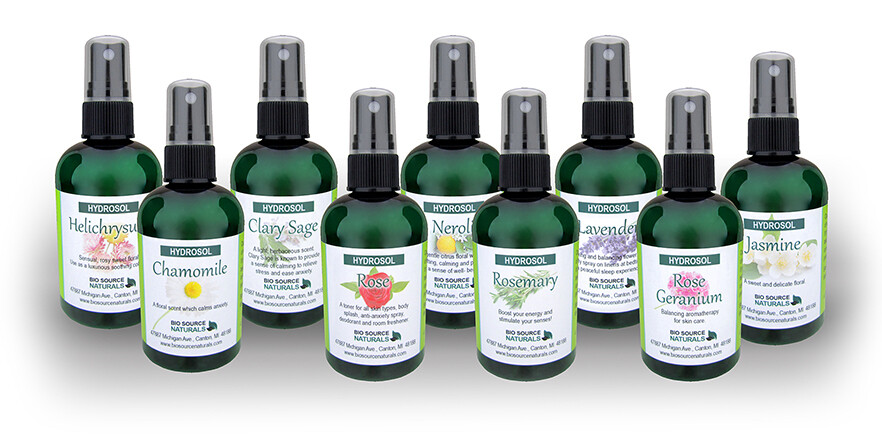
German Chamomile Hydrosol has a light botanical aroma and can be used alone as a simple facial or body mist.
Lavender Hydrosol
Lavender Hydrosol has a soft floral-herbal aroma and makes a wonderfully simple botanical facial mist.
It can also be used as a refreshing body or linen spray.
Rose Hydrosol
Rose Hydrosol provides a delicate floral aroma and is a beautiful choice for a simple facial toner, body mist or botanical skin refresher.
Rose Geranium Hydrosol
Rose Geranium Hydrosol has a fresh floral-green aroma and can be used as a simple botanical facial toner or refreshing mist.
Rosemary Hydrosol
Rosemary Hydrosol offers a fresh herbal aroma for those who prefer a less floral facial mist.
Witch Hazel for DIY Facial Toner
Witch hazel is another traditional ingredient in facial toners. It provides a clean, astringent skin feel and can be particularly appealing to people who prefer a fresh-feeling toner after cleansing. If purchasing witch hazel for facial use, check the ingredient label. Some commercial witch hazel products contain significant amounts of alcohol, which may feel drying to some skin types. Witch hazel can also be combined with hydrosols in a properly formulated and preserved cosmetic toner.
Ready-to-Use Facial Toner: Perfecting Dew Mist Spray
Don’t want to formulate your own water-based facial product?
Perfecting Dew Mist Spray is a ready-to-use facial toner formulated with distilled water, witch hazel, Lavender Hydrosol, hyaluronic acid and pure essential oils of Rose, Neroli and Sandalwood.
The formula is designed to leave the face and neck feeling refreshed and hydrated while adding a light botanical aroma to your daily skin care routine.
Key ingredients include:
Directions: After cleansing, close your eyes and lightly mist the face and neck. Follow with your preferred moisturizer or facial oil.
Avoid the eyes. Keep out of reach of children.
Which DIY Facial Toner Is Best for Your Skin?
There isn’t one toner that’s ideal for everyone.
Your choice may depend on your skin type, sensitivity, climate and the other products in your routine.
For a Simple, Minimalist Routine
Try a single hydrosol.
For a More Astringent Skin Feel
Consider a toner formulated with witch hazel.
For a Floral Botanical Experience
Explore Rose, Lavender or Rose Geranium Hydrosol.
For an Herbal Aroma
Rosemary Hydrosol may be more appealing.
If You Want Essential Oils in Your Toner
Choose a professionally formulated product or learn the fundamentals of cosmetic solubilization and preservation before creating a water-based essential oil spray at home.
Facial Toner Safety Tips
Keep these basic guidelines in mind when experimenting with DIY facial care:
- Never spray a facial toner into open eyes.
- Patch test new ingredients when appropriate.
- Stop using a product if irritation develops.
- Don’t apply undiluted essential oils to facial skin.
- Don’t assume shaking essential oil and water creates a proper dilution.
- Follow manufacturer storage instructions for hydrosols.
- Use clean equipment and containers.
- Take microbial preservation seriously when creating water-based cosmetics.
- If you have a diagnosed skin condition or are under a dermatologist’s care, ask your healthcare professional about introducing new products.
Explore More DIY Natural Body Care Recipes
This article is part of our complete DIY Natural Body Care Recipes with Essential Oils guide, featuring natural skin-care, hair-care, bath, beauty and personal-care recipes.
Frequently Asked Questions About DIY Facial Toner Sprays Using Essential Oils
Can I put essential oils in homemade facial toner?
Yes, but essential oils don’t dissolve in water. A water-based facial toner containing essential oils should use an appropriate cosmetic formulation system, such as a suitable solubilizer, and may also require a broad-spectrum preservative.
Simply adding essential oil to water and shaking the bottle does not create a true dilution.
Can I use hydrosol as a facial toner?
A hydrosol can be one of the simplest botanical facial toners. Choose a hydrosol appropriate for cosmetic use and follow its storage instructions.
Is witch hazel good in DIY facial toner?
Witch hazel is widely used in facial toners because it provides an astringent, fresh skin feel. Check the product’s ingredient list because some witch hazel preparations contain alcohol, which may feel drying to some people.
Do homemade facial toners need preservatives?
Water-based cosmetic formulations can support microbial growth. Whether a particular formulation requires an added preservative depends on its ingredients, packaging, manufacturing conditions and intended shelf life.
For stored DIY water-based cosmetics, don’t rely on appearance or smell alone to determine microbial safety.
Does vitamin E preserve homemade facial toner?
No. Vitamin E is an antioxidant used primarily to help slow oxidation of oils. It is not a broad-spectrum antimicrobial preservative for a water-based cosmetic.
How often can I use facial toner?
That depends on the toner and your skin. Many people use a gentle toner after cleansing once or twice daily, while others prefer occasional use. Follow the directions for the particular formulation and reduce or discontinue use if your skin becomes uncomfortable or irritated.
DIY Facial Toner Sprays Using Essential Oils – Keep It Simple
Making your own skin care can be fun, creative and educational, but a DIY product should still be thoughtfully formulated.
If you’re new to DIY facial toner sprays using essential oils, a hydrosol is an excellent place to begin. You can experience a botanical facial mist without trying to force concentrated essential oils into a water-based formula.
As your formulation knowledge grows, you can learn about solubilizers, preservation, pH, essential oil concentrations and other principles used to create more advanced water-based cosmetics.
And if you’d rather leave the formulation work to someone else, explore BioSource Naturals’ Hydrosols and Floral Waters and ready-to-use facial care products.
The information provided is for educational purposes only. Statements regarding essential oils and natural products have not been evaluated by the Food and Drug Administration. These products and recipes are not intended to diagnose, treat, cure or prevent disease. If you have a medical or dermatological condition or are under the care of a healthcare professional, consult an appropriately qualified professional regarding your individual needs.
About the Author

🔍 Click Image to Enlarge and Read