
Pure Aromatherapy for Body, Mind & Spirit
Essential Oils for Foot Care – Freshness, Relaxation & Everyday Foot Comfort
Essential Oils for Foot Care – Freshness, Relaxation & Everyday Foot Comfort
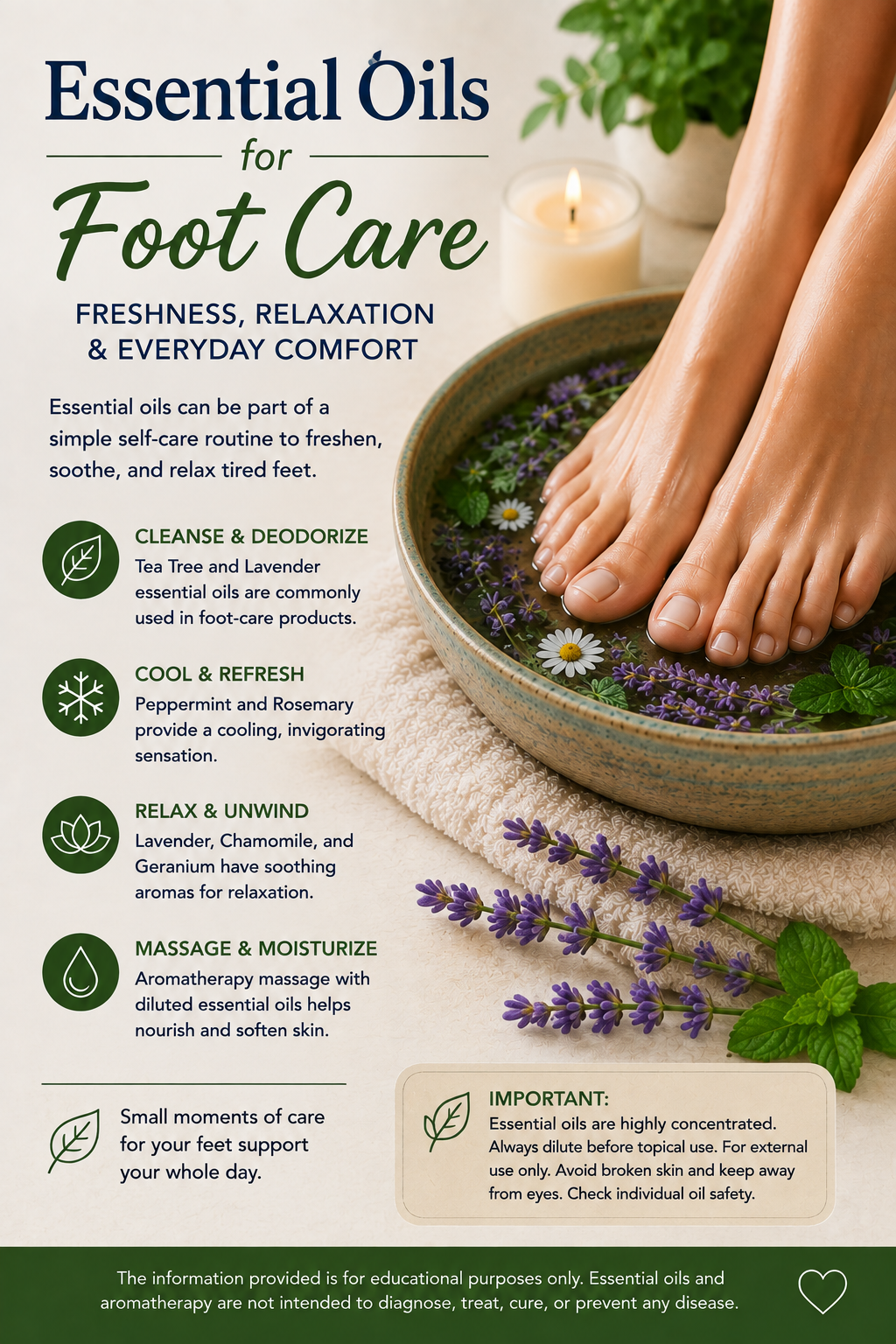
Tea Tree, Lavender, Peppermint, Rosemary, Geranium, and Roman Chamomile are some of the best essential oils for foot care, whether you want to refresh tired feet, soothe everyday aches, deodorize, or support clean, healthy-looking skin. BioSource Naturals’ Foot Care Essential Oil Blend combines Tea Tree and Lavender essential oils in one convenient formula for cleansing, purifying, and everyday foot care.
You can also create simple DIY foot soaks and massage blends using oils such as Lemon, Orange, Clary Sage, Rosemary, and Peppermint to give overworked feet some much-needed attention after a long day, exercise, or time spent standing.
Shop below for pure essential oils and our Foot Care Essential Oil Blend, or continue reading for DIY foot care recipes, foot soaks, massage ideas, and simple ways to use essential oils as part of your everyday foot care routine.
Why Foot Care Matters
Your feet contain 26 bones each, along with muscles, tendons, ligaments, nerves, and skin that work together every time you stand or move.
Even ordinary activity can add up over the course of a day.
People who spend long periods standing or walking may especially appreciate a routine that includes:
- Washing and thoroughly drying the feet
- Moisturizing dry skin
- Changing into clean, dry socks
- Wearing properly fitting footwear
- Resting tired feet
- Gentle massage when appropriate
- Cooling or relaxing aromatherapy
Foot care is also important because small problems can become more significant when ignored.
Persistent pain, swelling, numbness, wounds, skin changes, suspected infection, or changes in toenails should be evaluated appropriately rather than treated solely with essential oils.
Essential Oils for Foot Care & Aromatherapy
Different essential oils provide different aromatic and sensory qualities.
Some have fresh, clean aromas that work well in deodorizing foot-care products. Others provide a cooling sensory experience, while softer floral and herbal aromas can make an evening foot massage feel more relaxing.
Tea Tree Essential Oil
Tea Tree Essential Oil has a strong, fresh, medicinal-herbal aroma and is commonly incorporated into cleansing and deodorizing body-care products.
Its crisp aromatic profile makes it especially popular in products intended for feet.
Tea tree essential oil should still be appropriately diluted for topical application. Natural does not mean irritation-free, and repeated undiluted use can increase the risk of skin sensitivity.
Lavender Essential Oil
Lavender Essential Oil has a familiar floral-herbal aroma that works particularly well in evening self-care.
Lavender can be incorporated into foot massage when the goal is relaxation and a softer aromatic experience after a long day.
Peppermint Essential Oil
Peppermint Essential Oil offers a distinctive cooling sensation and refreshing aroma.
This makes peppermint especially appealing in warm weather, after exercise, or whenever tired feet would benefit from a fresh sensory experience.
Peppermint is potent and should be appropriately diluted.
Rosemary Essential Oil
Rosemary Essential Oil has a bright herbal aroma that pairs well with peppermint, lavender, citrus, and other oils used in massage blends.
It can add an invigorating aromatic character to a post-activity foot-care ritual.
Roman Chamomile Essential Oil
Roman Chamomile Essential Oil provides a soft, distinctive aroma that is well suited to relaxation blends.
It can be a good choice when you want a gentler aromatic profile for an evening foot massage.
Geranium Essential Oil
Geranium Essential Oil has a rich floral-green aroma that blends beautifully with lavender and citrus oils.
It can be incorporated into moisturizing foot-care preparations when you want something more floral than minty or medicinal.
BioSource Naturals Foot Care Essential Oil Blend
BioSource Naturals Foot Care Essential Oil Blend combines two classic essential oils frequently used in foot-care aromatherapy:
Tea tree contributes a crisp, clean herbal aroma, while lavender softens the blend with its familiar floral-herbal character.
Together, they create an aromatherapy blend designed for freshness, cleansing-oriented foot care, and everyday self-care rituals.
Follow the directions for the particular product format. Concentrated essential-oil blends generally require appropriate dilution before topical use.
A Simple Foot-Massage Ritual
Foot massage is one of the easiest ways to slow down after a long day.
Try this simple routine:
- Wash and thoroughly dry your feet.
- Sit somewhere comfortable.
- Apply an appropriately diluted aromatherapy massage oil or foot-care product.
- Massage the soles, heels, and other comfortable areas of the feet.
- Avoid broken, irritated, or infected skin.
- Relax your shoulders while taking several slow breaths.
- Put on clean socks afterward if desired.
The benefit of the ritual isn’t that essential oils travel through special pores in the feet and circulate throughout the body.
Rather, foot massage combines touch, aroma, rest, and intentional self-care—all simple sensory experiences that can make an evening routine feel more restorative.
DIY Fresh Foot Massage Blend
For a bright, fresh aromatic blend, consider combining appropriate amounts of:
Dilute the essential oils in a suitable carrier oil before applying them to the feet.
Check the phototoxicity guidance for the specific citrus oils you use, particularly if the treated area may be exposed to sunlight.
Using Essential Oils in a Foot Soak
I would not use the old recipes that simply mix essential oils into Epsom salts and water.
Essential oils do not dissolve in water, and Epsom salts do not reliably disperse them.
Undispersed essential oils may float on the water and contact the skin at full concentration.
If you want an aromatic foot soak, use an appropriately formulated bath or foot-soak product that properly disperses essential oils.
You can also enjoy a plain warm-water or Epsom-salt foot soak without essential oils and use a diluted aromatherapy massage product afterward.
Always check water temperature carefully, especially if you have reduced sensation in your feet.
Foot Care for Runners, Dancers & Active People
Feet can feel particularly tired after running, dancing, hiking, prolonged standing, or other repetitive activity.
A post-activity routine might include:
- Removing damp footwear and socks
- Washing and drying the feet thoroughly
- Resting
- Gentle stretching when appropriate
- Applying moisturizer to dry skin
- Using a cooling or relaxing aromatherapy massage blend
For Runners
Fresh herbal and cooling aromas may be especially appealing.
Consider:
For Dancers
A more aromatic floral-woody blend might include:
After a Long Day on Your Feet
For a softer evening blend, consider:
The goal is to create an aroma you enjoy, not to create a stronger and stronger concentration of essential oils.
Moisturizing Dry Feet
Dry heels and feet often benefit from a simple moisturizing routine.
Carrier oils and other emollient ingredients can help soften dry skin while also providing a base for appropriately diluted essential oils.
Apply your moisturizer after bathing or washing the feet, when the skin is clean and slightly damp.
Avoid applying oily products between the toes if the area tends to remain moist, and do not apply essential oils to cracked, bleeding, or infected skin without appropriate medical guidance.
Foot Care & Diabetes
People with diabetes may have changes in circulation or sensation that make careful foot care especially important.
If you have diabetes, neuropathy, impaired circulation, or another condition affecting your feet, do not rely on essential oils to treat wounds, infections, numbness, or significant skin changes.
Inspect your feet regularly and follow the foot-care recommendations provided by your healthcare professional.
Avoid very hot foot baths, because reduced sensation may make it difficult to recognize water that is hot enough to burn the skin.
Any sore, blister, wound, discoloration, swelling, or suspected infection that does not resolve appropriately deserves prompt medical attention.
What About Athlete’s Foot or Toenail Problems?
Tea tree and other essential oils are often discussed online in connection with athlete’s foot and nail concerns.
However, a suspected fungal infection should not automatically be treated with a homemade essential-oil blend.
Conditions that look like athlete’s foot may have other causes, and nail changes can be especially persistent.
If symptoms continue, spread, become painful, or repeatedly return, seek appropriate medical evaluation.
Similarly, essential oils should not be used to treat an ingrown toenail, particularly when redness, drainage, significant swelling, or infection is present.
Essential Oil Safety for Foot Care
Essential oils are highly concentrated botanical substances.
For topical use:
- Dilute concentrated essential oils appropriately.
- Do not apply essential oils to open wounds or broken skin.
- Keep oils away from mucous membranes.
- Stop use if irritation develops.
- Do not assume the thick skin of the feet means undiluted essential oils are safe.
- Check the safety information for the individual oil.
- Be particularly careful with potent essential oils and citrus oils that may be phototoxic.
- Consider pregnancy, medications, allergies, medical conditions, and skin sensitivity.
The fact that an essential oil is natural does not mean that stronger concentrations provide better results.
Frequently Asked Questions About Essential Oils for Foot Care
What are the best essential oils for foot care?
Tea tree, lavender, peppermint, rosemary, geranium, and Roman chamomile are all commonly used in foot-care aromatherapy. The best choice depends on whether you want a fresh, cooling, floral, herbal, or relaxing aromatic experience.
Can essential oils treat athlete’s foot?
Essential oils should not be relied upon to diagnose or treat athlete’s foot. If you suspect a fungal infection, especially one that persists or worsens, seek appropriate medical guidance.
Can I put essential oils directly on the bottoms of my feet?
Concentrated essential oils generally should be appropriately diluted before topical use, including on the feet. The skin on the soles does not make undiluted use automatically safe.
Are essential oils absorbed faster through the feet?
There is no good reason to treat the feet as a special route through which essential oils rapidly enter and circulate through the entire body. Use essential oils on the feet because you enjoy the topical and aromatic self-care experience, not because of claims about unusually large pores or whole-body absorption.
Can I add essential oils to Epsom salts for a foot soak?
Epsom salts do not reliably disperse essential oils in water. Use an appropriately formulated dispersing product or enjoy the foot soak without essential oils and apply a diluted aromatherapy product afterward.
Can essential oils heal cracked heels or wounds?
Essential oils should not be presented as wound-healing treatments. Dry, intact skin may benefit from moisturizing products, but cracked, bleeding, infected, or slow-healing areas deserve appropriate medical attention.
Is Foot Care Essential Oil Blend ready to use on the skin?
Follow the directions for the specific Foot Care Essential Oil Blend product you purchase. Concentrated essential-oil blends generally need appropriate dilution before topical use.
Learn More About Essential Oils for Physical Comfort
Looking for more information? Explore our comprehensive guide to Essential Oils for Pain Relief & Physical Comfort, including aromatherapy for sore muscles, joint comfort, back and neck tension, headaches, massage, relaxation, and everyday physical comfort.
The information provided on this page is for educational purposes only. Essential oils and aromatherapy are complementary wellness practices and are not intended to diagnose, treat, cure, or prevent foot infections, injuries, neuropathy, diabetes-related foot conditions, or any other disease or medical condition. Persistent pain, wounds, numbness, swelling, suspected infection, or other concerning foot symptoms should be evaluated by an appropriate healthcare professional.