
Pure Aromatherapy for Body, Mind & Spirit
Your Guide to Perfume and Scents
Your Guide to Perfume and Scents
Your Guide to Perfume and Scents
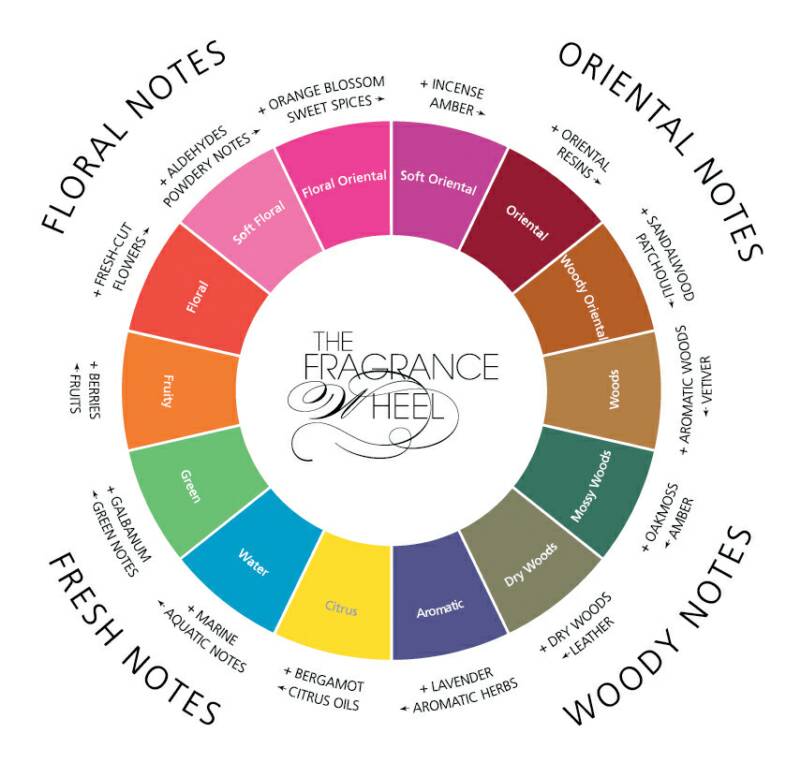
This guide to perfume and scents will help you recognize the major fragrance families and discover the essential oils and aromatic ingredients that appeal most to you.
Perfumers organize fragrances into broad families based on their dominant scent characteristics. Although classifications vary, four widely recognized fragrance families are Fresh, Floral, Ambery and Woody. Each family also contains subcategories that make it easier to describe more complex aromas.
The term Ambery is now frequently used in place of the older perfume classification “Oriental.” Fragrances previously described as Oriental, Soft Oriental or Woody Oriental may now be called Ambery, Soft Ambery or Woody Ambery.
If you would like to learn how to combine aromas after identifying your favorite fragrance families, read our guide to essential oil blending basics.
The Four Main Perfume Fragrance Families
Fresh Fragrances
Fresh fragrances are bright, clean, crisp and lively. Depending upon the ingredients, they may smell citrusy, fruity, green, herbal or reminiscent of water and fresh air.
Common Fresh subcategories include:
- Citrus
- Fruity
- Green
- Aromatic
- Watery
Fresh ingredients are frequently used as top notes because their aromas are often the first ones noticed in a perfume. Citrus oils can add sparkle and brightness, although they generally evaporate faster than heavier floral, woody and resinous notes.
Examples of Fresh aromatic ingredients:
Fresh notes combine especially well with florals, herbs, woods and resins. Because some expressed citrus oils can be phototoxic when used in leave-on skin products, check the safety information for the specific oil and extraction method before formulating perfume.
Floral Fragrances
Floral is one of the best-known and most diverse fragrance families. A floral perfume may emphasize a single flower or combine several floral notes into a more complex bouquet.
Floral fragrances can be soft and delicate, green and fresh, sweet and romantic, or deep and intoxicating. Combining flowers with citrus, woods, spices or resins can create an aroma that does not smell overwhelmingly flowery.
Common Floral subcategories include:
- Fresh Floral
- Soft Floral
- Floral Bouquet
- Fruity Floral
- Ambery Floral
Examples of Floral aromatic ingredients:
- Tuberose absolute
- Jasmine absolute
- Lavender
- Rose
- Gardenia absolute
- Lily absolute
Floral ingredients often form the heart or middle of a perfume. They can be balanced with bright citrus top notes and grounded with woody, earthy or resinous base notes.
Ambery Fragrances
Ambery fragrances are typically warm, rich, sweet, spicy and resinous. This family may include aromas reminiscent of vanilla, balsams, warm spices, resins and woods.
“Ambery” is the contemporary term frequently used for the fragrance family historically called “Oriental.” Updating the terminology does not change the fragrance style—it provides a more current way to describe it.
Common Ambery subcategories include:
- Soft Ambery
- Floral Ambery
- Spicy Ambery
- Woody Ambery
Examples of ingredients used in Ambery fragrance profiles:
Ambery ingredients can add warmth, depth and longevity to a fragrance. Cinnamon, clove and certain other spice oils have restrictive dermal-use limits and must be used carefully in products applied to the skin.
Woody Fragrances
Woody fragrances evoke forests, bark, roots, earth, moss, dry timber and aromatic trees. Depending upon the ingredients, they may smell warm, dry, smoky, earthy, balsamic or resinous.
Common Woody subcategories include:
- Woods
- Mossy Woods
- Dry Woods
- Aromatic Woods
- Woody Ambery
Examples of Woody aromatic ingredients:
Woody ingredients are frequently used as base notes because they can anchor lighter citrus and floral aromas. They are popular in traditionally masculine fragrances, but fragrance families are not inherently masculine or feminine. Anyone can wear the scents they enjoy.
How to Identify Your Favorite Fragrance Family
Think about the aromas you naturally enjoy.
Do you prefer the brightness of lemon and grapefruit? You may be drawn to Fresh fragrances.
If you love rose gardens, lavender fields or jasmine blossoms, begin with Floral scents.
If vanilla, patchouli, warm spices and resins appeal to you, explore the Ambery family.
If you love forests, cedar chests, sandalwood, pine or earthy aromas, Woody fragrances may feel most natural to you.
You may also enjoy fragrances that cross multiple families. A perfume can begin with fresh citrus, unfold into a floral heart and finish with warm woody or ambery base notes.
Fragrance Families Are a Starting Point
Fragrance classifications are useful guides, but they are not rigid rules. Many aromatic ingredients display characteristics associated with more than one family.
Bergamot is citrusy but also softly floral. Lavender is floral, herbal and fresh. Patchouli may smell earthy, woody and ambery. Black pepper is spicy, dry and woody.
Natural perfume formulation becomes especially interesting when you combine contrasting fragrance families. Citrus can brighten heavy woods, florals can soften spices, and resins can add depth to aromas that would otherwise disappear quickly.
Learn More About DIY Perfume with Essential Oils
Once you identify your favorite fragrance families, explore our complete guide to DIY Perfume with Essential Oils.
You’ll learn how to use top, middle and base notes, build balanced fragrances, make oil-based and alcohol-based perfume, follow essential-oil safety guidelines and explore dozens of natural perfume recipes.
You can also browse our complete collection of pure essential oils and aromatic ingredients.
These statements have not been evaluated by the Food and Drug Administration. This information is provided for educational purposes and is not intended to diagnose, treat, cure or prevent any disease.
Written by the BioSource Naturals Editorial Team
Reviewed by Lezlie Cebulski, Traditional Naturopath, Aromatherapist, Formulator and Founder

🔍 Click Image to Enlarge and Read