
Pure Aromatherapy for Body, Mind & Spirit
Many Types of Fear and the Essential Oils That Can Help
Many Types of Fear and the Essential Oils That Can Help
Choosing Essential Oils for Different Types of Fear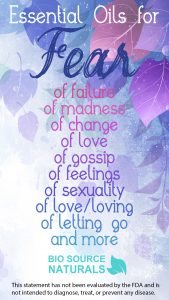
Essential oils traditionally associated with fear, grounding and emotional comfort include Sandalwood, Cypress, Lemon, Bergamot, Orange, Cedarwood, Basil, Frankincense, Clary Sage, Lavender and Roman Chamomile. These aromas can be incorporated into grounding, relaxation, meditation, journaling and other emotional self-care rituals when fear, uncertainty or apprehension feels especially present.
Shop the essential oils and aromatherapy products featured in this article at the bottom of the page.
Fear is a normal part of the body’s protective system. When we perceive a threat, the nervous system can prepare us to respond through changes in attention, breathing, heart rate, muscle tension and other physiological processes. This protective response is useful when danger is real.
Fear can also arise around situations that aren’t immediate physical threats. We may fear failure, rejection, change, vulnerability, intimacy, loss, judgment, uncertainty or letting go. These experiences are different from one another, which is one reason a personalized emotional self-care practice can be more meaningful than searching for one essential oil that supposedly eliminates fear.
Aromatherapy does not treat fear disorders, phobias, panic attacks or anxiety disorders. Instead, aroma can become a sensory anchor that accompanies grounding, breathing, EFT tapping, meditation, journaling or quiet reflection.
Choosing Essential Oils for Different Types of Fear
Aromatherapy author Valerie Ann Worwood has written extensively about using aroma in relation to personality, mood and emotional experiences. Traditional aromatherapy literature sometimes associates particular essential oils with very specific types of fear.
These associations should be understood as traditional aromatherapy guidance rather than clinically established treatments for particular fears. Use them as inspiration for choosing an aroma that feels appropriate to you.
Essential Oils for General Fear and Apprehension
For times when fear feels difficult to define, consider aromas traditionally associated with grounding, relaxation or emotional comfort:
- Sandalwood
- Cypress
- Lemon
- Bergamot
- Orange
- Cedarwood
- Basil
- Frankincense
- Clary Sage
- Lavender
- Roman Chamomile
Rather than asking which oil will make fear disappear, notice which aroma helps you create the sensory environment you want: grounding, calm, clarity, comfort or emotional steadiness.
Fear of Failure
Fear of failure can appear when starting something new, taking a risk, making a decision or putting your work in front of other people.
Traditional aromatherapy associations include:
Consider pairing your chosen aroma with journaling or EFT tapping around the question: What would I attempt if I didn’t need certainty about the outcome?
Fear of Losing Control
Older aromatherapy literature sometimes uses language such as “fear of madness.” Today, fear of losing control or becoming overwhelmed by your own thoughts and emotions is clearer and more compassionate language.
Traditionally associated oils include:
If fears about your mental health are persistent, severe or interfering with everyday life, aromatherapy should not replace appropriate professional support.
Fear of Change
Even positive change can create uncertainty. Leaving something familiar, starting a new chapter or simply not knowing what happens next can activate fear.
Traditional aromatherapy choices include:
Use the aroma as part of a grounding ritual while asking: What is changing, and what remains within my control?
Fear of Love and Emotional Intimacy
Love requires vulnerability, and vulnerability can feel uncomfortable when past experiences have taught us to protect ourselves. Jasmine and Ylang Ylang have traditionally been associated with sensuality, emotional openness and intimate aromatherapy rituals. The goal isn’t to use aroma to force yourself into vulnerability. Instead, it can accompany reflection about trust, boundaries, safety and what emotional openness means to you.
Fear of Judgment or Gossip
Concern about what other people think can make it difficult to speak honestly, set boundaries or make choices that reflect your own values. Cypress is traditionally associated with this type of emotional experience.
Consider using its fresh woody aroma while journaling about the distinction between other people’s opinions and your own values.
Fear of Difficult Feelings
Sometimes what we fear isn’t an external event. It is the possibility of experiencing grief, anger, disappointment, vulnerability or another uncomfortable emotion. Traditional aromatherapy choices include:
A familiar aroma can become part of a ritual for noticing an emotion without immediately trying to suppress, judge or escape it.
Fear Around Sexuality and Intimacy
Traditional aromatherapy literature associates Ylang Ylang and Patchouli with sensuality and intimacy. These rich aromas may be incorporated into personal self-care or intimate aromatherapy rituals when they are personally enjoyable and appropriate.
Fear of Letting Go
Letting go can involve relationships, expectations, identities, environments, possessions or a version of life that no longer exists. Traditional aromatherapy choices include:
Both aromas work particularly well in reflective rituals involving journaling, meditation, prayer, EFT tapping or quiet contemplation.
Create a Personalized Aromatherapy Ritual for Fear
You don’t need a different bottle of essential oil for every fear.
Choose one or two aromas that appeal to you and use them consistently as part of a simple grounding ritual:
Notice → Smell → Ground → Breathe → Reflect
Notice what you’re feeling.
Use your chosen essential oil according to appropriate directions.
Feel your feet against the floor and notice your surroundings.
Allow your breathing to become comfortable and slightly slower.
Then ask yourself: What am I afraid will happen, and what do I need right now?
Over time, the familiar aroma can become part of a repeated sensory ritual for slowing down and reconnecting with the present moment.
A Layered Holistic Self-Care Approach to Fear
Aromatherapy does not have to work alone. BioSource Naturals uses a Layered Holistic Self-Care approach that combines aroma with other practices selected according to your individual needs.
For fear, your layers might include aromatherapy, grounding, slow breathing, EFT tapping, journaling, meditation, movement, affirmations, visualization, prayer or quiet reflection.
The aroma becomes the sensory layer that helps signal: This is my moment to pause and reconnect with myself.
Learn More About Essential Oils for Fear
For our comprehensive guide to aromatherapy, nervous system regulation, grounding, research, individual essential oils and BioSource Naturals calming blends, read Essential Oils for Fear | Aromatherapy for Calm, Grounding & Nervous System Support.
Related Emotional Wellness Guides
Essential Oils for Fear, Grounding & Relaxation – Explore our complete guide to essential oils and aromatherapy blends for fear, grounding, relaxation and nervous system support, including research, calming rituals and practical ways to use aromatherapy.
How to Regulate Your Nervous System Naturally – Explore grounding, aromatherapy, EFT tapping, breathwork and other practices for nervous system regulation and restoration.
Emotional Healing with Essential Oils – Explore a broader approach to emotional wellness, self-trust, boundaries, emotional awareness and personal growth.
Outgrowing an Environment? | How to Grow When You Can’t Leave – Explore fear, boundaries, emotional regulation and personal growth when your environment no longer fits but leaving isn’t currently possible.
Layered Holistic Self-Care: A Personalized Wellness Approach – Learn how aromatherapy can be combined with mind-body and energetic wellness practices to create a personalized self-care ritual.
Frequently Asked Questions About Essential Oils and Different Types of Fear
What essential oils are commonly used for fear and grounding?
Lavender, Frankincense, Cedarwood, Sandalwood, Bergamot, Roman Chamomile and Cypress are commonly incorporated into aromatherapy rituals for calming, grounding and emotional comfort. The best choice can depend on the aroma you personally associate with feeling calm, steady or supported.
Are different essential oils used for different types of fear?
Traditional aromatherapy literature associates different essential oils with emotional experiences such as fear of change, failure, judgment, intimacy and letting go. These associations are traditional aromatherapy guidance rather than clinically established treatments for specific fears. They can be used as a starting point for choosing aromas for a personalized self-care ritual.
What essential oils are traditionally associated with fear of change?
Lavender, Frankincense and Ylang Ylang have traditionally been associated with emotional support during periods of change and uncertainty. Consider using the aroma during meditation, journaling, grounding or another reflective practice.
What essential oils are traditionally associated with fear of failure?
Fennel, Ylang Ylang, Frankincense and Basil appear in traditional aromatherapy recommendations for fear of failure. Rather than expecting an essential oil to remove the fear, use aroma as a sensory anchor while exploring confidence, uncertainty and your response to the possibility of an unwanted outcome.
Can essential oils stop fear or panic?
Essential oils should not be expected to stop fear, panic attacks, phobias or anxiety disorders. Aromatherapy can instead be incorporated into calming and grounding routines alongside practices such as comfortable breathing, EFT tapping, meditation, journaling and emotional awareness. Persistent or severe fear or panic should be discussed with an appropriate healthcare or mental-health professional.
Safety
Essential oils are highly concentrated. Follow product-specific directions and appropriate dilution recommendations. Avoid contact with the eyes and mucous membranes and review our Essential Oil Safety Information before use.
Fear is a normal human emotion, but persistent, severe or disabling fear, panic or phobias may require professional support. Aromatherapy should not replace appropriate medical or mental-health care.
*For educational purposes only. These statements have not been evaluated by the FDA. Essential oils and aromatherapy products are not intended to diagnose, treat, cure or prevent anxiety, panic disorder, phobias or any other medical or mental-health condition and are not substitutes for professional care.
Source
Worwood, Valerie Ann. The Fragrant Mind: Aromatherapy for Personality, Mind, Mood and Emotion. New World Library, 1996.
About the Author

🔍 Click Image to Enlarge and Read