
Pure Essential Oils - Massage Oils - BioSource Naturals

Pure Aromatherapy for Body, Mind & Spirit

Essential Oils for Fear

Aromatherapy to Calm Fears

Essential Oils for Fear | Aromatherapy for Calm, Grounding & Nervous System Support

Essential oils for fear can be used as part of calming aromatherapy rituals that support grounding, relaxation, and nervous system regulation. Fear itself is one of the body’s most powerful protective responses. When your brain perceives a threat, your nervous system can rapidly prepare you to respond, sometimes before you’ve consciously decided what to do.

Your heart may beat faster, your muscles may tighten, your breathing may change, and your senses may become sharper. You may feel an overwhelming urge to escape, freeze, hide, fight, or find safety. When danger is real, these responses can help protect you.

But sometimes the nervous system remains activated even when there is no immediate threat. Fear about relationships, health, finances, work, failure, change, uncertainty, or past experiences can keep the mind and body anticipating what might happen next. Aromatherapy can become one part of a broader nervous system regulation and restoration practice, helping create a sensory cue to pause, ground, breathe, and reconnect with the present moment.

Aromatherapy doesn’t eliminate fear or treat phobias, panic disorder, or other mental health conditions. Instead, scent can become a sensory anchor, a reminder to slow down, notice your body, breathe, and reconnect with the present moment.

Research examining aromatherapy and anxiety suggests that aromatherapy may help reduce anxiety in some settings, although results and study quality vary.¹⁻⁴

Fear and Your Nervous System

Fear isn’t a character flaw. It’s part of the body’s survival system.

When something is perceived as threatening, the sympathetic nervous system helps mobilize the body for action. Stress hormones and neurotransmitters contribute to changes in heart rate, breathing, attention, energy availability, and other physiological processes.

This is often described as the fight-or-flight response, although human defensive responses can also include freezing and other protective behaviors.

Once the danger has passed, the body ideally has opportunities to move away from high activation and toward recovery.

The difficulty comes when the threat isn’t something you can simply run away from.

What if you’re afraid of losing your job?

Being rejected?

Making the wrong decision?

Getting sick?

Speaking in front of people?

Starting over?

Losing someone you love?

Or simply not knowing what’s going to happen next?

The nervous system can respond to anticipated threats as well as immediate ones.

That’s why fear can sometimes remain in the body long after the immediate situation has passed.

Nervous System Regulation Doesn’t Mean Eliminating Fear

The goal of nervous system regulation isn’t to never feel afraid.

Fear contains information.

Sometimes it tells you to get away from something dangerous. Sometimes it identifies uncertainty. Sometimes it reflects an old experience. Sometimes it reveals something deeply important to you.

Regulation gives you more opportunity to respond to fear rather than automatically react to it.

Practices that may support this process include slow breathing, grounding, mindfulness, movement, adequate sleep, supportive relationships, psychotherapy when appropriate, EFT tapping, and sensory practices such as aromatherapy.

This is where essential oils can become useful.

A familiar aroma can become part of a repeated ritual:

Notice → Ground → Breathe → Regulate → Restore

Calm & Restore Set: Create a Ritual for Safety, Calm & Restoration

When fear keeps the body in a state of anticipation, repeatedly creating moments of calm can be more useful than waiting until you feel completely overwhelmed.

The BioSource Naturals Calm & Restore Set is designed to complement a daily nervous system regulation and restoration practice.

Use Calm & Restore when you:

  • feel emotionally overwhelmed or overstimulated
  • notice yourself anticipating everything that could go wrong
  • need to ground before a stressful situation
  • are having difficulty transitioning out of “alert mode”
  • practice meditation or slow breathing
  • use EFT tapping
  • journal about fear or uncertainty
  • need an evening transition into rest

The goal isn’t to convince yourself that nothing bad could ever happen.

Instead, your Calm & Restore ritual can remind you to ask:

Am I in danger right now, or is my nervous system anticipating danger?

That distinction can create space between the feeling of fear and what you choose to do next.

A Simple Calm & Restore Grounding Ritual for Fear

When you notice fear beginning to build, try this simple practice.

1. Notice

Don’t immediately fight the feeling.

Notice where fear is showing up in your body.

Your chest? Stomach? Jaw? Shoulders? Throat?

2. Ground

Feel your feet against the floor.

Notice the chair supporting your body or the ground beneath you.

Look around and notice where you actually are.

3. Add Aromatherapy

Use your Calm & Restore product or another preferred aromatherapy product according to its directions.

Instead of asking the aroma to make the fear disappear, simply notice the scent.

4. Slow Your Breathing

Allow your breathing to become comfortable and slightly slower.

Don’t force an unnaturally deep breath.

5. Release Physical Tension

Relax your jaw.

Lower your shoulders.

Unclench your hands.

Soften your abdomen.

6. Ask One Important Question

What do I need right now?

The answer may be reassurance.

Information.

A boundary.

Support.

Rest.

Action.

Or simply another few minutes to settle before deciding what to do.

What Does Research Say About Aromatherapy and Anxiety?

Fear and anxiety aren’t identical, but they’re closely related emotional and physiological experiences. Most clinical aromatherapy research has studied anxiety rather than fear itself.

A meta-analysis of randomized controlled trials reported that aromatherapy was associated with reductions in anxiety across a variety of clinical circumstances.¹

Lavender has been studied particularly extensively. Systematic reviews and meta-analyses have reported encouraging findings for lavender and anxiety, while also identifying significant differences in study methods and overall evidence quality.²⁻⁴

These findings don’t establish essential oils as treatments for fear, phobias, panic attacks, or anxiety disorders.

They do support a more appropriate use of aromatherapy as a complementary relaxation practice.

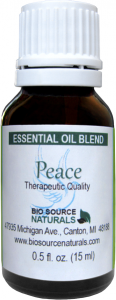
Peace Essential Oil Blend for Grounding & Relaxation

Peace Essential Oil Blend is one of our favorite aromatherapy blends when fear leaves you feeling tense, unsettled, or emotionally activated.

Choose Peace in a concentrate, spray, or roll-on.

Peace combines Cedarwood, Orange, Patchouli, Tangerine, and Ylang Ylang.

The combination of earthy woods, citrus, and floral aromas makes Peace particularly appropriate for a grounding ritual when you need to shift your attention away from anticipating the future and toward what is happening right now.

Try pairing Peace with several minutes of slow breathing, EFT tapping, meditation, or simply sitting quietly with both feet on the floor.

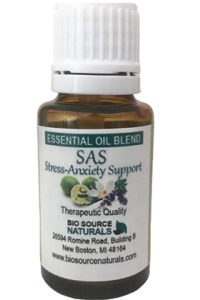
SAS! Stress-Anxiety Support Essential Oil Blend

Fear frequently overlaps with stress and anxiety.

SAS! Stress-Anxiety Support Essential Oil Blend combines Lavender, Himalayan Cedarwood, Vanilla Oleoresin, and Lime.

Lavender has been extensively studied in relation to relaxation and anxiety, while the blend’s cedarwood, vanilla, and citrus aromas create a comforting aromatherapy experience.

SAS! is especially suited to a midday nervous system reset, journaling, meditation, or EFT tapping when stress and anxious anticipation accompany fear.

Learn more about essential oils for anxiety.

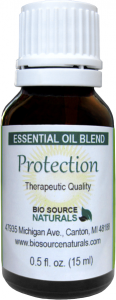
Protection Essential Oil Blend: A Ritual for Emotional Boundaries

Sometimes fear is connected to other people or environments.

You may feel uncomfortable in a particular setting, emotionally overloaded by someone else’s behavior, or find yourself continually absorbing the tension around you.

Protection Essential Oil Blend combines Black Pine, Holy Basil, Vetiver, and Rose Geranium.

Use Protection as part of an intentional grounding and boundary ritual.

The ritual can serve as a reminder:

I can notice what’s happening around me without carrying all of it.

This can be particularly meaningful before or after demanding social situations, caregiving, difficult conversations, energy work, or stressful environments.

See our Safety Information for additional guidance when using essential oils.

Best Essential Oils for Fear, Grounding & Relaxation

Many essential oils have traditionally been associated with grounding, relaxation, emotional balance, or creating a comforting atmosphere.

Rather than claiming that a particular oil treats a specific fear, choose aromas according to the kind of sensory experience you want to create.

Lavender

Lavender is among the most extensively researched essential oils for relaxation and anxiety.²⁻⁴ Its familiar floral-herbal aroma works particularly well during meditation, bedtime, massage, and calming routines.

Bergamot

Bergamot offers a bright citrus aroma that can be incorporated into uplifting relaxation rituals.

Cedarwood

Cedarwood has a warm woody aroma traditionally associated with grounding and works beautifully with citrus and floral oils.

Frankincense

Frankincense has a resinous aroma well suited to meditation, prayer, contemplation, and grounding practices.

Roman Chamomile

Roman Chamomile has a gentle herbaceous aroma commonly incorporated into relaxation and evening routines.

Orange

Orange provides a bright citrus aroma that combines particularly well with grounding woods and resins.

Neroli and Jasmine

Neroli and Jasmine provide rich floral aromas that can be incorporated into comforting emotional self-care rituals.

Sandalwood

Sandalwood has a warm, woody aroma particularly suited to meditation and grounding.

Cypress

Cypress offers a fresh woody aroma that can be incorporated into reflective aromatherapy rituals during periods of transition and change.

Ylang Ylang

Ylang Ylang has an intense floral aroma and is frequently used in blends designed for relaxation.

Clary Sage

Clary Sage provides a distinctive herbaceous aroma traditionally associated with relaxation and emotional balance.

These oils can be used individually or thoughtfully combined into aromatherapy blends according to appropriate safety and dilution guidelines.

Essential Oils and EFT Tapping for Fear

Fear isn’t always resolved by reasoning with yourself.

Sometimes you already know you’re safe, but your body is still responding as though something threatening is happening.

This is one reason some people prefer body-mind practices such as EFT tapping.

Combining aromatherapy with tapping creates a multisensory ritual involving scent, touch, attention, breathing, and emotional awareness.

Before beginning, use your chosen essential oil or blend according to its directions. Notice the aroma and what you’re experiencing in your body.

Then begin tapping while acknowledging the fear rather than trying to immediately suppress it.

Download our free EFT Tapping scripts for additional emotional wellness support.

Essential Oils for Fear – Frequently Asked Questions

What are the best essential oils for fear?

There isn’t a clinically established “best essential oil for fear.”

Lavender has some of the strongest research supporting its use in aromatherapy for anxiety and relaxation.²⁻⁴ Other oils traditionally used in calming or grounding aromatherapy include bergamot, cedarwood, frankincense, chamomile, orange, sandalwood, neroli, jasmine, cypress, and ylang ylang.

Personal preference also matters. A scent that feels familiar and comforting to you may be more appropriate for a calming ritual than an aroma you dislike.

Can essential oils stop the fight-or-flight response?

Essential oils haven’t been established as medical treatments that “turn off” the fight-or-flight response.

Aromatherapy is better viewed as one sensory component of a broader regulation practice involving breathing, grounding, movement, meditation, EFT, rest, or other techniques.

Can aromatherapy help with phobias?

A phobia is more than simply disliking or worrying about something, and essential oils shouldn’t be presented as treatments for phobias.

Aromatherapy may be used as a complementary relaxation practice, but persistent fears or phobias that interfere with everyday life deserve appropriate professional evaluation. Evidence-based psychological treatments are available for phobias.

Why does fear sometimes stay in my body after the situation is over?

The stress response doesn’t necessarily disappear the instant a stressful situation ends.

You may continue experiencing muscle tension, alertness, racing thoughts, or other sensations after an event. Rest, sleep, supportive relationships, grounding, breathing, movement, and other recovery experiences give the body opportunities to return toward baseline.

How can I use essential oils when I’m feeling afraid?

Instead of asking the essential oil to eliminate fear, use aroma as a cue to pause.

Notice the scent.

Feel your feet.

Relax your shoulders.

Slow your breathing.

Look around.

Then ask yourself:

What is happening right now, and what do I need?

That turns aromatherapy into an intentional grounding practice rather than simply putting an oil on and hoping the emotion disappears.

From Fear to Regulation and Restoration

Fear serves a purpose.

The goal isn’t to become someone who never feels afraid. It’s to develop ways of recognizing fear, listening to what it may be telling you, and helping your body return toward regulation when the threat has passed.

Sometimes that begins with something remarkably simple:

A familiar aroma.

A slower breath.

Feet firmly on the ground.

Relaxed shoulders.

A boundary.

A moment of quiet.

The BioSource Naturals Calm & Restore Set can become part of that practice—a sensory ritual you return to when you need to ground, settle, and reconnect with yourself.

Combine Calm & Restore with breathing exercises, EFT tapping, meditation, journaling, gentle movement, prayer, or quiet reflection to create a restoration practice that works for you.

You don’t have to eliminate fear to find your way back to calm.


Safety

Essential oils are highly concentrated botanical products. Follow product-specific directions and appropriate dilution recommendations. Avoid contact with eyes and mucous membranes.

Some essential oils have specific contraindications and precautions. Review our Safety Information before use.

Pregnant or breastfeeding individuals, people with medical conditions, and those taking medications should seek appropriate professional guidance when necessary.

Aromatherapy is a complementary wellness practice and isn’t a substitute for medical or mental health care. Persistent, severe, or disabling fear, panic, anxiety, or phobias should be evaluated by an appropriate healthcare professional.

Learn More About Nervous System Regulation

Looking for a more complete mind-body approach? Explore our guide to How to Regulate Your Nervous System Naturally, including aromatherapy, EFT tapping, grounding, breathwork, emotional awareness, and gentle daily practices for nervous system support.*

Learn More About Emotional Healing

Looking for a broader approach to emotional wellness? Explore our guide to Emotional Healing with Essential Oils, including aromatherapy, EFT tapping, emotional awareness, nervous system support, healthier boundaries, self-trust, and compassionate practices for personal growth.*

Disclaimer

*For educational purposes only. These statements have not been evaluated by the FDA. Aromatherapy and other wellness practices are not intended to diagnose, treat, cure, or prevent anxiety, trauma, phobias, or any mental health condition and are not substitutes for professional care. Consult a qualified healthcare or mental health professional if fear is persistent, overwhelming, or interferes with daily life.

References

  1. Gong M, Dong H, Tang Y, Huang W, Lu F. Effects of aromatherapy on anxiety: A meta-analysis of randomized controlled trials. Journal of Affective Disorders. 2020;274:1028–1040. doi:10.1016/j.jad.2020.05.118.
  2. Donelli D, Antonelli M, Bellinazzi C, Gensini GF, Firenzuoli F. Effects of lavender on anxiety: A systematic review and meta-analysis. Phytomedicine. 2019;65:153099. doi:10.1016/j.phymed.2019.153099.
  3. Kang HJ, Nam ES, Lee Y, Kim M. How strong is the evidence for the anxiolytic efficacy of lavender? Systematic review and meta-analysis of randomized controlled trials. Asian Nursing Research. 2019;13(5):295–305. doi:10.1016/j.anr.2019.11.003.
  4. Kim M, Nam ES, Lee Y, Kang HJ. Effects of lavender on anxiety, depression, and physiological parameters: Systematic review and meta-analysis. Asian Nursing Research. 2021;15(5):279–290. doi:10.1016/j.anr.2021.11.001.
  5. Worwood VA. The Fragrant Mind: Aromatherapy for Personality, Mind, Mood and Emotion. Novato, CA: New World Library; 1996.
essential oils for fear