Pure Essential Oils - Massage Oils - BioSource Naturals

Pure Aromatherapy for Body, Mind & Spirit

Essential Oils for Sinus Congestion

DIY Recipes & Breathe Clearly Essential Oil Blend

Essential Oils for Sinus Congestion | Aromatherapy for Clear, Refreshing Breathing

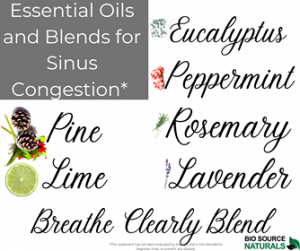
Essential oils for sinus congestion are commonly used in aromatherapy when a stuffy nose, seasonal allergies, or a cold leaves breathing feeling uncomfortable. Eucalyptus, peppermint, rosemary, pine, lavender, and citrus essential oils offer fresh, cooling, or invigorating aromas that can create the sensation of clearer, more comfortable breathing.

Research helps explain why some of these aromas feel so refreshing. Menthol, the familiar cooling constituent of peppermint, can increase the sensation of nasal airflow even when it does not physically reduce nasal resistance.¹ ² Eucalyptus contains 1,8-cineole (eucalyptol), a constituent that has also received considerable respiratory research interest.³

Essential oils do not treat the underlying causes of sinus congestion, including colds, allergies, or sinus infections. However, appropriately used aromatherapy can provide a refreshing sensory experience and make a comforting addition to your self-care routine when you feel stuffy.

Breathe Clearly Essential Oil Blend for Sinus Congestion

Breathe Clearly Essential Oil Blend brings together Eucalyptus, Lavender, Pine, and Lime Essential Oils in one convenient formula designed for fresh, invigorating aromatherapy.

Instead of purchasing and blending several individual oils, Breathe Clearly gives you a balanced combination of crisp eucalyptus and pine, bright lime, and relaxing lavender.

Each oil contributes something different to the aromatic experience:

Eucalyptus Essential Oil

Eucalyptus Essential Oil is one of the best-known essential oils used in respiratory-oriented aromatherapy.

Eucalyptus is naturally rich in 1,8-cineole, also known as eucalyptol. Cineole has been investigated in respiratory research, including a randomized, double-blind, placebo-controlled clinical trial involving 152 people with acute nonpurulent rhinosinusitis. Importantly, that study evaluated oral cineole capsules, not eucalyptus essential oil inhalation, so the results should not be interpreted as proof that eucalyptus essential oil treats sinusitis.³

For aromatherapy, eucalyptus is valued for its penetrating, invigorating aroma and the fresh, open-feeling breathing experience it can create.

Pine Essential Oil

Pine Essential Oil contributes the crisp evergreen character of Breathe Clearly.

Pine essential oil contains naturally occurring aromatic terpenes, including alpha-pinene and beta-pinene, depending on species and composition. Its clean forest-like aroma pairs particularly well with eucalyptus and citrus essential oils.

Lavender Essential Oil

Lavender Essential Oil softens the sharper eucalyptus and pine aromas while adding a relaxing floral-herbal character.

Lavender commonly contains linalool and linalyl acetate and has been extensively studied in relaxation-oriented aromatherapy. Systematic reviews have reported favorable findings for lavender aromatherapy in relation to anxiety and relaxation, although study methods and quality vary.⁴ ⁵

This makes lavender particularly appealing when a stuffy nose is interfering with your normal evening relaxation routine.

Lime Essential Oil

Lime Essential Oil adds a bright citrus note to Breathe Clearly and helps balance the heavier eucalyptus and pine aromas.

Lime essential oil is naturally rich in aromatic terpenes such as limonene. Its uplifting citrus character makes the finished blend smell fresh and vibrant rather than overly medicinal.

Why Choose Breathe Clearly?

If you don’t want to purchase several separate essential oils for sinus congestion and experiment with proportions, Breathe Clearly Essential Oil Blend provides eucalyptus, pine, lavender, and lime in one ready-made aromatherapy blend.

The combination provides:

  • Eucalyptus – fresh, penetrating aroma and naturally occurring 1,8-cineole
  • Pine – crisp evergreen aroma
  • Lavender – softer, relaxing aromatic character
  • Lime – bright, uplifting citrus notes

Use Breathe Clearly in a diffuser or according to the directions provided with the product.

Discover Breathe Clearly Essential Oil Blend for a convenient way to enjoy these four complementary essential oils in one refreshing aromatherapy formula.

Individual Essential Oils for Sinus Congestion Aromatherapy

If you prefer creating your own aromatherapy blends, several individual essential oils work particularly well for a fresh, cooling, or invigorating aromatic experience.

Eucalyptus Essential Oil

Eucalyptus Essential Oil provides a powerful, penetrating aroma and naturally occurring 1,8-cineole.

Research involving aromatic combinations containing eucalyptus has demonstrated changes in the subjective sensation of nasal airflow, which helps explain why eucalyptus-containing preparations can make the nose feel more open.⁶

This sensory effect should not be confused with physically opening obstructed sinuses or treating the underlying cause of congestion.

Peppermint Essential Oil

Peppermint Essential Oil is particularly useful when you want a pronounced cooling sensation.

Peppermint contains menthol, which interacts with cold-sensitive receptors in the nasal mucosa. Research has shown that menthol can significantly improve the subjective sensation of nasal airflow without producing a corresponding reduction in measured nasal resistance.¹ ²

This distinction is important: peppermint can make breathing feel clearer and more open even though it is not acting as a conventional nasal decongestant.

Its strong cooling aroma means only a small amount may be necessary in a diffuser blend.

Rosemary CT Cineole Essential Oil

Rosemary CT Cineole Essential Oil is especially suited to respiratory-oriented aromatherapy because this rosemary chemotype is rich in 1,8-cineole.

Its strong herbal aroma blends particularly well with eucalyptus, pine, peppermint, and citrus oils when you want a stimulating daytime diffuser blend.

Pine Essential Oil

Pine Essential Oil provides a crisp evergreen aroma and combines beautifully with eucalyptus.

Pine is an excellent choice for people who enjoy a clean, forest-inspired aromatic experience without the pronounced cooling sensation of peppermint.

Lemon Essential Oil

Lemon Essential Oil adds a fresh, bright citrus note to sinus-oriented aromatherapy blends.

Lemon is naturally rich in limonene and works especially well with eucalyptus, pine, lavender, and rosemary. Its role in these blends is primarily aromatic rather than as a treatment for mucus production, sinusitis, or blocked airways.

Lavender Essential Oil

Lavender Essential Oil provides a completely different experience from eucalyptus or peppermint.

Rather than creating an intense cooling sensation, lavender adds a softer, relaxing aroma. This makes it especially useful for evening diffuser blends when congestion is making it harder to settle down and relax.

Research into lavender aromatherapy has reported favorable effects on anxiety and relaxation in a number of clinical trials and systematic reviews.⁴ ⁵

Make Your Own Essential Oil Mixture for Congestion

Prefer to create your own blend? Try one of these aromatic combinations in an atomizing diffuser or aroma lamp.

Allow the aroma to disperse naturally throughout a well-ventilated room and breathe normally rather than deliberately inhaling concentrated vapors.

Essential Oil Mixture for Congestion #1

This blend combines crisp evergreen and eucalyptus aromas with relaxing lavender and a touch of bright lime.

Essential Oil Mixture for Congestion #2

The combination of lemon and pine creates a fresh, clean aroma, while lavender softens the blend for a more relaxing experience.

Always adjust the total number of drops according to your diffuser manufacturer’s instructions. Smaller diffusers may require considerably fewer drops.

Sinus Congestion Essential Oils for a Bath

A warm bath can provide a relaxing self-care ritual when you’re feeling stuffy or uncomfortable.

Essential oils should not simply be dropped into bath water because oil and water do not mix. Instead, dilute essential oils appropriately in a carrier oil before adding them to the bath.

Relaxing Aromatherapy Bath Blend

Dilute the essential oils appropriately before adding them to comfortably warm bath water. Eucalyptus provides the strong, refreshing aromatic component, chamomile contributes a softer herbal note, and lemon brightens the blend with citrus.

How to Use Essential Oils for Sinus Congestion Safely

Essential oils are highly concentrated, so using more does not necessarily create a better aromatherapy experience.

For safer use:

  • Follow the directions for your diffuser and individual essential oils.
  • Diffuse in a well-ventilated room.
  • Avoid deliberately inhaling concentrated essential-oil vapors.
  • Do not put undiluted essential oils inside your nose.
  • Avoid contact with the eyes and mucous membranes.
  • Dilute essential oils appropriately before topical use.
  • Follow individual product precautions regarding children, pregnancy, breastfeeding, medical conditions, and medications.
  • Follow sun/UV precautions when using phototoxic citrus essential oils topically.
  • Stop using an essential oil if it causes coughing, wheezing, headache, eye irritation, skin irritation, or other discomfort.

See our Essential Oil Safety Information for additional guidance.

What Does Research Say About Essential Oils for Sinus Congestion?

Research provides useful support for some of the sensory effects associated with respiratory aromatherapy, but the evidence needs to be interpreted correctly.

Menthol is a good example. Controlled studies found that menthol improved people’s sensation of nasal airflow even though measurements did not show corresponding nasal decongestion.¹ ² Another study examining camphor, eucalyptus, and menthol vapors similarly found effects on nasal sensation.⁶

Eucalyptus’s major constituent, 1,8-cineole, has also been studied clinically. A randomized controlled trial involving 152 patients with acute nonpurulent rhinosinusitis reported benefits from cineole compared with placebo. However, participants took cineole capsules, so those results should not be transferred directly to inhaled eucalyptus essential oil.³

This is why BioSource Naturals describes these oils primarily in terms of aromatherapy, cooling sensations, refreshing aromas, and the subjective experience of breathing rather than claiming that essential oils medically decongest the sinuses.

You may find this related article helpful.

Prepare for the Cold and Flu Season with Essential Oils

Frequently Asked Questions About Essential Oils for Sinus Congestion

What are the best essential oils for sinus congestion?

Eucalyptus and peppermint are two of the most popular essential oils for sinus-oriented aromatherapy. Eucalyptus provides a strong, penetrating aroma and naturally occurring 1,8-cineole, while peppermint’s menthol creates a pronounced cooling sensation.

Rosemary CT cineole, pine, lavender, lemon, and lime can also be incorporated into diffuser blends depending on the aromatic experience you prefer.

Does eucalyptus essential oil clear sinuses?

Eucalyptus can create a fresh, open-feeling breathing experience, but it should not be described as physically clearing blocked sinuses.

Its major constituent, 1,8-cineole, has been investigated clinically for respiratory applications, although some of the strongest clinical evidence involves standardized oral cineole rather than inhaled eucalyptus essential oil.³

Does peppermint oil clear a stuffy nose?

Peppermint can make a stuffy nose feel more open because menthol activates cold-sensitive receptors.

Research found that menthol improved people’s subjective sensation of nasal airflow without significantly reducing measured nasal resistance.¹ ²

Can essential oils treat a sinus infection?

No. Essential oils should not be considered treatments for bacterial or viral sinus infections.

Aromatherapy may provide a refreshing sensory experience while you’re congested, but persistent or severe symptoms should be medically evaluated.

What is the best BioSource Naturals blend for sinus congestion aromatherapy?

Breathe Clearly Essential Oil Blend is the most convenient choice if you don’t want to formulate your own blend.

It combines eucalyptus, pine, lavender, and lime in one balanced formula, giving you fresh evergreen, penetrating herbal, calming floral, and uplifting citrus aromas without needing to purchase four separate oils.

Can I diffuse essential oils at night when I’m congested?

A diffuser can be incorporated into an evening aromatherapy routine, but it does not need to run continuously throughout the night.

Lavender-containing blends may be especially appealing in the evening because lavender has been studied extensively for relaxation and sleep-related aromatherapy. A recent meta-analysis of 11 randomized trials involving 628 adults reported an improvement in sleep quality associated with lavender essential-oil interventions, although the authors noted limitations in the quantity and quality of available studies.⁷

When Sinus Congestion Needs Medical Attention

Occasional nasal congestion is common, but persistent or severe symptoms may require medical evaluation.

Seek appropriate care if you experience severe facial pain or swelling, difficulty breathing, a high or persistent fever, significant worsening after initially improving, unusual or severe headache, eye swelling or vision changes, or symptoms that persist longer than expected.

Disclaimer

*These statements have not been evaluated by the Food and Drug Administration. BioSource Naturals products are not intended to diagnose, treat, cure, or prevent sinusitis, sinus infections, colds, influenza, allergies, nasal congestion, respiratory infections, or any other disease or medical condition.

Research discussed on this page involving isolated constituents such as menthol or 1,8-cineole, pharmaceutical preparations, laboratory studies, or specific experimental formulations does not establish that BioSource Naturals finished essential-oil products produce the same effects.

References

  1. Eccles R, Jones AS. The effect of menthol on nasal resistance to air flow. Journal of Laryngology & Otology. 1983;97(8):705-709. doi:10.1017/S002221510009486X.
  2. Eccles R, Jawad MSM, Morris S. The effects of oral administration of (-)-menthol on nasal resistance to airflow and nasal sensation of airflow in subjects suffering from nasal congestion associated with the common cold. Journal of Pharmacy and Pharmacology. 1990;42(9):652-654.
  3. Kehrl W, Sonnemann U, Dethlefsen U. Therapy for acute nonpurulent rhinosinusitis with cineole: results of a double-blind, randomized, placebo-controlled trial. Laryngoscope. 2004;114(4):738-742. doi:10.1097/00005537-200404000-00027.
  4. Kang HJ, Nam ES, Lee Y, Kim M. How strong is the evidence for the anxiolytic efficacy of lavender? Systematic review and meta-analysis of randomized controlled trials. Asian Nursing Research. 2019. doi:10.1016/j.anr.2019.11.003.
  5. Malloggi E, Menicucci D, Cesari V, et al. Lavender aromatherapy: a systematic review from essential oil quality and administration methods to cognitive enhancing effects. Applied Psychology: Health and Well-Being. 2022;14(2):663-690. doi:10.1111/aphw.12310.
  6. Burrow A, Eccles R, Jones AS. The effects of camphor, eucalyptus and menthol vapour on nasal resistance to airflow and nasal sensation. Acta Otolaryngologica. 1983.
  7. Shen H, Zhang LJ, Zhu WY. The sleep-enhancing effect of lavender essential oil in adults: a systematic review and meta-analysis. Holistic Nursing Practice. 2026;40(2):105-118. doi:10.1097/HNP.0000000000000734.