
Essential Oils for Fibromyalgia – Aromatherapy for Nervous System, Fascia & Whole-Body Restoration
Essential oils for fibromyalgia can be incorporated into gentle self-care rituals designed to support relaxation, comfort, sleep, nervous system regulation, and whole-body restoration. Fibromyalgia is much more complex than ordinary muscle soreness. Current research increasingly describes fibromyalgia as a chronic pain condition involving altered pain processing, including central sensitization or nociplastic pain, along with possible changes in autonomic nervous system function.[1–3]
People living with fibromyalgia may experience widespread pain and tenderness, fatigue, stiffness, disrupted sleep, cognitive difficulties, heightened sensitivity to touch, and symptoms that fluctuate with stress, activity and sleep.
This broader understanding changes the way we think about complementary care. Instead of trying to simply “fight pain,” a restorative approach may include several layers of support:
- calming an over-responsive nervous system
- encouraging restorative sleep and relaxation
- using gentle massage and touch
- supporting comfortable movement
- addressing muscle and fascial tension
- creating soothing aromatherapy rituals
- supporting emotional well-being during chronic illness
Aromatherapy does not treat or cure fibromyalgia, but essential oils can become part of these restorative practices.
Fibromyalgia and the Nervous System
One of the most important developments in fibromyalgia research is the recognition that the condition involves changes in how the nervous system processes pain.
Central sensitization describes a state in which pain-processing pathways become more responsive, potentially amplifying sensory signals. Recent reviews continue to identify central sensitization and altered descending pain modulation as important mechanisms in fibromyalgia.[1,2]
Research has also identified differences in autonomic nervous system activity among people with fibromyalgia. A 2025 systematic review reported autonomic nervous system dysfunction, including altered heart-rate variability patterns, in fibromyalgia.[3]
This doesn’t mean fibromyalgia is “just stress” or psychological. The pain is real.
Rather, it helps explain why a whole-body approach that includes relaxation, sleep, appropriate movement and nervous system regulation may complement medical care.
Aromatherapy as a Nervous System Restoration Ritual
Scent is closely connected with brain regions involved in emotion, memory and physiological responses. For this reason, aromatherapy can be used as a sensory cue for slowing down and creating a consistent relaxation ritual.
Consider oils traditionally associated with calming aromatherapy, including:
Lavender Essential Oil – ideal for evening relaxation, massage and bedtime rituals.
German Chamomile Essential Oil – a deeply aromatic oil that can be incorporated into calming massage blends.
Ylang Ylang Essential Oil – a rich floral aroma particularly suited to relaxation rituals.
Tangerine Essential Oil – a bright citrus aroma that works well when fatigue and emotional heaviness accompany chronic discomfort.
A systematic review of essential-oil therapy in rheumatic conditions found a small body of research involving fibromyalgia and other rheumatic disorders. Lavender was the most frequently studied essential oil. The authors considered the findings encouraging but emphasized the limited number of studies.[4]
Essential oils should therefore be viewed as complementary sensory and self-care tools rather than fibromyalgia treatments.
Fibromyalgia, Fascia and Myofascial Restoration
The nervous system isn’t the only area of interest in fibromyalgia research.
Researchers have also explored the possible relationship between fibromyalgia symptoms and the fascia and myofascial system.
Fascia is the connective-tissue network surrounding and connecting muscles, nerves, blood vessels and other structures throughout the body. It is richly innervated and capable of contributing to sensory and pain signals.[5]
Research on myofascial release in fibromyalgia is particularly interesting. A systematic review found moderate evidence that therapist-administered and self-myofascial release may improve pain, sleep-related outcomes and quality of life in people with fibromyalgia.[6]
A newer 2026 systematic review and meta-analysis also reported significant reductions in pain with myofascial release, although the authors emphasized the importance of individualized technique and treatment intensity.[7]
This does not mean that damaged fascia causes fibromyalgia. Fibromyalgia remains a complex condition involving multiple systems.
However, it does provide a good reason to include gentle fascial and body-based restoration alongside nervous system support.
Gentle Massage for Fibromyalgia
Massage is another complementary approach that has been studied in fibromyalgia.
A systematic review and meta-analysis found that massage performed over five weeks or longer was associated with improvements in pain, anxiety and depression, although the researchers called for larger, higher-quality trials.[8]
Another systematic review found that different forms of massage produced different results, with myofascial release showing some of the most promising evidence.[9]
For someone with fibromyalgia, however, more pressure isn’t necessarily better.
Because fibromyalgia can increase sensitivity to touch and pressure, massage should generally begin gently and be adjusted according to individual comfort.
Create a Fibromyalgia Restoration Massage Ritual
Dilute essential oils appropriately in a carrier oil or use a prepared aromatherapy massage oil.
Rather than aggressively working painful areas, try slow, comfortable strokes over the shoulders, arms, legs, feet or other areas that tolerate touch well.
Pair massage with:
slow breathing
warmth
comfortable stretching
quiet music
an evening bath or shower
a calming aromatherapy ritual
The goal isn’t to force tight muscles or fascia to “release.” Think comfort, safety and restoration.
Essential Oils for Fibromyalgia Massage
Several essential oils work particularly well in massage and relaxation rituals.
Lavender
Lavender essential oil is one of the most versatile choices for fibromyalgia self-care because it can bridge both physical and emotional restoration.
Use diluted lavender during gentle massage or incorporate it into a bedtime aromatherapy routine.
Peppermint
Peppermint essential oil creates a distinctive cooling sensation on the skin and is a popular choice in topical aromatherapy blends.
Because fibromyalgia can make the body unusually sensitive, start with a low dilution.
German Chamomile
German Chamomile essential oil has a rich herbaceous aroma and combines beautifully with lavender in relaxing massage blends.
Thyme
Thyme essential oil has traditionally been included in massage preparations for tired muscles.
Red thyme, particularly thyme chemotype thymol, is a potent essential oil and requires careful dilution. People with highly sensitive skin may prefer gentler oils such as lavender or chamomile.
A Simple Lavender Massage Blend
For a gentle home massage blend, combine:
1 ounce (30 mL) carrier oil
3–6 drops Lavender essential oil
Massage a small amount gently into comfortable areas of the body.
Because fibromyalgia can involve heightened sensory sensitivity, always begin with a conservative dilution and discontinue use if irritation or discomfort occurs.
Supporting Lymphatic Flow Through Gentle Body Care
Some people with fibromyalgia enjoy extremely light massage techniques rather than traditional deep-tissue massage.
Manual lymphatic drainage has actually been studied in fibromyalgia. A systematic review examining manual lymph drainage and myofascial therapy found improvements in quality-of-life outcomes across the included studies, although the evidence remains limited and these approaches should be considered complementary rather than curative.[10]
This makes gentle lymphatic-style self-care another possible part of a broader restoration routine.
If you use BioSource Naturals Flow for Lymph, position it as part of a gentle massage and body-care ritual, rather than as a treatment for fibromyalgia or a way to “detox” the body.
Apply with very light strokes according to product directions. Fibromyalgia can increase sensitivity to pressure, so vigorous massage isn’t necessary.
Calm & Restore: Supporting the Nervous System Side of Fibromyalgia
Physical discomfort is only one part of living with fibromyalgia.
Poor sleep, fatigue, stress and heightened sensory sensitivity can interact with pain. This is one reason nervous system restoration deserves a central place in fibromyalgia self-care.
The BioSource Naturals Calm & Restore Set can be incorporated into a daily aromatherapy ritual designed around relaxation and restoration.
Try using calming aromatherapy:
Morning: Begin with a few quiet minutes of breathing and aroma before starting the day.
After activity: Give your nervous system time to transition rather than moving immediately from one demand to another.
During a difficult day: Pair aroma with slow breathing or EFT tapping.
Before bed: Create a predictable sensory routine with low light, calming aroma and reduced stimulation.
The goal is not to convince yourself that the pain isn’t real. It is to give an already highly responsive nervous system repeated opportunities for rest and recovery.
Emotional Restoration Without Blaming Emotions for Fibromyalgia
Chronic pain affects emotional well-being, and emotional stress can influence how the nervous system experiences pain. But that is very different from saying unresolved emotions cause fibromyalgia.
That distinction matters.
Rather than searching for the “emotional cause” of fibromyalgia, consider emotional healing another layer of whole-person restoration.
Aromas such as:
Rose
Jasmine
Ylang Ylang
Tangerine
German Chamomile
can be incorporated into personal rituals associated with rest, self-compassion, meditation, journaling or EFT tapping.
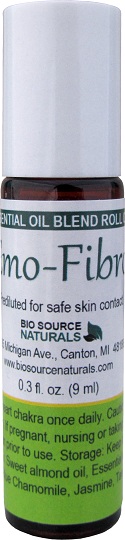
Emo-Fibro Essential Oil Blend
BioSource Naturals Emo-Fibro Essential Oil Blend Roll-On combines German chamomile, jasmine, lavender, tangerine and rose diluted in sweet almond oil.
Rather than positioning the blend as treating the underlying cause of fibromyalgia, use it as an emotional restoration aromatherapy ritual.
Apply the roll-on to pulse points or the chest area, breathe naturally, and use the aroma as a cue to slow down and reconnect with your body.
It can also be paired with BioSource Naturals free EFT tapping scripts for pain and emotional wellness.
EFT Tapping, Stress and Fibromyalgia Self-Care
Emotional Freedom Techniques (EFT), breathing practices, mindfulness and other relaxation techniques may be useful additions to a broader self-care plan because fibromyalgia involves much more than muscles alone.
Research examining non-drug interventions for fibromyalgia has found benefits from several approaches, including exercise, psychological interventions, mindfulness, multidisciplinary treatment and massage, although the effectiveness varies according to the symptom being addressed.[11]
The important idea is individualization.
A person whose primary challenge is sleep may need a different restoration routine than someone struggling primarily with fatigue, physical sensitivity or stress.
A Whole-Body Fibromyalgia Restoration Routine
Instead of searching for one essential oil that will “fix” fibromyalgia, consider building a gentle daily routine around several forms of restoration.
Regulate. Use calming aromatherapy, slow breathing, meditation or EFT to create regular periods of lower stimulation.
Restore. Prioritize sleep and periods of genuine recovery rather than waiting until exhaustion forces you to stop.
Move. Use comfortable, appropriately paced movement rather than an all-or-nothing approach.
Support the fascia. Gentle massage, stretching and appropriately performed myofascial work may help some people feel more comfortable.
Use touch carefully. Fibromyalgia can increase pressure sensitivity. Start gently and allow your body’s response to determine intensity.
Create sensory cues for safety and relaxation. Aroma can become part of a repeated ritual telling the body that it is time to rest.
Fibromyalgia is complex. Self-care can be gentle.
BioSource Naturals Fibromyalgia Self-Care Favorites
For this page, we recommend keeping the product selection focused rather than displaying the entire essential-oil catalog.
Calm & Restore Set – Best overall choice for the nervous system regulation and restoration theme.
Rosemary Mint Massage Oil – A natural companion to the fascia, massage and gentle-touch sections of this article.
Flow for Lymph – An optional addition for customers who enjoy gentle lymphatic-style massage and body-care rituals.
Emo-Fibro Essential Oil Blend – For emotional restoration, mindfulness and EFT rituals.
Lavender Essential Oil – A versatile single oil for relaxation, massage and bedtime aromatherapy.
Peppermint Essential Oil – For customers who enjoy a cooling aromatic sensation in appropriately diluted topical blends.
Sweet Almond Carrier Oil – For creating individualized diluted massage blends.
Essential Oil Safety
Essential oils are highly concentrated.
Always dilute essential oils appropriately before widespread skin application. Patch test new topical preparations, particularly if you have sensitive skin.
Do not put essential oils in the eyes or ear canals and do not ingest essential oils unless specifically directed by an appropriately qualified healthcare professional.
Some essential oils have additional contraindications involving pregnancy, medications, medical conditions, children or sun exposure. See our Essential Oil Safety Information before use.
Fibromyalgia symptoms can overlap with other medical conditions. New, severe or unexplained pain, weakness, swelling, neurological symptoms or other significant changes should be evaluated by a healthcare professional.
Essential oils and BioSource Naturals products are intended for complementary wellness and aromatherapy use and are not intended to diagnose, treat, cure or prevent fibromyalgia or any other disease.
Frequently Asked Questions
What are the best essential oils for fibromyalgia?
There isn’t an essential oil proven to treat fibromyalgia itself. Lavender is one of the better researched essential oils in complementary rheumatic-disease aromatherapy and is an excellent choice for relaxation and massage rituals.[4] Peppermint, German chamomile and other oils may also be incorporated according to aroma preference and skin tolerance.
Can essential oils calm the nervous system in fibromyalgia?
Aromatherapy can be used as part of a relaxation and nervous-system regulation ritual. This is particularly relevant because research has identified altered pain processing and autonomic nervous system activity in fibromyalgia.[1–3] Aromatherapy should complement—not replace—appropriate medical care.
Is fascia involved in fibromyalgia?
The relationship is still being investigated. Research has explored myofascial abnormalities and treatments targeting fascia, and systematic reviews suggest that myofascial release may improve certain fibromyalgia outcomes.[6,7] This doesn’t establish fascia as the single cause of fibromyalgia.
Is massage good for fibromyalgia?
It can be for some people. Systematic reviews suggest certain forms of massage and myofascial therapy may improve symptoms or quality of life.[8–10] Because pressure sensitivity is common in fibromyalgia, massage should be individualized and comfortable.
Is lymphatic drainage good for fibromyalgia?
Manual lymphatic drainage has been studied as a complementary therapy for fibromyalgia, with some promising findings, but evidence is limited.[9,10] There isn’t sufficient evidence to claim that fibromyalgia results from impaired lymphatic drainage or that lymphatic massage treats the underlying condition.
Can stress cause fibromyalgia?
Fibromyalgia is not simply caused by stress or unresolved emotions. It is a complex chronic pain disorder involving biological nervous-system and pain-processing mechanisms. Stress can, however, interact with pain, sleep and autonomic function, making stress management and nervous-system restoration useful parts of a broader wellness plan.[1–3]
You may find these related articles helpful.
Essential Oils for Improving Fibromyalgia Pain
Self Care Essential Oils to Soothe Stress and Manage Emotions
References
- Hladkykh FV, Liadova TI, Matvieienko MS, et al. Central sensitization and nociplastic pain: shared mechanisms in fibromyalgia, osteoarthritis, and inflammatory arthritis. Journal of Pain Research. 2026;19:571311. doi:10.2147/JPR.S571311.
- Sarzi-Puttini P, et al. Pathogenetic and clinical aspects of fibromyalgia: one year in review 2026. Clinical and Experimental Rheumatology. 2026. doi:10.55563/clinexprheumatol/asx3uo.
- Di Bari A, Demo G, Patron E. Unravelling the relationship between anxiety, autonomic nervous system dysfunction and fibromyalgia: a systematic review. Clinical and Experimental Rheumatology. 2025;43(6):1136–1145. doi:10.55563/clinexprheumatol/z1jcry.
- Paixão VLB, de Carvalho JF. Essential oil therapy in rheumatic diseases: a systematic review. Complementary Therapies in Clinical Practice. 2021;43:101391. doi:10.1016/j.ctcp.2021.101391.
- Wang F, et al. Response to mechanical properties and physiological challenges of fascia: diagnosis and rehabilitative therapeutic intervention for myofascial system disorders. Bioengineering. 2023;10(4):474. doi:10.3390/bioengineering10040474.
- Ughreja RA, Venkatesan P, Balebail Gopalakrishna D, Singh YP. Effectiveness of myofascial release on pain, sleep, and quality of life in patients with fibromyalgia syndrome: a systematic review. Complementary Therapies in Clinical Practice. 2021;45:101477.
- Ide FC, D’Oliveira A, Vieira EP, et al. What are the effects of connective tissue massage vs. myofascial release on fibromyalgia pain? Systematic review with meta-analysis. Complementary Therapies in Medicine. 2026;96:103305. doi:10.1016/j.ctim.2025.103305.
- Li YH, Wang FY, Feng CQ, Yang XF, Sun YH. Massage therapy for fibromyalgia: a systematic review and meta-analysis of randomized controlled trials. PLoS ONE. 2014;9(2):e89304. doi:10.1371/journal.pone.0089304.
- Yuan SLK, Matsutani LA, Marques AP. Effectiveness of different styles of massage therapy in fibromyalgia: a systematic review and meta-analysis. Manual Therapy. 2015;20(2):257–264. doi:10.1016/j.math.2014.09.003.
- Algar-Ramírez M, Úbeda-D’Ocasar E, Hervás-Pérez JP. Efficacy of manual lymph drainage and myofascial therapy in patients with fibromyalgia: a systematic review. Schmerz. 2021;35(5):349–359. doi:10.1007/s00482-020-00520-7.
- Kundakci B, Kaur J, Goh SL, et al. Efficacy of nonpharmacological interventions for individual features of fibromyalgia: a systematic review and meta-analysis of randomised controlled trials. Pain. 2022;163(8):1432–1445.
This information is provided for educational purposes and is not intended to diagnose, treat, cure or prevent any disease. Aromatherapy and other complementary practices should not replace appropriate medical care.