
Pure Essential Oils - Massage Oils - BioSource Naturals

Pure Aromatherapy for Body, Mind & Spirit

Essential Oils for Constipation

Bowel & Digestive Support

Essential Oils for Constipation – Abdominal Massage, DIY Recipes & Digestive Comfort

Can essential oils help when you’re constipated? Essential oils such as peppermint, ginger, black pepper, sweet marjoram, rosemary, and citrus oils have a long history of use in aromatherapy and digestive-comfort massage. But the strongest evidence for essential oils for constipation, behind this type of natural routine may come from something surprisingly simple: abdominal massage itself.

Clinical research has found that abdominal massage may improve bowel-movement frequency and constipation symptoms in some people.[1–3]

That makes properly diluted essential oils a natural companion to massage—not because an essential oil has been proven to work as a laxative, but because aromatic plant oils can transform an ordinary abdominal massage into a warming, relaxing, or refreshing self-care ritual.

This guide explores essential oils for constipation, abdominal massage techniques, DIY massage-oil recipes, lifestyle strategies, and the scientific evidence behind abdominal massage for occasional constipation.

What Is Constipation?

Constipation doesn’t simply mean that you didn’t have a bowel movement today.

The National Institute of Diabetes and Digestive and Kidney Diseases (NIDDK) describes constipation as potentially involving:

  • fewer than three bowel movements per week;
  • stools that are hard, dry, or lumpy;
  • bowel movements that are difficult or painful to pass; or
  • feeling that not all stool has passed.[4]

Individual bowel patterns vary considerably, so what’s normal for one person may not be normal for another.

Constipation is also extremely common. NIDDK estimates that approximately 16 out of every 100 U.S. adults experience symptoms of constipation, with prevalence increasing among older adults.[4]

What Causes Constipation?

Constipation can have many causes, and sometimes several factors are involved at the same time.

Common contributors include:

  • inadequate dietary fiber;
  • dehydration or insufficient fluid intake;
  • low physical activity;
  • changes in routine or travel;
  • repeatedly ignoring the urge to have a bowel movement;
  • certain medications and supplements;
  • pregnancy;
  • pelvic-floor problems;
  • gastrointestinal disorders; and
  • certain metabolic or hormonal conditions.[5]

That’s one reason it’s important not to assume every episode of constipation has the same solution.

Occasional constipation associated with travel or changes in routine is very different from persistent constipation caused by medication, pelvic-floor dysfunction, hypothyroidism, gastrointestinal disease, or another medical condition.

Do Essential Oils for Constipation Provide Relief?

There isn’t strong clinical evidence demonstrating that applying a particular essential oil to the abdomen works as a laxative or restores normal bowel function.

Therefore, we don’t recommend describing essential oils as natural laxatives.

However, essential oils can still have a useful place in a constipation self-care routine.

They provide aroma and sensory qualities to abdominal massage, and abdominal massage itself has increasingly interesting clinical evidence.

This distinction is important:

The research supports abdominal massage more strongly than it supports claims that a particular essential oil causes a bowel movement.

What Does the Research Say About Abdominal Massage for Constipation?

This is where the science becomes particularly interesting.

Randomized Controlled Trial of Abdominal Massage

A randomized controlled trial involving 60 people with constipation compared participants receiving abdominal massage in addition to their previously prescribed laxatives with people continuing their laxatives alone.

After eight weeks, the massage group experienced significant improvements in gastrointestinal symptoms and an increase in bowel movements compared with the control group.[1]

However, abdominal massage did not significantly reduce laxative use.

The researchers therefore described massage as a potential complement rather than a substitute for laxatives.[1]

Recent Systematic Reviews and Meta-Analyses

Evidence has continued to accumulate.

A 2025 systematic review and meta-analysis examining abdominal massage for chronic constipation in adults reported improvements in defecation frequency and constipation symptoms.[2]

Interestingly for aromatherapy enthusiasts, the researchers’ subgroup analysis found greater effects on defecation frequency in studies involving acupressure and aromatherapy massage than circular massage alone.

However, the researchers also emphasized substantial heterogeneity and the limited number of studies, so this result shouldn’t be interpreted as proof that essential oils themselves produced the effect.[2]

Another 2025 systematic review and meta-analysis also concluded that abdominal massage may be useful for constipation while emphasizing that results require cautious interpretation because constipation has many different causes.[3]

This is much stronger evidence for an abdominal-massage ritual than simply claiming an essential oil “stimulates the bowel.”

Essential Oils for Constipation & Abdominal Massage

Essential oils used in digestive-comfort aromatherapy tend to have warming, cooling, spicy, herbal, or relaxing aromas.

Here are several popular choices.

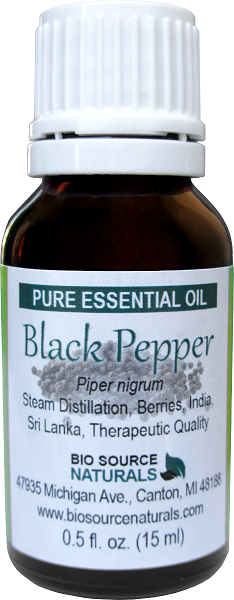
Black Pepper Essential Oil

Warm and spicy Black Pepper Essential Oil makes an excellent addition to abdominal massage blends.

Traditionally used in aromatherapy for warming and invigorating massage, black pepper pairs especially well with rosemary, sweet marjoram, ginger, and citrus essential oils.

We prefer describing black pepper for its warming aromatic and sensory qualities rather than claiming that it stimulates the intestines or functions as a laxative.

Sweet Marjoram Essential Oil

Warm, herbal Sweet Marjoram Essential Oil has traditionally been incorporated into relaxing massage preparations.

Its soft herbal aroma makes it particularly appealing when digestive discomfort seems to accompany tension or stress.

Sweet marjoram blends beautifully with black pepper, lavender, rosemary, and citrus oils.

Rosemary Essential Oil

Fresh and herbaceous Rosemary Essential Oil adds an invigorating note to abdominal and body-massage preparations.

Its aromatic intensity balances especially well with sweet marjoram and citrus oils.

Pink Grapefruit Essential Oil

Bright, uplifting Pink Grapefruit Essential Oil gives digestive-comfort massage blends a fresh citrus character.

Rather than describing grapefruit as a “digestive stimulant,” it is more accurate to appreciate its role as an uplifting aromatic component of massage and self-care preparations.

Because expressed grapefruit essential oil can be phototoxic at sufficient concentrations, appropriate dilution and sun-exposure precautions are important.

Cinnamon Essential Oil

Cinnamon essential oil creates a distinctly warming sensation and spicy aroma.

However, cinnamon oils can also be skin irritating, particularly when used at excessive concentrations.

Cinnamon bark and cinnamon leaf are also chemically different essential oils with different safety considerations.

For that reason, cinnamon should be incorporated only at appropriate dermal concentrations rather than assuming that a stronger blend will work better.

Peppermint Essential Oil

Peppermint Essential Oil provides an unmistakably fresh aroma and cooling sensation.

Peppermint has been studied extensively in gastrointestinal research, particularly in enteric-coated oral preparations for irritable bowel syndrome. That evidence should not be extrapolated to mean that topical peppermint essential oil treats constipation.

In a massage preparation, peppermint is better appreciated for its refreshing aroma and cooling sensory effect.

Ginger Essential Oil

Warm, spicy Ginger Root Essential Oil is another natural choice for aromatic abdominal massage.

Ginger has a long traditional association with digestive wellness, but evidence concerning ingested ginger or ginger extracts shouldn’t automatically be applied to topical ginger essential oil.

For abdominal massage, its warm botanical aroma is reason enough to include it.

DIY Essential Oils for Constipation – Abdominal Massage Oil

This simple massage oil allows you to combine aromatherapy with the abdominal-massage technique that has attracted clinical research.

Ingredients

Combine the ingredients thoroughly in a clean glass bottle.

Apply a small amount to intact abdominal skin and massage gently.

How to Perform Abdominal Massage for Constipation

Abdominal massage is traditionally performed following the approximate direction of the large intestine.

Lie or recline in a comfortable position.

Apply a small amount of massage oil to the abdomen.

Using gentle, comfortable pressure, begin around the lower right abdomen.

Massage upward along the right side of the abdomen, following the general direction of the ascending colon.

Continue across the upper abdomen from right to left, following the approximate direction of the transverse colon.

Then massage downward along the left side toward the lower abdomen, following the approximate direction of the descending colon.

The overall movement forms a broad clockwise pattern when looking down at your abdomen.

Massage should feel gentle and comfortable—not painful.

The goal isn’t to press deeply or aggressively manipulate the bowel.

Stop if massage causes pain or significant discomfort.

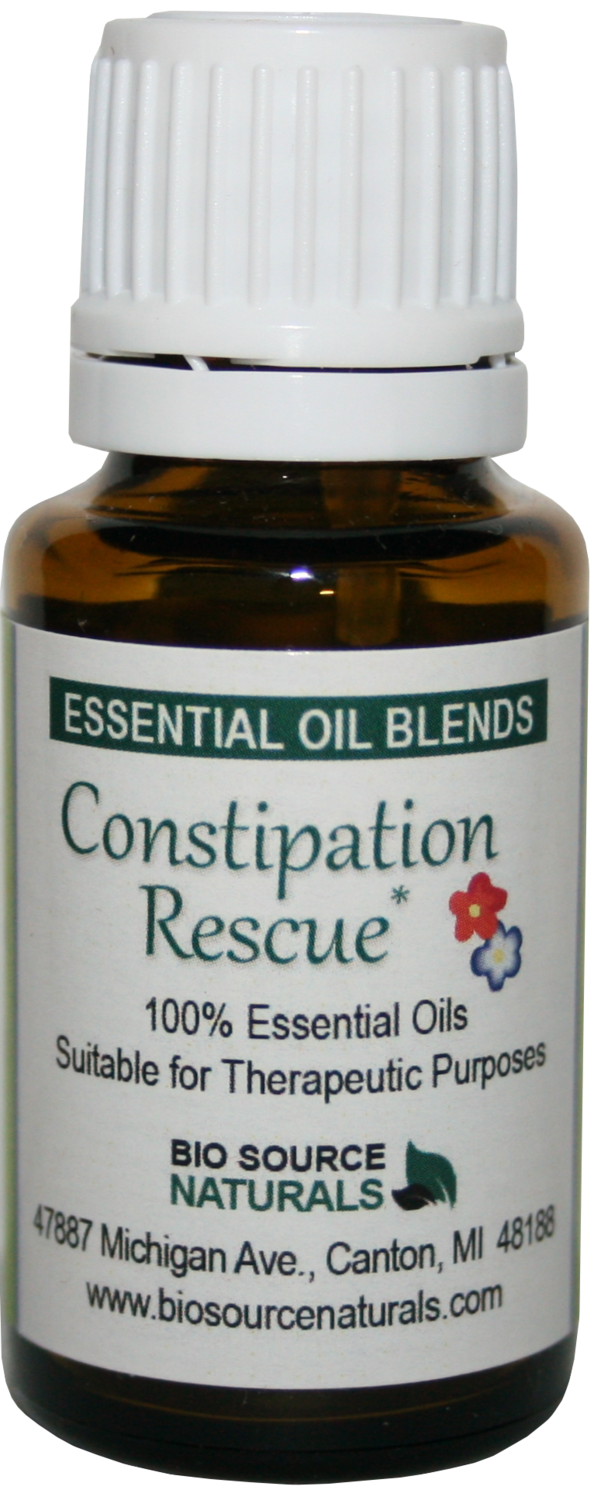
Easy Exit Essential Oil Blend

Don’t want to measure several individual essential oils?

Easy Exit Essential Oil Blend (formerly Constipation Rescue Essential Oil Blend) combines several botanical aromas traditionally associated with digestive-comfort massage:

The result is a warm, spicy, herbal-citrus aromatherapy blend designed for use as part of a relaxing abdominal-massage and digestive-wellness ritual.*

Because Easy Exit is concentrated, dilute it appropriately in a carrier oil before applying it to the abdomen.

Pair Aromatherapy With EFT

Stress and tension can influence many aspects of digestive wellness and daily routines.

BioSource Naturals also offers a complementary mind-body practice:

Download our FREE EFT (Emotional Freedom Techniques) Tapping Scripts for Constipation – EOTT™.

EFT should not be considered a treatment for the underlying medical causes of constipation. Instead, use it as a relaxation and emotional self-care practice alongside appropriate lifestyle and medical care.

Easy Exit Safety Information

  • For external use only. Do not ingest.
  • Dilute appropriately before topical application.
  • Patch test before widespread use.
  • Avoid irritated, diseased, or damaged skin.
  • Keep away from eyes and mucous membranes.
  • Not recommended during pregnancy or breastfeeding.
  • Follow oil-specific precautions regarding medications and medical conditions.
  • Do not apply to or near the face of infants or children.
  • Not recommended for children under 6 years of age.
  • See our Safety Information for additional guidance.

Digestion Support Essential Oil Blend

For a fresh rather than spicy aromatic experience, Digestion Support Essential Oil Blend combines:

The combination creates a cooling, spicy, citrus-herbal aroma that works beautifully as part of a properly diluted abdominal or body-massage ritual.*

Use the blend for its aromatic and sensory qualities rather than as a substitute for medical treatment of constipation, IBS, or other gastrointestinal disorders.

Does Peppermint Oil Help Constipation?

This deserves its own section because it is an excellent AI-search question.

Peppermint oil has legitimate gastrointestinal research behind it—but there’s an important catch.

Much of the clinical research involves specially formulated, enteric-coated peppermint-oil capsules, particularly in people with irritable bowel syndrome.

That is very different from rubbing peppermint essential oil onto the abdomen.

Research involving an oral pharmaceutical-style peppermint preparation cannot be used as evidence that topical peppermint essential oil treats constipation.

Peppermint remains an excellent aromatic choice for abdominal massage because of its fresh scent and cooling sensation.

Natural Ways to Support Regular Bowel Habits

Essential-oil massage should be considered an adjunct to, not a replacement for, basic constipation care.

NIDDK recommends several evidence-based strategies for preventing or managing many cases of constipation.[5,6]

Eat Enough Fiber

Adults generally need approximately 22 to 34 grams of fiber per day, depending on age and sex.[6]

Good sources include:

  • whole grains;
  • beans and lentils;
  • fruits;
  • vegetables; and
  • nuts.

Increase fiber gradually rather than making an enormous dietary change overnight.

Drink Enough Fluids

Adequate fluid intake helps fiber work effectively and can help stools remain softer and easier to pass.[6]

Individual fluid requirements vary based on body size, health, activity, medications, and environment.

Get Regular Physical Activity

Regular movement and physical activity may help improve constipation symptoms.[5]

Even simple daily walking can be an important part of a broader bowel-health routine.

Don’t Ignore the Urge to Go

Repeatedly postponing bowel movements can contribute to constipation.

NIDDK also notes that bowel training may be useful for some people. For example, attempting a bowel movement approximately 15 to 45 minutes after breakfast can take advantage of the natural increase in colon activity after eating.[5]

Give yourself enough time rather than rushing.

Consider Your Toilet Position

A small footstool can help some people achieve a more comfortable position during a bowel movement.

Relax rather than straining excessively.

What About Probiotics and Digestive Enzymes?

The original version of this guide broadly recommended probiotics and digestive enzymes for regularity.

The evidence is more nuanced.

Some probiotic strains and formulations have been investigated for constipation, but probiotic effects are strain-specific, and a general statement that “probiotics maintain regularity” is too broad.

Likewise, digestive enzymes are useful for specific digestive problems but are not a general treatment for constipation.

For a constipation-focused page, fiber, fluids, physical activity, appropriate bowel habits, and evidence-based medical treatments deserve greater emphasis.

Frequently Asked Questions About Essential Oils for Constipation

What is the best essential oil for constipation?

No particular essential oil has been established as a clinically proven topical treatment for constipation.

Black pepper, sweet marjoram, rosemary, ginger, peppermint, and citrus essential oils are popular choices for aromatic abdominal massage because they create warming, cooling, relaxing, or refreshing sensory experiences.

The massage itself has stronger clinical evidence for constipation than any one topical essential oil.[1–3]

Can essential oils make you poop?

There isn’t sufficient evidence to claim that applying an essential oil to the abdomen causes a bowel movement.

Some studies have evaluated aromatherapy massage for constipation, but these interventions combine essential oils with massage, making it difficult to attribute the results to the essential oils themselves.

Does abdominal massage help constipation?

Research suggests it may.

Randomized clinical trials and recent systematic reviews have reported improvements in bowel-movement frequency and constipation symptoms with abdominal massage.[1–3]

It should be viewed as a complementary strategy rather than a replacement for appropriate medical care or necessary medications.

Which direction should I massage my stomach for constipation?

Abdominal massage is commonly performed in a clockwise direction, approximately following the pathway of the large intestine: upward on the right side, across the upper abdomen, and downward on the left side.

Pressure should remain comfortable and gentle.

How long should I massage my abdomen?

Research protocols vary, so there is no single clinically established massage duration appropriate for everyone.

For home self-care, several minutes of gentle, comfortable massage may be more appropriate than aggressive or prolonged pressure.

Stop if you experience pain.

Can I use peppermint oil on my stomach?

Properly diluted peppermint essential oil can be incorporated into a cosmetic abdominal-massage oil for appropriate adults.

Peppermint essential oil should not be assumed to have the same effects as enteric-coated oral peppermint-oil preparations studied clinically.

Always follow appropriate dilution and product-specific safety guidelines.

Does drinking essential oils help constipation?

Do not drink ordinary essential oils as a home remedy for constipation.

Essential oils are highly concentrated substances. The fact that certain plant compounds or specially formulated oral products have been studied does not make ordinary essential oils appropriate for casual ingestion.

BioSource Naturals essential oils discussed on this page are intended for aromatherapy and appropriate topical use according to their labeling.

Can stress cause constipation?

Stress may influence digestive symptoms and bowel habits in some individuals, but constipation has many possible causes.

If you notice that your bowel habits change during periods of stress, relaxation practices such as gentle abdominal massage, breathing exercises, aromatherapy, or EFT may complement other healthy bowel habits.

When Constipation Needs Medical Attention

Constipation is common, but persistent or severe constipation shouldn’t automatically be treated as a simple lifestyle issue.

NIDDK recommends seeking prompt medical attention if constipation occurs along with symptoms including:

  • rectal bleeding;
  • blood in the stool;
  • constant abdominal pain;
  • inability to pass gas;
  • vomiting;
  • fever;
  • lower-back pain; or
  • unexplained weight loss.[7]

You should also speak with a healthcare professional if constipation doesn’t improve with self-care or becomes a persistent problem.

Constipation can sometimes result from medications, pelvic-floor dysfunction, metabolic or hormonal conditions, intestinal obstruction, or other medical problems.[7]

Building a Gentle Digestive Wellness Ritual

A natural constipation routine doesn’t need to revolve around finding a “miracle” essential oil.

Start with the fundamentals: adequate fiber, appropriate hydration, regular movement, healthy bowel habits, and medical evaluation when symptoms warrant it.

Then consider adding gentle abdominal massage.

That’s where aromatherapy can make the routine more enjoyable.

A warm herbal aroma such as sweet marjoram, black pepper, or rosemary can turn several minutes of abdominal massage into an intentional self-care ritual.

You can create your own diluted massage blend or simplify the process with Easy Exit Essential Oil Blend.

The goal isn’t to force the body into a bowel movement.

It’s to combine evidence-informed abdominal massage with a calming aromatic ritual while continuing the dietary, lifestyle, and medical approaches appropriate for you.

Essential Oil Safety

Essential oils are highly concentrated botanical extracts.

Always dilute concentrated essential oils appropriately before applying them to the abdomen.

Do not apply essential oils to irritated, diseased, or damaged skin.

Keep essential oils away from the eyes and mucous membranes.

Do not ingest essential oils unless a product has been specifically formulated and labeled for that purpose.

Follow individual essential-oil precautions concerning pregnancy, children, medications, medical conditions, phototoxicity, and skin sensitivity.

See BioSource Naturals Safety Information for additional guidance.

You may wish to read this related article.

Detox with Essential Oils: Say Hello to a Healthier You

*These statements have not been evaluated by the Food and Drug Administration. BioSource Naturals products are not intended to diagnose, treat, cure, or prevent constipation or any other disease.

References

  1. Lämås K, Lindholm L, Stenlund H, Engström B, Jacobsson C. Effects of abdominal massage in management of constipation—A randomized controlled trial. International Journal of Nursing Studies. 2009;46(6):759–767. doi:10.1016/j.ijnurstu.2009.01.007.
  2. Huang SY, Chiao CY, Chien LY. Effectiveness of abdominal massage on chronic constipation in adults: A systematic review and meta-analysis. International Journal of Nursing Studies. 2025;161:104936. doi:10.1016/j.ijnurstu.2024.104936.
  3. Lin Z, et al. Effect of abdominal massage on constipation: A systematic review and meta-analysis of randomized controlled studies. Complementary Medicine Research. 2025. doi:10.1159/000548699.
  4. National Institute of Diabetes and Digestive and Kidney Diseases. Definition & Facts for Constipation. National Institutes of Health.
  5. National Institute of Diabetes and Digestive and Kidney Diseases. Treatment for Constipation. National Institutes of Health.
  6. National Institute of Diabetes and Digestive and Kidney Diseases. Eating, Diet & Nutrition for Constipation. National Institutes of Health.
  7. National Institute of Diabetes and Digestive and Kidney Diseases. Symptoms & Causes of Constipation. National Institutes of Health.
  8. Buckle J. Clinical Aromatherapy: Essential Oils in Healthcare. 3rd ed. Elsevier; 2015.
  9. Price S, Price L. Aromatherapy for Health Professionals. 4th ed. Churchill Livingstone Elsevier; 2012.
  10. Tisserand R, Young R. Essential Oil Safety: A Guide for Health Care Professionals. 2nd ed. Churchill Livingstone Elsevier; 2014.

See our additional References for aromatherapy and essential-oil resources.

essential oils for constipation