
Pure Aromatherapy for Body, Mind & Spirit

From Emotional Healing to Conscious Manifestation
A Holistic Path to Freedom, Physical Vitality & Intentional Living
From Emotional Healing to Conscious Manifestation
Exploring how Layered Holistic Self-Care, the Emotional Healing Tree™, and Emotional Alchemy support emotional freedom, physical vitality, energetic alignment, and the conscious creation of a meaningful life.
Human well-being encompasses far more than the absence of illness or emotional distress. It includes physical vitality, emotional resilience, meaningful relationships, spiritual connection, personal fulfillment, and the freedom to pursue a life aligned with one’s values and aspirations. These dimensions are interconnected, and experiences affecting one aspect of well-being may influence others.
Persistent stress, unresolved emotional conflict, habitual reactions, and limiting beliefs can influence how individuals experience their bodies, interpret circumstances, relate to others, and make decisions. Emotional distress may affect sleep, muscle tension, energy, digestion, and health-related behaviors. At the same time, physical discomfort, illness, fatigue, and hormonal or physiological changes may influence emotional resilience and the capacity to cope with everyday challenges.
Traditional healing systems, including Traditional Chinese Medicine (TCM), have long viewed emotional and physical experiences as interconnected. Modern research approaches this relationship through the study of stress physiology, autonomic nervous system activity, neuroendocrine responses, inflammation, sleep, and behavior. Although these perspectives use different explanations, both invite consideration of the relationship between emotional experience and physical well-being.
BioSource Naturals approaches these interconnected dimensions through a philosophy of whole-person self-care, integrating aromatherapy, Emotional Freedom Techniques (EFT tapping), somatic awareness, journaling, meditation, intentional living, spiritual reflection, and other supportive practices.
The ultimate purpose extends beyond relaxation, stress management, or temporary emotional relief. It is to cultivate greater emotional freedom, support physical vitality, develop inner harmony, and encourage individuals to participate more consciously in creating the lives they desire.
The BioSource Naturals Philosophy: Six Interconnected Stages
The philosophy follows a developmental pathway connecting self-care with emotional healing, physical well-being, personal transformation, and intentional creation.
Layered Holistic Self-Care → Emotional Healing → Emotional Alchemy → Emotional Freedom & Physical Vitality → Energetic Alignment → Conscious Manifestation
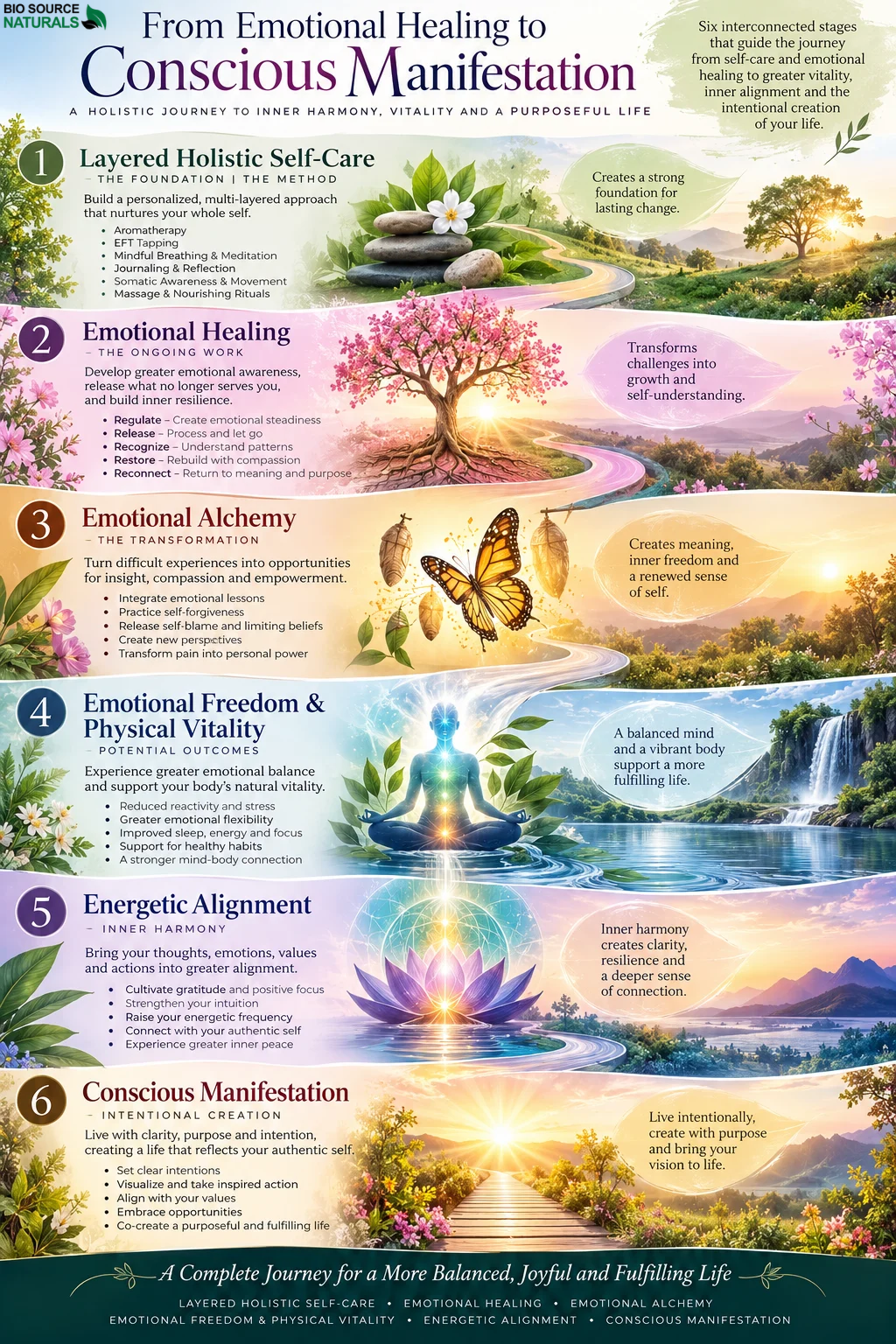 Each stage has a distinct purpose:
- Layered Holistic Self-Care is the method. Complementary practices are combined to support physical, emotional, mental, and spiritual well-being.
- Emotional Healing is the ongoing work. The Emotional Healing Tree™ provides five interconnected layers for exploring emotional experiences: Regulate, Release, Recognize, Restore, and Reconnect.
- Emotional Alchemy is the transformation. Difficult experiences may be integrated into greater awareness, wisdom, self-compassion, forgiveness, and personal growth.
- Emotional Freedom and Physical Vitality are potential outcomes. Greater emotional flexibility, reduced persistent stress, healthier habits, and improved mind-body awareness may contribute to resilience, physical energy, and overall well-being.
- Energetic Alignment is the integration. Thoughts, emotions, intentions, personal values, and actions become more harmonious. Within spiritual traditions, this may be described as raising one’s vibrational frequency.
- Conscious Manifestation is intentional creation. Individuals clarify their aspirations, cultivate supportive beliefs, recognize opportunities, and take purposeful action toward meaningful goals.
These stages are not rigid steps that must be completed in order. Emotional healing and personal growth are ongoing, and individuals may revisit different aspects of the process throughout life. Physical vitality is also influenced by genetics, medical conditions, environmental factors, and circumstances beyond personal control.
The framework is intended to support awareness and intentional self-care, not to suggest that people must eliminate difficult emotions before pursuing happiness, health, or personal aspirations.
Stage 1: Layered Holistic Self-Care Is the Method
Why Whole-Person Well-Being Requires More Than One Practice
Many approaches to wellness emphasize a particular technique, such as meditation, exercise, aromatherapy, journaling, or relaxation. Each may provide value, but human experiences are complex, and individual needs change according to emotional circumstances, physical health, relationships, and daily demands.
Layered Holistic Self-Care recognizes that complementary practices may address different dimensions of well-being. A person experiencing emotional overwhelm may benefit from grounding and breathing before exploring difficult feelings. Someone carrying chronic muscle tension may begin with gentle movement or massage, while another individual may find journaling, EFT tapping, or spiritual reflection more meaningful.
The objective is not to accumulate wellness techniques or establish an elaborate routine. It is to select supportive practices that encourage emotional awareness, physical comfort, personal responsibility, and greater connection with oneself.
Aromatherapy as a Sensory Anchor
Aromatherapy plays an important role within this philosophy because the olfactory system has close connections with brain networks involved in emotion, memory, and learned associations. A familiar scent may evoke memories, create a personally meaningful atmosphere, or become associated with repeated experiences of relaxation and reflection.
When paired with mindful breathing, EFT tapping, journaling, meditation, or intentional rituals, an aroma may become a recognizable cue for self-care. For example, using a preferred essential oil blend before journaling may help establish a consistent practice of slowing down, acknowledging feelings, and reflecting on personal needs.
Essential oils do not independently resolve trauma, remove limiting beliefs, cure illness, or create emotional transformation. Their role is to provide an optional sensory experience that can complement other supportive practices. Individual scent preferences, sensitivities, and safety considerations should always guide their use.
Integrating Emotional and Physical Self-Care
Layered Holistic Self-Care may incorporate aromatherapy, EFT tapping, journaling, somatic awareness, meditation, prayer, breathing exercises, affirmations, visualization, massage, gentle movement, and intentional reflection. These practices can be combined with appropriate medical care, restorative sleep, nourishing habits, supportive relationships, and other health-promoting behaviors.
A person experiencing chronic stress might begin with a short breathing practice, use EFT tapping to acknowledge an emotional concern, and then engage in gentle movement to relieve physical tension. Another individual might use journaling to identify an unhealthy relationship pattern, practice self-forgiveness, and establish a boundary that reduces ongoing emotional strain.
These approaches may contribute to improved coping, greater body awareness, and more supportive daily routines. The goal is to nurture the interconnected dimensions of well-being without assuming that emotional practices can replace medical evaluation or treatment.
Explore: Layered Holistic Self-Care
Related reading: The Neuroscience of Aromatherapy
Stage 2: Emotional Healing Is the Ongoing Work

Click to Enlarge and Read
The Emotional Healing Tree™: Five Layers of Emotional Self-Care
Emotional healing involves more than attempting to feel positive or eliminating uncomfortable emotions. It includes acknowledging experiences, recognizing patterns, developing healthier responses, practicing self-compassion, and rebuilding meaningful connections with life.
BioSource Naturals founder Lezlie Cebulski developed the Emotional Healing Tree™ as an educational framework organizing emotional self-care into five interconnected layers: Regulate, Release, Recognize, Restore, and Reconnect.
These layers reflect the understanding that emotional experiences influence thoughts, behavior, physical sensations, relationships, and personal choices. They are not a prescribed sequence or a clinically validated treatment model, but a flexible approach to exploring different dimensions of emotional well-being.
Regulate: Supporting Nervous System Flexibility
Regulate involves developing awareness of stress responses and using supportive practices to encourage grounding and greater emotional flexibility.
When an individual perceives danger, uncertainty, or overwhelming demands, the body may respond through changes in heart rate, breathing, muscle tension, attention, and stress-related hormonal activity. These responses are normal protective mechanisms, but persistent activation may contribute to physical and emotional strain.
Mindful breathing, gentle movement, sensory grounding, and appropriately chosen aromatherapy rituals may provide opportunities to pause and respond more intentionally. Regulation does not mean suppressing emotions or remaining calm under every circumstance. It involves developing greater capacity to experience and respond to changing emotional states.
Release: Acknowledging and Processing Difficult Feelings
Release involves recognizing feelings that may have been suppressed, avoided, repeatedly activated, or difficult to express.
Grief, anger, fear, resentment, guilt, disappointment, and sadness are natural human experiences. When emotional concerns remain unresolved, they may contribute to ongoing rumination, relationship difficulties, heightened stress, or physical tension.
EFT tapping, journaling, reflective conversations, gentle movement, and other appropriate practices may help individuals acknowledge their experiences without demanding immediate resolution. Emotional release does not require dramatic expression, reliving traumatic events, or forcing forgiveness.
The intention is to create opportunities for emotional awareness and integration while respecting individual readiness and safety.
Recognize: Understanding Emotional Patterns and Beliefs
Recognize focuses on identifying the beliefs, expectations, triggers, and habitual responses that influence emotional experiences.
An individual may repeatedly feel responsible for other people’s happiness, fear criticism, struggle with boundaries, or interpret disagreement as evidence of personal inadequacy. These patterns may influence emotional well-being, physical stress responses, and the choices made in everyday life.
Recognizing such patterns creates an opportunity to respond differently. Instead of automatically repeating familiar behaviors, individuals may begin questioning whether those responses reflect present circumstances or earlier experiences.
Recognition is not intended to create blame. It encourages compassionate self-inquiry and greater personal choice.
Restore: Self-Forgiveness, Self-Love, and Healthier Habits
Restore involves rebuilding self-trust, practicing self-compassion, developing healthier boundaries, and making choices that support well-being.
Self-forgiveness is foundational within the BioSource Naturals philosophy. People may continue carrying guilt about decisions they made, opportunities they missed, warning signs they overlooked, or situations they believe they should have handled differently.
Acknowledging mistakes and accepting responsibility can coexist with compassion. Self-forgiveness allows individuals to learn from their experiences without defining their entire identity through regret or self-criticism.
Forgiveness toward others may also become meaningful, but it is voluntary and does not require reconciliation or excusing harmful behavior. Restoration may involve establishing boundaries, changing expectations, seeking support, improving daily habits, or allowing oneself to move forward.
Reconnect: Returning to Meaning, Joy, and Purpose
Reconnect extends emotional healing beyond the management of distress. It involves cultivating meaningful relationships, creativity, gratitude, spiritual connection, authentic self-expression, and a renewed sense of purpose.
As emotional patterns become less restrictive, individuals may feel more willing to pursue goals, establish fulfilling relationships, or participate in experiences that previously felt inaccessible. Reconnection may also involve becoming more attentive to physical needs, enjoying movement, restoring routines, and creating opportunities for rest and pleasure.
The objective is not a life without difficulty. It is a life in which emotional experiences no longer need to dominate personal identity or prevent meaningful participation.
Explore: Emotional Healing With Essential Oils
Related reading: Essential Oils for Nervous System Regulation
Stage 3: Emotional Alchemy Is the Transformation
Transforming Emotional Experiences Into Awareness and Wisdom
Alchemy traditionally refers to transformation. Within the BioSource Naturals philosophy, Emotional Alchemy describes the process of changing one’s relationship with emotional experiences through awareness, integration, self-compassion, and intentional personal growth.
The objective is not to erase memories, deny suffering, or reinterpret every difficult experience as beneficial. It is to reduce the extent to which past experiences continue to determine personal identity, expectations, emotional reactions, and future choices.
Anger may reveal the need for healthier boundaries. Rejection may become an opportunity to examine self-worth. Regret may encourage accountability and self-forgiveness. Grief may gradually coexist with gratitude, love, and meaningful remembrance.
These transformations are possibilities rather than requirements. Not every painful experience produces an identifiable lesson, and emotional healing should never impose pressure to find gratitude or meaning in suffering.
Emotional Integration and the Mind-Body Connection
Emotional experiences are accompanied by physiological processes. Fear may increase muscle tension and alertness, while grief may affect sleep, appetite, and energy. Persistent worry may influence breathing patterns, concentration, and physical comfort.
Emotional Alchemy encourages individuals to recognize these interconnected responses rather than treating emotions as experiences occurring entirely within the mind. Somatic awareness may help individuals notice tension, changes in breathing, or other sensations that accompany emotional experiences.
As individuals develop healthier ways of responding to stress, they may experience less persistent tension, improved coping, or greater capacity for restorative habits. These changes can contribute to subjective physical well-being, although their extent varies and they do not establish that emotional work can cure underlying medical conditions.
Self-Forgiveness as a Foundation for Transformation
Excessive self-criticism can perpetuate emotional distress long after a difficult experience has ended. Individuals may repeatedly revisit past decisions, criticize themselves for perceived failures, or believe they should have known what they could not reasonably have understood at the time.
Self-forgiveness involves acknowledging what happened, accepting appropriate responsibility, recognizing one’s humanity, and identifying what can be learned or changed. It does not erase consequences or excuse harmful actions.
Within Emotional Alchemy, self-forgiveness creates opportunities to replace ongoing self-punishment with compassion, accountability, and forward movement. This process may reduce some sources of recurring emotional strain while encouraging healthier choices and relationships.
Explore: Emotional Alchemy: Healing & Integration
Related reading: What Is Emotional Alchemy?
Stage 4: Emotional Freedom and Physical Vitality Are Potential Outcomes
Emotional Freedom Is Not Emotional Numbness
Emotional Freedom involves developing greater flexibility and choice in responding to emotions, rather than being continually governed by habitual reactions, limiting beliefs, or unresolved expectations.
It does not mean becoming indifferent, detached from meaningful relationships, or unaffected by difficult circumstances. An emotionally free individual may still experience grief, anger, fear, disappointment, and sadness.
The difference lies in the ability to recognize these feelings without automatically allowing them to determine every decision or belief about oneself.
Someone who previously sought constant approval may gradually become more comfortable with disagreement. A person who struggled with boundaries may learn to express personal needs without excessive guilt. Another may become more willing to pursue meaningful opportunities despite uncertainty.
Emotional Freedom supports authenticity, resilience, self-respect, and a greater capacity to participate in life without attempting to control every outcome.
Emotional Stagnation, Traditional Chinese Medicine, and Physical Vitality
Traditional Chinese Medicine (TCM) has long recognized a relationship between emotional experiences, the movement of Qi, and physical well-being. Within this traditional framework, prolonged emotional distress, unresolved frustration, worry, grief, and other persistent emotional states may contribute to patterns described as Qi stagnation or disharmony.
In TCM theory, these patterns are traditionally associated with changes in physical comfort, energy, digestion, sleep, and overall vitality. Emotional and physical experiences are not regarded as entirely separate processes, but as interconnected expressions of balance and imbalance within the whole person.
This traditional perspective provides an important philosophical foundation for BioSource Naturals. Emotional experiences that remain unacknowledged, repeatedly activated, or difficult to integrate may contribute to ongoing stress, internal tension, and a diminished subjective sense of vitality.
Within the Emotional Healing Tree™, Regulate, Release, Recognize, Restore, and Reconnect provide opportunities to explore these experiences while developing more supportive emotional and behavioral patterns. Through Emotional Alchemy, individuals may gradually transform their relationship with persistent emotional distress, potentially creating greater capacity for relaxation, resilience, self-care, and physical well-being.
TCM concepts such as Qi stagnation belong to a traditional medical framework and should not be treated as scientifically established explanations of disease. They offer a different interpretive model from modern biomedical research, even where both traditions recognize relationships between emotional experiences and bodily functioning.
What Modern Research Reveals About Chronic Stress and Physical Health
Modern research provides physiological explanations for some relationships between emotional experiences and physical well-being.
Stress activates interconnected systems involving the brain, autonomic nervous system, endocrine signaling, and immune function. During an acute challenge, these responses help the body adapt by increasing alertness and mobilizing resources.
When stress is prolonged or repeatedly activated without sufficient recovery, these systems may contribute to ongoing physiological strain. Research has examined associations between chronic psychological stress and cardiovascular functioning, inflammatory signaling, sleep disturbances, gastrointestinal symptoms, muscle tension, and other aspects of health.
The concept of allostatic load describes the cumulative physiological burden that may develop when adaptive stress-response systems are repeatedly or persistently engaged. Research by Bruce McEwen and others helped establish this framework for understanding how stress-related biological processes can have both protective and potentially harmful effects.
Psychological stress is not the sole cause of chronic illness, and relationships between stress and disease are complex. Genetics, infections, environmental exposures, aging, socioeconomic conditions, lifestyle factors, and medical conditions all contribute to health outcomes.
Nevertheless, the scientific recognition that persistent stress can influence physical processes supports the importance of addressing emotional well-being as one component of comprehensive health care.
Can Emotional Healing Support Physical Vitality?
Emotional healing may contribute to physical vitality through several interconnected pathways.
Reducing persistent psychological stress may support healthier sleep, improved relaxation, reduced muscle tension, and more adaptive stress responses. Developing emotional awareness may also help individuals recognize when they need rest, nourishment, movement, supportive relationships, or medical attention.
Greater self-compassion and emotional flexibility may encourage more sustainable health behaviors. Someone who previously responded to stress through overwork, poor sleep, or neglect of personal needs may become better able to establish restorative routines.
Mindfulness, relaxation practices, gentle movement, and other supportive approaches may improve certain aspects of stress management and subjective well-being. Some individuals may experience greater energy or physical comfort as their stress burden decreases.
However, emotional healing does not guarantee increased vitality, prevent disease, or reverse medical conditions. Persistent fatigue, pain, digestive problems, and other physical symptoms deserve appropriate medical evaluation rather than being automatically attributed to emotional stagnation.
The underlying principle is that caring for emotional well-being may also be an important way of caring for the body. Emotional Freedom and Physical Vitality are interconnected aspirations within a broader philosophy of whole-person health.
Restoring Vitality Through Compassionate Self-Care
Physical vitality does not require perfect health, constant energy, or freedom from physical limitations. For someone managing a chronic condition, vitality may mean improving comfort, maintaining meaningful activities, adapting routines, or developing a more supportive relationship with the body.
Layered Holistic Self-Care encourages individuals to work with their circumstances rather than against them. Aromatherapy, mindful breathing, gentle movement, massage, journaling, meditation, EFT tapping, and somatic awareness may become complementary components of a personalized wellness routine.
The objective is to support physical and emotional resilience while respecting the body’s individual needs. Appropriate healthcare, restorative sleep, nutrition, movement, and supportive relationships remain important foundations.
Explore: How to Regulate Your Nervous System Naturally
Related reading: Essential Oils for Pain Relief and Physical Comfort
Stage 5: Energetic Alignment Brings Body, Mind, and Spirit Into Greater Harmony
Understanding Vibrational Frequency as a Spiritual Concept
Many spiritual and energetic traditions describe human experiences in terms of vibration, resonance, frequency, or energetic alignment. Within these perspectives, qualities such as gratitude, compassion, joy, appreciation, and love are often associated with higher-vibrational states.
Fear, resentment, shame, and prolonged emotional conflict may be described as lower-vibrational experiences. These descriptions belong to spiritual and philosophical traditions rather than an established scientific system for measuring overall emotional or spiritual well-being.
There is no scientifically validated scale demonstrating that a person’s emotional or spiritual condition can be represented by a single measurable vibrational frequency. Nor has research established that such a frequency directly determines the events or opportunities an individual experiences.
BioSource Naturals uses the concept of vibrational alignment to explore greater harmony among thoughts, emotions, intentions, values, physical well-being, and everyday actions.
Within this interpretation, raising one’s vibration does not mean suppressing sadness, fear, anger, or grief. It means developing greater emotional awareness, compassion, authenticity, and the capacity to respond to life with intention.
The Relationship Between Emotional Healing and Energetic Alignment
Unexamined emotional patterns may create conflict between conscious aspirations and habitual responses.
A person may desire meaningful relationships while repeatedly withdrawing because of fear of rejection. Another may wish to pursue professional opportunities but avoid visibility because of anticipated criticism. Someone seeking greater vitality may recognize that chronic overcommitment prevents adequate rest and self-care.
Emotional healing creates opportunities to identify these conflicts and make choices that better reflect personal values.
As self-awareness and self-compassion develop, individuals may experience greater consistency between what they believe, desire, express, and do. Within an energetic interpretation, this increasing harmony may be described as greater vibrational alignment.
Physical well-being is also part of this process. Rest, movement, nourishment, stress management, and appropriate healthcare can support the ability to participate in meaningful activities and pursue personal goals.
Cultivating Alignment Through Daily Practices
Energetic alignment may be explored through practices that encourage reflection and congruence between inner experience and outward behavior.
Gratitude, meditation, prayer, mindful aromatherapy, EFT tapping, affirmations, visualization, self-forgiveness, and purposeful action can provide opportunities to clarify intentions and reinforce personal values.
For example, an individual might begin the day with a familiar aroma, a brief breathing exercise, and a written intention. Rather than attempting to force positivity, they may acknowledge their present emotional state and identify one meaningful action that supports their desired direction.
Over time, repeated practices can become reminders of the qualities they wish to cultivate, including compassion, authenticity, gratitude, resilience, and personal responsibility.
The objective is not constant happiness or perfect energetic balance. It is a more conscious and harmonious relationship among emotional experiences, physical needs, spiritual beliefs, and everyday choices.
Explore: Essential Oils and Vibrational Frequencies
Related reading: Essential Oils and the Four Elements
Stage 6: Conscious Manifestation Is Intentional Creation
From Emotional Freedom to Conscious Participation in Life
Conscious Manifestation involves clarifying what one wishes to experience or create, cultivating supportive beliefs, recognizing opportunities, and taking meaningful action toward personal aspirations.
Within spiritual traditions such as the Law of Attraction, manifestation is often understood through the relationship between intention, energetic vibration, and the experiences individuals attract.
BioSource Naturals respects this spiritual interpretation while distinguishing it from established scientific mechanisms. Research has not demonstrated that emotional frequency or positive thinking alone causes desired external events to occur.
There are, however, understandable ways in which emotional awareness, expectations, behavior, and personal choices can influence life experiences.
An individual who becomes more comfortable with visibility may begin sharing creative or professional work. Someone who develops healthier boundaries may have greater time and energy for meaningful relationships. A person who reduces excessive self-criticism may become more willing to explore new opportunities.
In these examples, inner changes support different behaviors and greater participation in life.
Manifestation Begins With Clarity and Self-Awareness
Conscious creation begins by identifying what matters.
Rather than focusing exclusively on acquiring a particular object, relationship, or achievement, individuals may explore the qualities they wish to experience in everyday life.
They may desire freedom, connection, creativity, physical vitality, meaningful work, peace, financial stability, spiritual fulfillment, or greater opportunities for authentic expression.
Clarifying these aspirations helps translate abstract desires into values, priorities, and practical choices.
Visualization, affirmations, journaling, meditation, gratitude, and aromatherapy rituals may support this process by creating dedicated opportunities to focus attention and reinforce intentions.
Emotional Freedom Reduces Unnecessary Resistance
Within manifestation traditions, resistance is often described as the beliefs or emotions that interfere with alignment.
A compassionate approach recognizes that fear, uncertainty, grief, and self-doubt are normal human experiences. Their presence does not indicate that an individual is attracting undesirable events or failing spiritually.
People do not cause every hardship through their thoughts or emotional state. Illness, loss, economic circumstances, other people’s choices, and unexpected events are influenced by many factors beyond personal control.
Emotional healing may nevertheless help individuals recognize patterns that influence their own decisions and develop more supportive responses.
Someone who fears rejection may learn to pursue connection without demanding certainty. A person who struggles with perfectionism may become more willing to act before every detail feels complete.
In this way, Emotional Freedom may support manifestation by allowing individuals to participate more fully in life rather than waiting for the complete absence of discomfort.
Physical Vitality Supports Intentional Living
Physical well-being can also influence the capacity to pursue meaningful goals.
Adequate rest, supportive health habits, movement appropriate to individual abilities, and attention to medical needs may help individuals maintain the energy and resilience required for everyday participation.
Emotional healing may indirectly support these habits by reducing some sources of persistent stress and encouraging greater awareness of physical needs.
The relationship is reciprocal. Better sleep and physical comfort may support emotional coping, while improved emotional coping may make restorative routines easier to maintain.
Within the BioSource Naturals philosophy, physical vitality is therefore not separate from conscious manifestation. It is one of several dimensions that may support the ability to engage with meaningful aspirations.
Combining Spiritual Intention With Purposeful Action
Conscious Manifestation becomes most practical when intentions are supported by behavior.
A person seeking meaningful relationships may practice authenticity, establish boundaries, and participate in activities that encourage connection. Someone pursuing professional growth may develop skills, share ideas, cultivate relationships, and explore new opportunities.
Gratitude and visualization may accompany these efforts, but they do not replace preparation, practical decision-making, or sustained action.
The purpose is to bring emotional awareness, physical self-care, spiritual intention, and personal responsibility together in a way that supports meaningful participation in life.
Explore: Manifesting With Essential Oils
Related reading: Essential Oils for Manifesting Love and Money
How the Six Stages Work Together: An Everyday Example
Consider an individual who wishes to pursue a meaningful professional opportunity but feels uncomfortable being visible, sharing accomplishments, or attracting attention.
Through Layered Holistic Self-Care, the individual establishes grounding practices involving aromatherapy, mindful breathing, EFT tapping, journaling, and attention to physical well-being.
Using the Emotional Healing Tree™, they recognize fears of criticism, explore experiences that contributed to those fears, practice self-compassion, and gradually develop greater comfort with authentic expression.
Through Emotional Alchemy, the meaning of visibility begins to change. Rather than automatically associating attention with rejection, the individual recognizes that being seen may also create opportunities for connection, contribution, and fulfillment.
Emotional Freedom develops as anticipated reactions from others become less controlling. Reduced rumination and healthier boundaries may also support better rest, less unnecessary tension, and improved attention to personal needs.
Energetic Alignment emerges as thoughts, intentions, values, and actions become more consistent. The individual no longer requires complete certainty or the absence of discomfort before pursuing meaningful goals.
Conscious Manifestation takes shape through practical action: sharing work, communicating ideas, developing relationships, and exploring opportunities.
The outcome is not guaranteed, but the individual has become better able to participate in creating the life they envision.
This example illustrates the central principle of the BioSource Naturals philosophy: emotional healing is not an isolated activity. It can influence physical well-being, relationships, personal choices, and the capacity to engage with the future.
A Practical Aromatherapy, EFT, and Manifestation Ritual
The following exercise illustrates how the six stages may be integrated into a simple personal self-care practice. It is intended for general wellness and reflection rather than treatment of medical or psychological conditions.
Step 1: Begin With a Sensory Anchor
Choose a pleasant essential oil or aromatherapy blend and use it safely according to appropriate product directions. Take a moment to notice the aroma, your surroundings, and your present physical sensations.
Aroma is optional. Individuals who find fragrances unpleasant or triggering may choose another sensory anchor, such as music, a comfortable object, or attention to the feet resting on the floor.
Step 2: Regulate and Acknowledge
Allow your breathing to remain comfortable and notice how you feel physically and emotionally.
Consider asking:
- What am I feeling right now?
- Where do I notice physical tension or discomfort?
- What does my body need in this moment?
- What would help me feel more supported?
The intention is awareness rather than forcing relaxation or eliminating an emotion.
Step 3: Explore With EFT Tapping
If EFT tapping is familiar and comfortable, gently tap through a preferred sequence while acknowledging a present concern.
A possible setup statement is:
“Even though part of me feels uncertain about moving forward, I acknowledge how I feel, and I am open to treating myself with compassion.”
The purpose is honest acknowledgment and supportive attention rather than pretending that uncertainty has disappeared.
Step 4: Recognize and Practice Self-Forgiveness
Use a journal to explore whether a recurring belief, emotional pattern, or expectation is influencing your choices.
Consider:
- What am I afraid might happen?
- Is this concern based on current circumstances, past experiences, or both?
- What would a compassionate and realistic response look like?
- Is there something I need to forgive myself for?
- What choice would better reflect my values?
Self-forgiveness can include accepting responsibility where appropriate while releasing the belief that past mistakes permanently determine personal worth.
Step 5: Reconnect With Your Desired Experience
Identify a meaningful quality or aspiration you wish to cultivate.
This might include confidence, connection, creativity, peace, freedom, vitality, gratitude, or meaningful contribution.
A supportive affirmation could be:
“I honor my experiences, care for my body and mind, and choose actions that reflect the life I wish to create.”
Allow the affirmation to serve as a reminder of intention rather than a demand to feel positive.
Step 6: Visualize and Take One Meaningful Action
Spend a moment imagining yourself acting with greater clarity, self-respect, vitality, or confidence.
Then identify one practical step that supports your intention.
This might involve resting, having a conversation, setting a boundary, beginning a project, seeking medical guidance, practicing a skill, or making time for a meaningful relationship.
Conclude by recognizing that emotional freedom and intentional living develop through repeated awareness, compassionate choices, and purposeful action.
Frequently Asked Questions
What is the relationship between Layered Holistic Self-Care and Emotional Alchemy?
Layered Holistic Self-Care is the method used to support whole-person well-being through complementary practices. Emotional Alchemy describes the transformation of one’s relationship with emotional experiences through awareness, integration, self-compassion, and personal growth.
How does the Emotional Healing Tree™ fit into the process?
The Emotional Healing Tree™ provides a five-layer educational framework: Regulate, Release, Recognize, Restore, and Reconnect. These layers help individuals organize emotional self-care and explore the relationship between emotional experiences, physical sensations, beliefs, and personal choices.
Can emotional healing improve physical vitality?
Emotional healing may support physical vitality indirectly through improved stress management, sleep, healthier daily habits, and greater awareness of physical needs. However, individual outcomes vary, and emotional healing does not guarantee disease prevention, recovery, or improved physical functioning.
What does Traditional Chinese Medicine say about emotional stagnation?
Within TCM theory, persistent emotional distress may contribute to patterns described as Qi stagnation or disharmony, which are traditionally associated with changes in energy, digestion, sleep, and physical comfort. These concepts belong to a traditional medical framework and are not scientifically established causes of disease.
Can unresolved emotions cause physical illness?
Chronic psychological stress can influence physiological processes and may contribute to or worsen certain health problems. However, it is inaccurate to conclude that unresolved emotions alone cause disease. Physical illness is influenced by multiple biological, environmental, behavioral, and social factors.
What is Emotional Freedom?
Emotional Freedom involves developing greater flexibility and choice in responding to emotions rather than being continually controlled by habitual reactions, limiting beliefs, or unresolved expectations. It does not mean emotional numbness or the absence of difficult feelings.
What does raising your vibrational frequency mean?
Within spiritual and energetic traditions, raising one’s vibrational frequency generally refers to cultivating qualities such as gratitude, compassion, love, joy, and inner harmony. It is a spiritual concept rather than a scientifically established measurement of emotional or physical health.
Do negative emotions prevent manifestation?
There is no scientific evidence that experiencing negative emotions prevents desired outcomes or attracts harmful events. A compassionate manifestation practice acknowledges difficult feelings while encouraging individuals to pursue meaningful goals through clarity, intention, and purposeful action.
How can aromatherapy support emotional healing and manifestation?
Aromatherapy may provide a sensory anchor during EFT tapping, journaling, meditation, affirmations, visualization, and intention-setting. Essential oils do not independently heal emotional trauma or cause desired events to occur, but meaningful aromatic rituals may support focused reflection and consistent self-care practices.
Must the six stages be completed in order?
No. The stages are interconnected and may be revisited throughout life. Individuals can pursue meaningful goals while continuing to work through emotional experiences, support physical well-being, and refine their self-care practices.
The Ultimate Purpose: Emotional Freedom, Physical Vitality, and Conscious Creation
The ultimate purpose of the BioSource Naturals philosophy extends beyond managing emotions, reducing stress, or establishing a self-care routine. It is to cultivate emotional freedom, support physical vitality, and develop greater harmony among body, mind, and spirit so individuals can participate more fully in creating the lives they desire.
Layered Holistic Self-Care provides the method for nurturing these interconnected dimensions of well-being. The Emotional Healing Tree™ offers a framework for recognizing and working through emotional experiences, while Emotional Alchemy encourages the transformation of habitual patterns, limiting beliefs, resentment, guilt, and self-criticism into greater awareness, compassion, wisdom, and personal empowerment.
As emotional burdens become less restrictive, individuals may experience greater psychological flexibility, improved stress management, healthier behaviors, and a renewed sense of physical energy and resilience. Traditional healing philosophies, including TCM, have long described emotional stagnation as a potential contributor to disrupted vitality. Modern mind-body research likewise recognizes that prolonged stress can influence multiple physiological systems, although the mechanisms and terminology differ.
Within the spiritual perspective of BioSource Naturals, greater emotional freedom and physical vitality may also contribute to a sense of higher vibrational alignment. As thoughts, emotions, values, intentions, and actions become more harmonious, individuals may feel increasingly capable of pursuing meaningful aspirations without being continually constrained by old emotional patterns.
Conscious Manifestation represents the outward expression of this evolving alignment. Through gratitude, visualization, intentional choices, meaningful relationships, and purposeful action, individuals participate more consciously in shaping their experiences and pursuing their desired future.
The ultimate goal is not simply to heal from the past, but to live with greater emotional freedom, physical vitality, energetic harmony, and the capacity to consciously create a meaningful, fulfilling life.
Continue Exploring the BioSource Naturals Philosophy
- Emotional Healing & Holistic Self-Care Resource Center
- Layered Holistic Self-Care
- Emotional Healing With Essential Oils
- Emotional Alchemy: Healing & Integration
- Manifesting With Essential Oils
About the Author

🔍 Click Image to Enlarge and Read
Lezlie Cebulski is the founder of BioSource Naturals, a Traditional Naturopath, aromatherapist, EFT practitioner, and Reiki Master Teacher with a professional background in chemistry and specialty chemical formulation.
Her philosophy integrates traditional holistic practices, aromatherapy, emotional awareness, mind-body self-care, spiritual reflection, and intentional living. Through Layered Holistic Self-Care, the Emotional Healing Tree™, and Emotional Alchemy, she seeks to provide accessible educational approaches to emotional freedom, physical vitality, and whole-person well-being.
References and Further Reading
The following references provide scientific and historical context for stress physiology, emotional regulation, mind-body relationships, self-compassion, olfaction, and traditional approaches to wellness. They do not establish the Emotional Healing Tree™, Qi stagnation, vibrational alignment, or conscious manifestation as scientifically validated treatment or causal models.
- McEwen BS. Protective and damaging effects of stress mediators. New England Journal of Medicine. 1998;338(3):171–179. https://doi.org/10.1056/NEJM199801153380307
- Cohen S, Janicki-Deverts D, Miller GE. Psychological stress and disease. JAMA. 2007;298(14):1685–1687. https://doi.org/10.1001/jama.298.14.1685
- Slavich GM, Irwin MR. From stress to inflammation and major depressive disorder: A social signal transduction theory of depression. Psychological Bulletin. 2014;140(3):774–815. https://doi.org/10.1037/a0035302
- Gross JJ. Emotion regulation: Current status and future prospects. Psychological Inquiry. 2015;26(1):1–26. https://doi.org/10.1080/1047840X.2014.940781
- Zaccaro A, Piarulli A, Laurino M, et al. How breath-control can change your life: A systematic review on psycho-physiological correlates of slow breathing. Frontiers in Human Neuroscience. 2018;12:353. https://doi.org/10.3389/fnhum.2018.00353
- Herz RS. Aromatherapy facts and fictions: A scientific analysis of olfactory effects on mood, physiology and behavior. International Journal of Neuroscience. 2009;119(2):263–290. https://doi.org/10.1080/00207450802333953
- Keng SL, Smoski MJ, Robins CJ. Effects of mindfulness on psychological health: A review of empirical studies. Clinical Psychology Review. 2011;31(6):1041–1056. https://doi.org/10.1016/j.cpr.2011.04.006
- Neff KD. Self-compassion: An alternative conceptualization of a healthy attitude toward oneself. Self and Identity. 2003;2(2):85–101. https://doi.org/10.1080/15298860309032
- Fredrickson BL. The role of positive emotions in positive psychology: The broaden-and-build theory of positive emotions. American Psychologist. 2001;56(3):218–226. https://doi.org/10.1037/0003-066X.56.3.218
- Oettingen G, Mayer D. The motivating function of thinking about the future: Expectations versus fantasies. Journal of Personality and Social Psychology. 2002;83(5):1198–1212. https://doi.org/10.1037/0022-3514.83.5.1198
- National Center for Complementary and Integrative Health. Traditional Chinese Medicine: What You Need To Know. National Institutes of Health. https://www.nccih.nih.gov/health/traditional-chinese-medicine-what-you-need-to-know
- National Center for Complementary and Integrative Health. Stress. National Institutes of Health. https://www.nccih.nih.gov/health/stress
- National Center for Complementary and Integrative Health. Qigong: What You Need To Know. National Institutes of Health. https://www.nccih.nih.gov/health/qigong-what-you-need-to-know
Important Wellness Disclaimer
This article is provided for educational and general wellness purposes only. The BioSource Naturals frameworks are not intended to diagnose, treat, cure, or prevent disease or mental-health conditions. Aromatherapy, EFT tapping, meditation, energetic practices, and other complementary approaches should not replace appropriate medical or mental-health care.
Traditional Chinese Medicine concepts such as Qi stagnation describe a traditional framework and should not be interpreted as scientifically established causes of illness. References to vibrational frequency, energetic alignment, and manifestation describe spiritual or philosophical perspectives rather than established scientific mechanisms or guarantees of specific outcomes.
Persistent physical symptoms, significant emotional distress, or concerns about medical or mental-health conditions should be evaluated by qualified healthcare professionals. Individual experiences and results vary.
Statements regarding BioSource Naturals products have not been evaluated by the Food and Drug Administration.