
Pure Aromatherapy for Body, Mind & Spirit
The Alchemy of Pain – Turning Wounds Into Wisdom
The Alchemy of Pain – Turning Wounds Into Wisdom
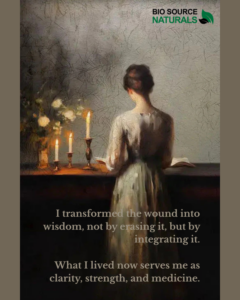
There may come a point in emotional healing when a painful experience begins to hold a different meaning. The memory may remain, but the relationship with it changes. What once brought overwhelming sadness, anger, fear, or self-doubt may gradually become a source of understanding, discernment, or greater self-trust. This is the deeper meaning of emotional alchemy:
transforming the relationship with difficult experiences so they no longer define the present in quite the same way.
Healing does not require finding something positive in every painful event. Nor does it mean forgetting what happened, forgiving someone who caused harm, or pretending an experience no longer matters.
It means that emotional pain can sometimes be integrated into a larger understanding of oneself.
Different Responses to Emotional Pain
People respond to painful experiences in many ways.
Some become highly vigilant, anticipating rejection, conflict, or disappointment even when circumstances have changed. Others avoid thinking about the experience or try to remain constantly busy so difficult feelings have little opportunity to surface.
Still others gradually develop ways to acknowledge what happened, recognize the emotional and behavioral patterns that followed, and make choices that reflect greater self-awareness.
These responses are not fixed categories, and individuals may move among them at different points in their lives.
Emotional integration begins when the past can be acknowledged without allowing it to dictate every response in the present.
This process may involve reflection, emotional regulation, healthier boundaries, supportive relationships, and changes in everyday behavior. For some people, professional therapeutic support is also an important part of healing.
The Three Common Responses to Pain
When people are shaped by prolonged emotional stress, relational trauma, or chronic over-responsibility, they tend to fall into one of three paths.
Some people collapse under the weight of what they’ve been through.
They stay fused to the injury. Their nervous system remains locked in protection. Life becomes small, guarded, and exhausting.
Others pretend it never happened.
They bypass, minimize, or spiritualize the experience away. They stay functional on the surface but disconnected underneath. The body keeps the score even when the mind refuses to look.
And then there are those rare, often underestimated people who do something else entirely.
They metabolize it.
They take the painful chapters and turn them into medicine, for themselves first, and eventually for others.
This is not about being “strong.”
It’s about becoming fluent.
When You Stop Trying to Fix What Was Never Yours
One of the most liberating and sobering moments in healing is when you finally understand this:
Someone’s pattern is their communication.
Not their words.
Not their promises.
Not their apologies.
Their pattern.
When this lands, you stop trying to teach someone what decency looks like. You stop explaining your worth. You stop hoping that if you’re clear enough, patient enough, or loving enough, they’ll suddenly become someone different.
You also stop bleeding out emotionally to fix a dynamic that was never yours to repair.
That’s not bitterness.
That’s clarity.
And clarity changes everything.
Instead of staying entangled, you begin to learn from the experience.
Instead of reliving it, you integrate it.
Instead of carrying it as a burden, you convert it into discernment.
This is where emotional alchemy begins. This stage marks emotional healing integration when understanding shifts from intellectual awareness into embodied change.
What Emotional Alchemy Actually Is
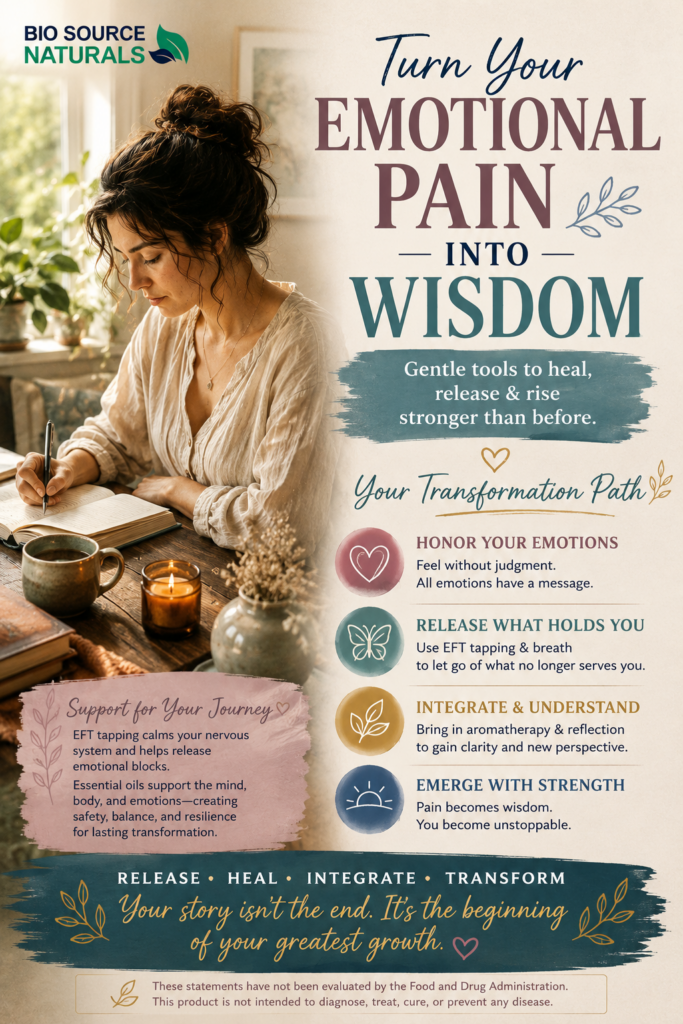
Emotional alchemy is part of a larger process of emotional healing that can include nervous system regulation, aromatherapy, EFT tapping, reflection, healthy boundaries, and intentional self-care. If you are new to this concept, begin with our guide to Emotional Alchemy With Aromatherapy: Turning Pain Into Wisdom, which explores how difficult emotions can be acknowledged, processed, and gradually transformed into greater self-awareness, resilience, and wisdom.
But this kind of transformation is not positive thinking.
It’s not forgiveness-on-demand.
It’s not pretending something didn’t matter.
Forgiveness and letting go are deeply personal processes. They do not require reconciliation, restored access to someone who has hurt you, or pretending harmful behavior was acceptable. Sometimes healing means understanding what happened while also choosing stronger boundaries or greater distance. We explore this distinction more deeply in Forgiveness and Letting Go: A Layered Holistic Self-Care Guide.
Emotional alchemy is the process of:
- allowing the nervous system to settle
- letting the body gradually release patterns of tension and protection
- extracting wisdom without remaining attached to the pain
- turning lived experience into greater self-awareness and self-trust
It’s when the question begins to shift from “Why did this happen to me?” to “What did this teach me about myself, my boundaries, my needs, and what I know to be true?”
And importantly, this process doesn’t happen only in the mind.
It happens in the body.
This is where Layered Holistic Self-Care becomes especially meaningful. Aromatherapy can provide a sensory anchor, while practices such as EFT tapping, journaling, meditation, breathwork, reflection, and intentional ritual offer additional ways of engaging with what we are experiencing. The layers are not meant to erase the experience; they provide different avenues for processing and integrating it into the larger story of our lives.
Layered holistic self-care is the method. Aromatherapy is a sensory anchor. Emotional alchemy is the process of integration and transformation.
Signs Emotional Integration Is Occurring
- You notice reactions sooner
- Emotional intensity passes faster
- Boundaries require less explanation
- Memory feels informative instead of activating
- Rest becomes restorative instead of avoidant
The Body’s Role in Integration
Emotional integration involves more than changing how a difficult experience is understood intellectually. Emotional memories and learned responses may also be associated with physiological reactions.
For example, an individual may recognize that a past relationship or stressful situation has ended yet still experience muscular tension, a racing heart, shallow breathing, or heightened vigilance when encountering a familiar reminder.
These reactions can involve interconnected brain and body systems responsible for evaluating significance, responding to perceived threats, and regulating physiological arousal.
Prolonged psychological stress may also contribute to sleep disturbances, muscular tension, changes in pain perception, and other physical symptoms. These relationships are complex and do not mean that every physical symptom originates in an unresolved emotional experience.
Emotional integration may involve learning to notice these responses, developing ways to regulate them, and gradually responding to familiar reminders with greater flexibility.
Understanding an experience intellectually and developing a different emotional or physiological response to it are related, but they are not always simultaneous processes.
This is one reason complementary practices such as mindful breathing, meditation, gentle movement, journaling, and aromatherapy may be incorporated into emotional self-care.
A familiar aroma can provide sensory stimulation through olfactory pathways connected with emotional memory and learned associations. When paired repeatedly with a calming or reflective practice, it may also become a recognizable cue for that experience.
The purpose is not to erase emotional memories or guarantee that the body will stop responding to them. It is to create opportunities for greater awareness, regulation, and emotional flexibility.
For a deeper explanation of these connections, explore Neuroscience of Aromatherapy and Essential Oils for Nervous System Regulation.
Supporting Emotional Alchemy with BioSource Naturals
Pure Essential Oils for Emotional Alchemy and Integration
Aromatherapy can play an active sensory role in emotional alchemy by stimulating olfactory pathways closely connected with the brain’s emotional-memory networks. An aroma may evoke an existing emotional association, bring feelings into conscious awareness, or become linked through repetition with a new emotional response. When combined with EFT tapping, journaling, meditation, breathwork, or intentional reflection, essential oils can become meaningful companions in the process of emotional awareness, transformation, and integration.
Lavender offers a familiar, soothing aroma that can accompany practices focused on relaxation, emotional settling, and self-compassion. Bergamot provides a bright, uplifting citrus aroma for moments when emotions feel heavy or a fresh perspective is desired. Frankincense has a grounding, contemplative aromatic character that pairs naturally with meditation, EFT tapping, journaling, and reflection during periods of emotional transition.
Roman Chamomile offers a gentle, comforting aroma that may accompany practices focused on slowing down, emotional acceptance, and inner calm. Neroli, distilled from orange blossoms, provides a delicate floral aroma that can complement reflection on gratitude, hope, joy, and emotional renewal.
These essential oils are not expected to resolve difficult emotions independently. Rather, their aromas engage the senses and emotional-memory networks, while intentional self-care practices provide opportunities to explore emotional experiences, develop healthier responses, and integrate new perspectives. With repetition, a particular aroma may also become associated with the calm, courage, acceptance, or self-compassion cultivated during those practices.
Supporting Emotional Alchemy with BioSource Naturals Formulated Blends, Lotions & Sprays
BioSource Naturals offers aromatherapy products designed to complement emotional awareness, reflection, relaxation, and personal transformation. Within a Layered Holistic Self-Care practice, aromatic experiences can be paired with EFT tapping, affirmations, journaling, meditation, massage, and intentional reflection to support different stages of emotional processing.
Inhaling an aroma stimulates olfactory pathways connected with brain networks involved in emotion, memory, and learned associations. A familiar scent may bring an emotional response into awareness or, through repeated pairing with a self-care practice, become associated with a more intentional response.
Courage & Clarity Body-Mind Remedy Lotion
Courage & Clarity can accompany periods of personal growth, difficult decisions, and the development of healthier boundaries. Gentle massage provides a tactile experience, while the aroma can serve as a sensory cue for examining fears, recognizing personal needs, and cultivating greater self-trust.
Pair this lotion with EFT tapping, conscious breathing, or affirmations focused on courage, discernment, and confidence when navigating change.
Purification Body-Mind Remedy Lotion
Purification can be incorporated into emotional self-care rituals focused on releasing resentment, guilt, disappointment, or recurring emotional patterns that no longer serve a constructive purpose. The aromatic and tactile experience may provide a meaningful starting point for journaling or EFT tapping, particularly when exploring what an emotion is communicating and what might be needed to move forward.
Rather than forcing an emotion to disappear, the intention is to recognize it, understand its significance, and gradually develop a different relationship with the experience.
Protection Essential Oil Blend Spray
Protection can be incorporated into personal rituals centered on healthy boundaries, self-respect, emotional independence, and personal empowerment. An aromatic spray may serve as a deliberate sensory cue when practicing affirmations, reflecting on relationship patterns, or preparing for situations that require greater clarity and confidence.
The goal is not to create an invisible barrier against other people’s emotions or behavior, but to reinforce the conscious choices and practical boundaries that support emotional well-being.
Serenity Kissable Massage Oil
Serenity can complement relaxing evening rituals that combine aroma, gentle massage, mindful breathing, and calming music. The combination of scent, touch, and focused attention offers a multisensory experience that may help create a more peaceful setting for emotional reflection and physical relaxation.
This can be especially meaningful after a stressful day, when slowing down and reconnecting with the present moment is an important part of self-care.
Aromatherapy as a Foundation for Emotional Transformation
These products are not expected to resolve difficult emotions independently. Their aromas and tactile qualities provide sensory experiences that can become part of a larger process of emotional awareness and integration.
Aromatherapy engages the senses and emotional-memory networks. EFT tapping, journaling, meditation, affirmations, and practical changes in daily life provide opportunities to recognize emotional patterns, develop healthier responses, and integrate new perspectives.
With repetition, a particular aroma may become associated with a consciously practiced emotional response, such as courage, acceptance, self-compassion, or calm.
This is the heart of the BioSource Naturals Layered Holistic Self-Care philosophy: bringing complementary practices together to support the whole person—body, mind, and spirit.
Mini EFT Tapping for Emotional Alchemy
This short EFT sequence can be used during moments of reflection, integration, or emotional release.
Gently tap on the side of the hand (karate chop point) and repeat:
Even though this hurt me deeply,
I honor myself for surviving it.
Continue tapping through the points (eyebrow, side of eye, under eye, under nose, chin, collarbone, under arm, top of head):
- I acknowledge what this cost me
- I stop carrying responsibility that was never mine
- I allow the lessons without the pain
- I release what no longer belongs to me
- I am transforming pain into wisdom
- I choose clarity over confusion
- I choose strength without armor
- I choose emotional alignment
Take a slow breath. Let the body settle.
EFT tapping can provide a structured opportunity to acknowledge difficult emotions, practice self-compassion, and reflect on healthier responses. Research into its effects on emotional distress and physiological stress responses is ongoing.
The Quiet Power of Transmutation
One of the most meaningful changes in emotional healing may be the gradual realization that an experience no longer carries the same emotional weight.
A memory that once triggered resentment may eventually bring understanding. A painful relationship may become a lesson in boundaries. Grief may gradually make room for gratitude without diminishing the significance of the loss.
These changes do not necessarily happen quickly or permanently. Difficult emotions may return, particularly during periods of stress or major life transitions.
Integration does not require never feeling hurt again.
Instead, it may become easier to recognize emotional patterns, respond with greater flexibility, and make decisions that reflect present values rather than past fears.
The experience remains part of the person’s history, but it no longer has to determine the direction of the person’s future.
This is the quiet power of emotional alchemy: not denying pain, but allowing the meaning of an experience to evolve.
For those exploring this process, the Emotional Healing Tree provides a complementary framework for regulation, emotional release, recognition, restoration, and reconnection.
Continue Exploring Emotional Healing
Emotional alchemy is one part of the larger emotional healing process. For a deeper exploration of how aromatherapy, EFT tapping, nervous system regulation, emotional processing, healthy boundaries, and intentional self-care can work together, continue with our comprehensive guide:
Research & References
Research into emotional regulation, chronic stress, and odor-evoked memory offers useful context for understanding emotional integration and sensory self-care. These studies do not establish that aromatherapy or EFT independently resolves trauma.
- Herz RS. The role of odor-evoked memory in psychological and physiological health. Brain Sciences. 2016;6(3):22. https://doi.org/10.3390/brainsci6030022
- McEwen BS. Protective and damaging effects of stress mediators. New England Journal of Medicine. 1998;338(3):171–179. https://doi.org/10.1056/NEJM199801153380307
- Gross JJ. Emotion regulation: Current status and future prospects. Psychological Inquiry. 2015;26(1):1–26. https://doi.org/10.1080/1047840X.2014.940781
About the Author

🔍 Click Image to Enlarge and Read