
Pure Aromatherapy for Body, Mind & Spirit
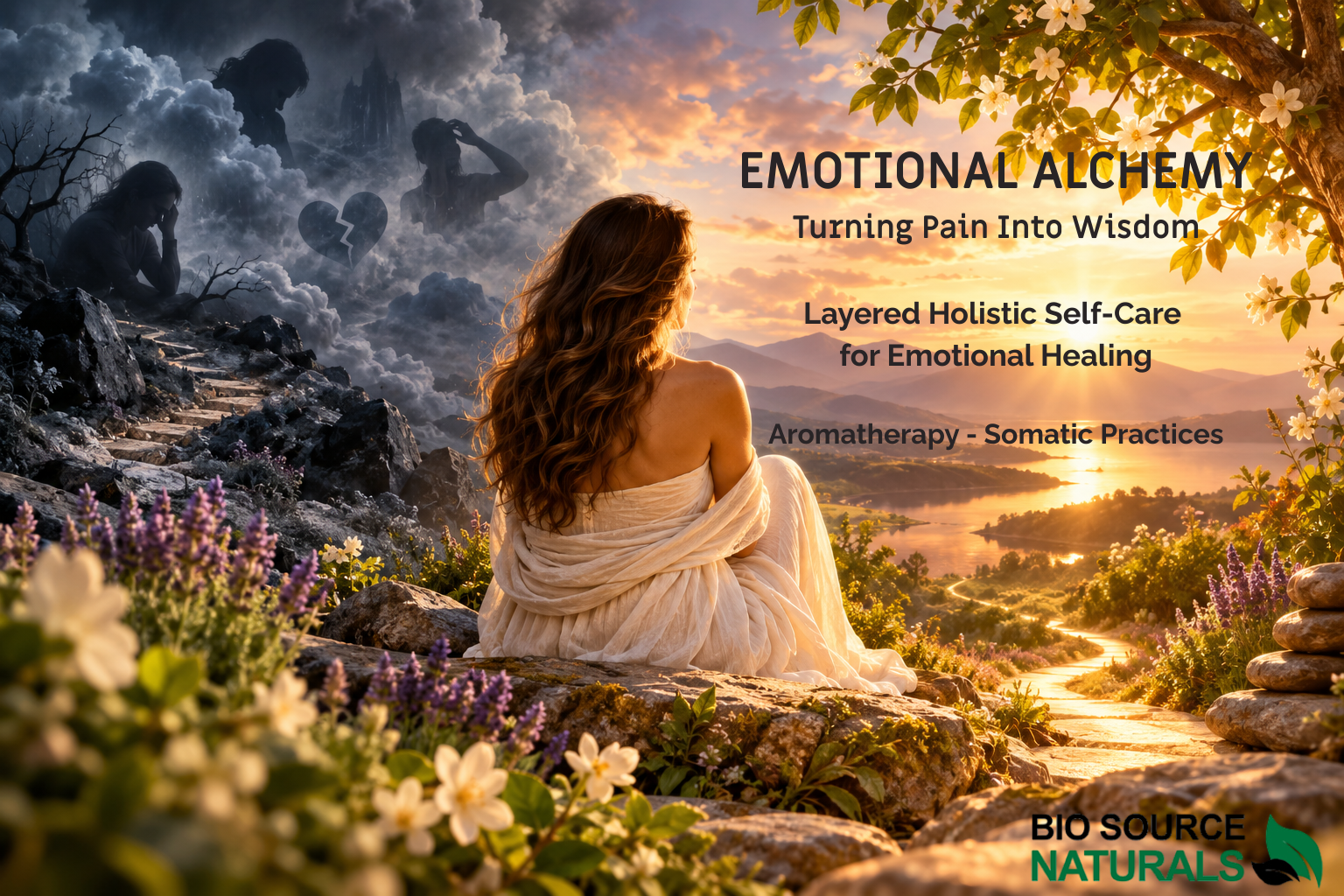
Emotional alchemy with aromatherapy is a layered approach to transforming our relationship with life’s painful experiences. Aroma can serve as a sensory and emotional anchor while we work through difficult feelings, supporting practices such as EFT tapping, journaling, meditation, reflection, breathwork, and intentional self-care. Over time, pain can become wisdom, grief can coexist with gratitude, fear can deepen self-awareness, and disappointment can clarify what truly matters.
Life does not promise that we will avoid grief, betrayal, disappointment, fear, loss, trauma, illness, or change. No essential oil or self-care practice can guarantee a life without pain. But we can learn to change our relationship with what happens to us – and aroma can become one of the sensory tools we use to support that process.
At BioSource Naturals, emotional alchemy with aromatherapy means using scent intentionally as part of a larger process of acknowledging, working through, and ultimately integrating difficult experiences into the larger story of our lives. Because scent is closely connected with brain systems involved in emotion, memory, and learned associations, a familiar aroma can become an anchor for the emotional state or intention we are cultivating.
This is not about pretending something didn’t hurt, finding a positive interpretation for everything that happens, or bypassing grief, anger, fear, or other difficult emotions. Instead, emotional alchemy allows an experience to be acknowledged, felt, processed, and eventually integrated rather than expecting ourselves simply to forget it or “get over it.”
Layered holistic self-care is the method. Aromatherapy is a sensory anchor. Emotional alchemy is the goal.
What Is Emotional Alchemy?
Historically, alchemy was associated with transformation, the attempt to turn one substance into another.
Emotional alchemy uses transformation as a metaphor for what human beings can sometimes do with painful experience.
We cannot turn back time and prevent something from happening. We cannot make a betrayal become loyalty. We cannot make a loss never have occurred. We cannot erase every disappointment, frightening experience or period of grief from our history.
But what happened to us does not have to remain emotionally frozen in the form in which we first experienced it.
Over time, pain may teach us compassion.
Betrayal may teach us boundaries.
Failure may teach us resilience.
Grief may deepen our gratitude for what we still have.
Fear may reveal what matters most.
Anger may show us where something needs to change.
Disappointment may redirect us toward a different path.
An experience does not have to become “good” for something meaningful to eventually grow from it.
That transformation is emotional alchemy.
Emotional Alchemy Is Not Toxic Positivity
Emotional alchemy should never become another demand to “look on the bright side.” There are experiences for which gratitude is not an appropriate immediate response.
Someone experiencing profound grief does not need to be told to find the lesson. Someone who has been betrayed does not need to immediately forgive. Someone overwhelmed by fear does not necessarily need another affirmation telling them everything is wonderful.
Sometimes the emotionally healthy response is:
This hurts.
I am angry.
I am grieving.
I am disappointed.
I don’t know what happens next.
Transformation begins with truth.
Only after an experience has been acknowledged can we begin asking different questions:
- What am I feeling?
- What is my body telling me?
- What do I need right now?
- What does this experience reveal?
- What do I want to carry forward?
- What am I ready to release?
- What boundary might I need?
- What have I learned about myself?
- What still deserves my gratitude?
Emotional alchemy doesn’t require us to deny the darkness.
It asks what we might eventually create from it.
The Mind and Body Experience Life Together
Chronic psychological stress can influence multiple physiological systems, including the autonomic nervous system, hormonal regulation, immune function, inflammation, sleep, and muscular tension. These relationships help explain why emotional well-being deserves consideration as part of physical self-care.
Traditional Chinese medicine, Ayurveda, and chakra-based healing philosophies have long explored the relationship between emotional experiences, energetic balance, and physical well-being. In traditional Chinese medicine, for example, anger is associated with the Liver system, grief with the Lung system, and fear with the Kidney system. These traditional associations describe patterns of energetic imbalance rather than medically established relationships between specific emotions and organ diseases.
Nevertheless, the broader philosophy: that emotional experiences and physical well-being are deeply interconnected, offers a meaningful perspective on holistic self-care.
Emotions that are repeatedly suppressed, resisted, or left unresolved may contribute to prolonged patterns of psychological stress and physical tension. Over time, these patterns can become one of many influences affecting physical well-being.
This is one of the deeper purposes of emotional alchemy. Its goal is not simply to feel better emotionally, but to reduce unnecessary emotional and physiological strain while supporting the body’s capacity for regulation, recovery, and resilience.
Genetics, environment, infections, lifestyle, aging, and numerous other influences contribute to physical health. Emotional healing cannot guarantee disease prevention, and illness should never be interpreted as evidence that someone failed to process difficult emotions.
However, recognizing emotional patterns, developing healthier responses to stress, and transforming persistent emotional burdens can become meaningful components of whole-person self-care.
Emotional alchemy offers an opportunity to care for the body, mind, and spirit together rather than treating emotional experiences as entirely separate from physical health.
Layered Holistic Self-Care: The Method Behind Emotional Alchemy
There is rarely one perfect technique for processing everything life brings us.
That insight became the foundation of BioSource Naturals’ approach to Layered Holistic Self-Care.
Rather than asking one essential oil, meditation, supplement, affirmation or wellness technique to do everything, we can combine complementary practices intentionally.
Aromatherapy provides the sensory foundation.
Additional layers might include:
- EFT tapping
- breathing practices
- somatic awareness
- journaling
- meditation
- massage and intentional touch
- movement
- affirmations
- visualization
- music and sound
- nutritional wellness
- spiritual reflection
- Reiki or other energetic traditions
- flower or gem essences
- color and light
- intention and ritual
You do not need every layer. More is not necessarily better.
The purpose is to choose practices that help you engage with what you are experiencing rather than simply trying to escape it.
Aromatherapy is the foundation. You choose your layers.
Explore the Complete Guide to Layered Holistic Self-Care.
The Origins of Emotional Alchemy: An Integrative Approach to Emotional Wellness
The BioSource Naturals approach to Emotional Alchemy developed through founder Lezlie Cebulski’s education in human development and psychology, training in traditional naturopathy, aromatherapy, EFT tapping, and energetic wellness, and nine years of direct client practice. Her work integrated several complementary traditions with an interest in the relationship between emotional experiences, physical well-being, and personal transformation.
Two influential works were Feelings Buried Alive Never Die….by Karol K. Truman and Releasing Emotional Patterns with Essential Oils by Carolyn L. Mein, D.C. These authors explored proposed relationships among emotional patterns, physical concerns, energetic approaches, and essential oils. Their perspectives contributed to Cebulski’s development of an individualized approach to emotional exploration and holistic self-care.
Although the specific emotional and physical associations proposed in these books have not been scientifically established as diagnostic relationships, their frameworks influenced the historical development of her practice. Cebulski combined these perspectives with her professional education, complementary assessment traditions, and observations from working directly with clients.
Many individuals initially sought support for physical concerns, including digestive discomfort, food sensitivities, and other wellness challenges. Her traditional naturopathic approach considered nutritional and lifestyle factors alongside emotional stress and personal circumstances. Rather than assuming that physical symptoms originated from unresolved emotions, she explored possible connections while addressing physical concerns through appropriate complementary wellness practices.
Over time, Cebulski increasingly integrated aromatherapy with EFT tapping, emotional exploration, cognitive reframing, and other energetic approaches. She observed that some clients had difficulty describing their feelings or recognizing connections among their emotions, life experiences, and physical well-being. Aromatherapy became an important component of her work, offering another pathway for exploring emotional experiences through the close relationship between olfaction, memory, and emotion.
Her sessions generally began by allowing clients to acknowledge and process what they were feeling. EFT tapping, including its reframing techniques, was incorporated alongside aromatherapy and other complementary practices. As emotional distress diminished, Cebulski frequently observed that clients became more receptive to alternative perspectives, sometimes developing new interpretations of their experiences relatively quickly.
In her historical practice, most clients completed their work surrounding a major emotional issue within approximately four to six weeks. This describes her personal practitioner experience, not a formally measured clinical outcome or a predictable timeline for others.
Forgiveness, self-forgiveness, and letting go were important elements of this work. The goal was not to convince clients that painful experiences were beneficial, but to support emotional processing, personal insight, and the possibility of moving forward with less distress.
These experiences eventually informed the philosophy now known as Layered Holistic Self-Care, with the Emotional Healing Tree™ providing an organized educational framework for the interconnected processes of regulation, release, recognition, restoration, and reconnection.
The Emotional Healing Tree™: A Framework for Emotional Alchemy

Click to Enlarge and Read
Emotional transformation rarely occurs in one dramatic moment. BioSource Naturals’ Emotional Healing Tree™, created by Lezlie Cebulski, provides a useful framework for understanding the process:
1. Regulate
Safety • Calm • Nervous System
When we are overwhelmed, regulation may need to come before analysis.
2. Release
EFT • Aromatherapy • Somatic Healing
Emotions and physical sensations can be acknowledged and explored rather than continually suppressed or avoided.
3. Recognize
Awareness • Insight
Patterns become easier to see.
What triggered me?
Why did this affect me so strongly?
Is this experience connected to an older wound, belief or expectation?
4. Restore
Habits • Boundaries
Insight can begin changing behavior.
We may establish a boundary, change a habit, communicate differently or make a different choice.
5. Reconnect
Purpose • Joy • Meaning
Healing is not merely the absence of distress.
Eventually we begin reconnecting with curiosity, relationships, creativity, pleasure, purpose, gratitude and life itself.
This is where emotional healing and emotional alchemy meet.
The experience has not disappeared.
Our relationship to it has changed.
Explore Emotional Healing with Essential Oils and the Emotional Healing Tree™.
Nervous System Regulation Creates the Foundation
Sometimes we understand something intellectually long before our body feels differently about it.
We may know:
“The danger is over.”
“That relationship has ended.”
“I made the best decision I could.”
“I cannot change what happened.”
And still feel the physical response.
That is why nervous-system regulation has become an important part of the BioSource Naturals emotional-wellness philosophy. Regulation is not about forcing ourselves to be calm. It is about creating enough internal safety to make emotional processing, reflection and perspective easier. Body-based and sensory practices can provide another route when thinking alone isn’t enough.
These might include:
Scent • Breath • Touch • Movement • Tapping • Sound • Temperature • Grounding • Body awareness
Read the Complete Guide to Natural Nervous System Regulation.
Somatic Healing: When the Body Needs a Voice
The word somatic simply refers to the body. Somatic self-care brings attention to what we are experiencing physically instead of remaining entirely inside our thoughts.
You might notice:
- Where do I feel this emotion?
- Is my jaw tight?
- Am I holding my breath?
- Are my shoulders lifted?
- Does my stomach tighten when I think about this person?
- Do I feel an urge to move, cry, shake, stretch or take a deep breath?
The purpose isn’t to diagnose every sensation or assign psychological meaning to every ache. It is simply to include the body in the conversation. Sometimes awareness itself is an important first step.
Why Emotional Alchemy Matters for Long-Term Physical Well-Being
Emotional alchemy is often described as transforming difficult emotions into greater understanding, acceptance, compassion, and personal growth. Yet its potential significance extends beyond emotional well-being.
Emotional experiences involve physiological responses throughout the body. Fear may accelerate the heartbeat and breathing. Anger may increase muscular tension and sympathetic nervous system activity. Grief may influence sleep, appetite, energy, and physical sensations.
When emotional stress becomes persistent, these responses may contribute to ongoing physiological strain.
Chronic stress has been associated with changes in cardiovascular function, immune regulation, inflammation, sleep quality, pain perception, and other aspects of physical health.
Traditional healing philosophies describe these relationships through concepts such as disrupted energy flow, energetic stagnation, and imbalances within the body’s functional systems.
In traditional Chinese medicine, the smooth movement of Qi, or vital energy, is considered important to maintaining balance. Emotional experiences such as prolonged anger, frustration, worry, and grief are traditionally understood as potential contributors to patterns of energetic disharmony.
Ayurvedic and chakra-based traditions similarly explore the relationship between emotional experiences and energetic balance.
Although these energetic models have not been established as scientific explanations for specific diseases, they offer complementary philosophical frameworks for understanding the relationship between emotional and physical experiences.
Modern approaches to somatic awareness also recognize that emotional experiences may be accompanied by changes in breathing, posture, muscular tension, and bodily sensations.
The emerging study of fascia adds another dimension to this discussion. Fascia is a connective tissue network containing sensory nerve endings and participating in movement, mechanical force transmission, and bodily perception. Researchers continue to investigate its relationships with pain, movement, and interoception, the ability to perceive internal bodily sensations.
These findings do not establish that unresolved emotions are physically stored within fascia or that fascia possesses consciousness. However, they reinforce the importance of examining how physical sensations, nervous system activity, and emotional experiences interact.
Emotional alchemy provides an intentional process for recognizing difficult feelings, exploring their meaning, and developing healthier emotional responses rather than continually suppressing or resisting them.
Practices such as EFT tapping, breathwork, meditation, journaling, mindful movement, massage, and aromatherapy can be incorporated into this process.
The purpose is not to eliminate normal emotions or promise protection against disease. It is to reduce unnecessary emotional strain, encourage healthier stress responses, and support overall physical and emotional resilience.
Emotional alchemy ultimately recognizes that caring for emotional well-being is also an important part of caring for the whole person.
EFT Tapping: Giving the Experience Words
EFT tapping can add another layer.
Instead of demanding that we immediately replace an uncomfortable thought with a positive one, tapping allows us to begin with what is actually present.
For example:
Even though this really hurt me, I acknowledge how I feel.
Or:
Even though part of me is still angry about what happened, I’m willing to listen to what this anger is trying to tell me.
The words create conscious awareness while tapping adds touch and rhythmic sensory input.
For some people, combining EFT with aromatherapy creates an especially intentional ritual involving:
scent + breath + touch + language + emotional awareness + intention
Read the Complete Guide to Combining Essential Oils with EFT Tapping.
Emotional Alchemy, Cognitive Reframing, and Redemptive Narratives
Emotional transformation can occur through changes in feelings, thoughts, physiological responses, and personal meaning. These processes are interconnected, but they do not always occur simultaneously. Understanding their relationship helps explain why Emotional Alchemy emphasizes emotional processing while also recognizing the value of cognitive reframing and personal insight.
Cognitive Reframing: Changing Thoughts to Influence Feelings
Cognitive behavioral therapy, developed from the work of psychologists including Aaron Beck, recognizes that interpretations of experiences influence emotional responses. By identifying and reconsidering unhelpful beliefs, individuals may experience changes in their emotions and behavior.
For example, someone who interprets rejection as evidence of personal inadequacy may experience shame or anxiety. Recognizing that another person’s judgment does not determine personal worth may help reduce those feelings.
However, intellectual understanding does not always immediately change learned emotional responses. Someone may recognize that an experience is no longer threatening while continuing to feel anxious when reminded of it.
Thoughts, emotions, and physiological responses influence one another in multiple directions. Cognitive reframing can support emotional regulation, while changes in emotional arousal may also make new perspectives easier to consider.
Emotional Processing: Working With the Experience Before Reinterpreting It
In Cebulski’s integrative practice, clients were generally encouraged to acknowledge, express, and explore their emotions before being directed toward alternative interpretations. EFT tapping, aromatherapy, emotional exploration, and complementary techniques were used to support this process.
EFT itself incorporates reframing methods, and cognitive exploration was not excluded from sessions. However, Cebulski observed that once clients experienced substantial emotional relief, changes in perspective often occurred more readily. She sometimes offered observations, practical wisdom, or alternative interpretations after clients had worked through their initial emotional responses.
This experience helped shape a central principle of Emotional Alchemy: A person does not necessarily have to change the story of what happened before beginning to change their emotional relationship with it.
Emotional processing and cognitive reframing are complementary rather than competing approaches. Either may contribute to changes in the other, and the most helpful sequence depends on the individual.
Redemptive Narratives: When Pain Becomes Part of a Different Life Story
Narrative psychologist Dan P. McAdams has studied redemptive narratives, in which difficult experiences become connected to positive outcomes such as greater wisdom, resilience, self-understanding, or renewed purpose.
A person who experienced betrayal may eventually recognize that the experience helped clarify personal boundaries. Someone who experienced a painful career transition may discover new opportunities for independence or meaningful work.
These interpretations can contribute to personal identity and psychological well-being. However, developing a positive narrative does not necessarily mean that the emotional distress associated with the experience has fully resolved.
Redemptive narratives may emerge naturally during emotional integration, but they should not be imposed as a requirement for healing. Some experiences remain painful or unjust even after individuals develop healthier ways of responding to them.
Emotional Alchemy does not require every painful experience to become a positive story. Acceptance, emotional relief, self-forgiveness, stronger boundaries, and renewed personal agency can be meaningful outcomes without assigning a beneficial purpose to suffering.
Why Emotional Processing Matters for Mind-Body Well-Being
The relationship between psychological stress and physical health involves interconnected activity within the nervous, endocrine, and immune systems. Persistent stress can influence sleep, muscular tension, digestive functioning, pain sensitivity, and inflammatory processes.
Research on stress physiology, including Bruce McEwen’s work on allostatic load, demonstrates that prolonged activation of stress-response systems can contribute to physiological strain.
Although emotions are not literally stored in muscles or organs, learned emotional and physiological responses can persist after the original experience has ended. A person may intellectually recognize that an earlier situation is no longer threatening while continuing to experience physical tension or emotional distress in similar circumstances.
This helps explain why emotional awareness and regulation deserve attention alongside cognitive reframing. However, unresolved emotions should not be assumed to cause particular diseases, and emotional processing cannot be presented as a guaranteed method of preventing or treating illness.
Within Layered Holistic Self-Care, emotional processing, cognitive reframing, and meaning-making are understood as interconnected aspects of whole-person wellness.
Emotional Alchemy concerns transformation in one’s relationship with an experience. Cognitive reframing can change its interpretation. Redemptive narratives may change its place within the larger story of one’s life.
Each can contribute to personal growth, but none requires denying the reality of what happened.
Aromatherapy as a Pathway to Emotional Awareness, Memory, and Mind-Body Regulation
Aromatherapy occupies a central role in the BioSource Naturals philosophy of Layered Holistic Self-Care. Beyond providing a pleasant fragrance, aromatic experiences engage sensory pathways closely connected with emotional processing, memory, and physiological responses.
When aromatic molecules reach specialized olfactory receptors in the nasal cavity, they initiate neural signals that travel through the olfactory bulb and into brain networks involved in odor perception, emotional significance, and memory. These networks include connections with the amygdala, which participates in emotional learning and responses, and the hippocampus, which plays an important role in memory formation and retrieval.
This neurological relationship helps explain why particular aromas can evoke vivid memories, emotional associations, and changes in subjective experience. A familiar scent may bring back memories of childhood, relationships, meaningful places, or emotionally significant events, sometimes before the individual consciously recognizes the association.
Aromatherapy and Emotional Awareness
Not everyone finds it easy to identify or articulate what they are feeling. Some individuals recognize physical tension, discomfort, or uneasiness without immediately understanding the emotions or experiences associated with those sensations.
Aromatherapy offers a sensory pathway that may encourage emotional reflection and awareness. Through the relationship between smell, memory, and emotion, an aroma may evoke personal associations that become useful starting points for exploration.
During her integrative client practice, Lezlie Cebulski incorporated essential oils into emotional exploration and EFT tapping sessions. She observed that aromas sometimes helped clients identify or describe feelings and associations that had been difficult to express through conversation alone.
These observations informed her understanding of aromatherapy as an active component of individualized emotional self-care rather than simply a fragrance added to another technique.
Aromatherapy and Mind-Body Regulation
Aromas may also influence subjective mood, comfort, and relaxation. Some research suggests that particular aromatic experiences can affect perceived stress and aspects of autonomic activity, although responses vary considerably among individuals and study conditions.
An individual’s preferences, memories, expectations, and previous experiences can all influence how an aroma is perceived. A scent experienced as comforting by one person may be unpleasant or emotionally activating for another.
Within Layered Holistic Self-Care, aromatherapy can be incorporated into breathing practices, EFT tapping, meditation, emotional reflection, journaling, massage, and other complementary approaches. These combinations create opportunities to engage emotional awareness and physical relaxation together.
Aromatherapy Within the Emotional Alchemy Process
The BioSource Naturals approach recognizes that aromatherapy can contribute to several dimensions of emotional self-care. Aromatic experiences may encourage awareness of feelings and memories, provide opportunities for relaxation, and become part of intentional practices involving emotional expression, reflection, and cognitive reframing.
The purpose is not to suppress uncomfortable emotions with pleasant scents. Rather, aromatherapy is incorporated into a broader process that allows individuals to acknowledge their experiences, explore emotional responses, and develop greater self-understanding.
Although the neurological connections among olfaction, emotion, and memory are well established, research has not demonstrated that specific essential oils reliably reveal hidden emotions, release emotions stored in tissues, or enhance the effectiveness of EFT tapping. Individual experiences and practitioner observations should therefore be distinguished from established clinical findings. You can read more in the article The Neuroscience of Aromatherapy: What Research Is Beginning to Show About Scent and the Brain.
Within Layered Holistic Self-Care, aromatherapy is a foundational component that brings the sensory experience of plants into the exploration of emotional awareness, memory, and mind-body regulation. Complementary practices provide additional opportunities for emotional processing, reflection, and integration.
This relationship forms an important part of the BioSource Naturals philosophy: aromatherapy is the foundation, while the additional layers are selected according to individual needs, preferences, and intentions.
From Pain to Wisdom
The goal of emotional alchemy isn’t to become unaffected by life. A deeply engaged life will include emotion.
We will love people and eventually lose some of them. We will trust people and sometimes be disappointed. We will take risks and occasionally fail. We will make decisions we later wish we had made differently. We will experience beginnings and endings we didn’t choose.
Emotional alchemy asks a different question:
What will this experience become within me?
Pain can become wisdom without pretending the pain was necessary.
Grief can eventually exist beside gratitude without diminishing the person or experience we lost.
Betrayal can become discernment without requiring us to become cynical.
Failure can become knowledge without defining our worth.
Fear can become awareness without controlling every future decision.
Anger can become a boundary rather than a permanent home.
The transformation doesn’t erase what happened.
It changes what we carry forward.
Emotional Alchemy and Forgiveness
Forgiveness can sometimes become part of emotional alchemy, but forgiveness should not be confused with permission. Understanding someone’s behavior does not require accepting repeated disrespect or harm. Forgiveness does not necessarily require reconciliation. And empathy without boundaries can become another way of abandoning our own needs.
Sometimes the wisdom extracted from a painful relationship is precisely this:
I understand why you are the way you are, and I also understand what I will no longer accept.
That, too, can be emotional transformation.
Explore Forgiveness and Letting Go: A Layered Holistic Self-Care Guide.
Turning Grief Into Gratitude
Grief may be one of the clearest examples of emotional alchemy because healing can profoundly change our relationship with loss. In the beginning, grief may occupy nearly the entire emotional landscape. We feel the absence, the pain and everything that has been taken away.
But grief does not necessarily have to remain equally intense forever.
With time, emotional processing and integration, the experience of loss can change. For some people, grief gradually learns to coexist with gratitude. For others, much of the active grief may eventually recede, leaving love, memories, meaning and a deep appreciation for what was shared.
I have experienced this transformation in my own life following the loss of my parents. The fact of their deaths has not changed, nor has my love for them. But much of the grief I once felt is gone. What remains most strongly now is tremendous gratitude: gratitude that they were my parents, gratitude for the years we had together, gratitude for what they gave me and gratitude for the ways they continue to influence who I am.
That is what I mean by emotional alchemy.
It is not forcing ourselves to be grateful while we are hurting. It is not pretending the loss was good or rushing ourselves through grief because we think we should be “over it.” The transformation happens when it happens.
Eventually, “I am devastated that you are gone” may become “I am so grateful that you were here.”
The loss has not been erased. The love has not diminished. What has changed is the emotional experience we carry forward.
Layered holistic self-care can support us as we move through that process. Aromatherapy may provide a sensory anchor, EFT tapping can give difficult feelings a voice, journaling can help us explore memories and meaning, somatic practices can help us notice how grief is experienced in the body, and meditation, ritual or spiritual practices can create space for reflection and connection.
Emotional alchemy does not tell us how long grief should last or what healing should look like. It simply leaves open the possibility that pain does not always have to remain the dominant legacy of loss.
Sometimes, after the grief has done its work, what remains is love and gratitude.
For a deeper exploration of grief, loss and layered approaches for moving through the grieving process, read Essential Oils for Grief and Loss | A Complete Guide to Aromatherapy and Emotional Healing
Emotional Alchemy Is a Practice, not a Destination
You may feel completely at peace with an experience and then unexpectedly encounter something that brings part of it back.
A song.
A scent.
An anniversary.
A photograph.
A conversation.
A familiar situation.
That does not necessarily mean you have returned to the beginning. Healing can be layered too. Something may simply be asking for attention at a different level.
- We regulate.
- We feel.
- We release what we can.
- We recognize.
- We restore.
- We reconnect.
And sometimes we repeat the process.
A Simple Emotional Alchemy wit Aromatherapy Self-Care Practice
When something is weighing heavily on you, try creating a small ritual rather than demanding an immediate solution.
1. Anchor
Choose an essential oil or blend that feels appropriate for your present emotional experience. Notice the aroma, any memories or feelings it evokes, and how you respond physically and emotionally. Allow the sensory experience to encourage awareness without forcing a particular response or interpretation.
2. Notice
Ask:
What am I feeling emotionally?
Then:
Where do I notice this in my body?
Don’t try to change it yet.
3. Breathe
Take several comfortable, unforced breaths.
4. Acknowledge
Put the experience into words.
This hurt.
I’m disappointed.
I’m frightened.
I’m grieving.
I’m angry.
5. Choose a Layer
You might tap, journal, walk, meditate, stretch, listen to music, pray, talk with someone you trust or simply sit quietly.
6. Ask the Alchemy Question
When you feel ready, ask:
What might I eventually carry forward from this besides pain?
You don’t need an answer today. Sometimes the question itself is enough.
Aromatherapy Tools for Emotional Alchemy
There is no single essential oil or blend for every emotional experience. Aromatherapy offers a pathway to emotional awareness, memory, and mind-body regulation, while individual aromas may evoke different associations and responses depending on personal experience.
BioSource Naturals essential oils and aromatherapy blends can be incorporated into Layered Holistic Self-Care alongside EFT tapping, journaling, breathing practices, meditation, somatic awareness, affirmations, and other complementary approaches. The goal is to encourage emotional engagement, reflection, and intentional self-care rather than simply covering uncomfortable feelings with a pleasant fragrance.
Essential Oils for Emotional Alchemy
Certain pure essential oils can be especially meaningful as aromatic anchors during emotional alchemy practices.
Lavender can accompany practices centered on calm, emotional settling, and creating space for reflection.
Bergamot offers a bright, uplifting aroma that may be especially appealing during periods of emotional heaviness or when you are intentionally cultivating hope and a sense of moving forward.
Frankincense has a grounding, contemplative character that pairs beautifully with meditation, EFT tapping, journaling, reflection, and periods of emotional transition.
Roman Chamomile offers a gentle aromatic cue for slowing down, becoming centered, and creating a quieter space in which to process difficult emotions.
Neroli, distilled from orange blossoms, can complement practices focused on joy, gratitude, hope, renewal, and reconnecting with the parts of life that still feel beautiful and meaningful.
Rather than “transforming” emotions on their own, these essential oils can become sensory anchors for emotional transformation, helping connect aroma with intention, reflection, and the emotional state you are cultivating. Because scent preferences, memories, and emotional associations are highly individual, the most meaningful aroma may simply be the one that helps you feel present and connected to your self-care practice.
Aromatherapy Blends for Different Stages of Emotional Alchemy
Sometimes a formulated blend may speak more directly to the emotional intention you are working with. BioSource Naturals aromatherapy blends can be used as sensory anchors alongside the other layers of your self-care practice.
Courage & Clarity may be a meaningful choice when you are working through fear, uncertainty, or a difficult transition and want to create an intentional ritual around finding clarity and moving forward.
Purification may complement practices centered on emotional release, letting go, or creating a symbolic transition away from what you no longer want to carry with you.
Protection can become part of an intentional boundary ritual when emotional healing involves difficult relationships, reduced contact, changing relationship dynamics, or creating a stronger sense of personal space.
Serenity may be especially appropriate when slowing down, grounding, rest, and creating a calmer environment are the first layers you need before deeper reflection or emotional processing.
The purpose is not to use an essential oil or blend to suppress grief, anger, fear, disappointment, or other emotions. Instead, aroma becomes part of the sensory experience of emotional self-care, an anchor you can intentionally pair with the other layers of your practice as you acknowledge, process, and integrate what you have experienced.
Choose the aroma that speaks to where you are now, then build your self-care layers around it.
Emotional Alchemy and the BioSource Naturals Philosophy
Aromatherapy remains the foundation of the BioSource Naturals approach because of its meaningful relationship with emotion, memory, and sensory experience. Through Layered Holistic Self-Care, essential oils are combined with complementary practices such as EFT tapping, emotional reflection, affirmations, journaling, meditation, and somatic awareness. Together, these practices offer different pathways for engaging with emotional experiences and supporting personal growth.
Questions & Answers About Emotional Alchemy
What is emotional alchemy?
Emotional alchemy is a metaphor for transforming our relationship with difficult emotional experiences. Rather than erasing pain or pretending something didn’t happen, the goal is to process and integrate the experience so that wisdom, self-awareness, gratitude, boundaries, resilience or meaning can eventually emerge from it.
Is emotional alchemy the same as positive thinking?
No. Emotional alchemy begins by acknowledging what is actually present. Grief, anger, disappointment, fear and pain do not need to be replaced immediately with positive thoughts.
What is the difference between emotional healing and emotional alchemy?
Emotional healing describes the broader process of working with emotional distress, patterns and experiences. Emotional alchemy describes the transformation that can emerge through that process—when our relationship to an experience changes and something meaningful can eventually be carried forward from it.
How does layered holistic self-care relate to emotional alchemy with aromatherapy?
At BioSource Naturals, layered holistic self-care describes the method. Aromatherapy can provide a sensory foundation while practices such as EFT tapping, somatic awareness, journaling, meditation, breathwork, massage, affirmations, visualization and other complementary approaches provide additional layers.
Emotional alchemy describes the larger goal: integration and transformation.
Can aromatherapy create emotional healing?
Aromatherapy may support emotional awareness, relaxation, and reflection through the close relationship between olfaction, memory, and emotion. Within Layered Holistic Self-Care, essential oils are incorporated into complementary practices such as EFT tapping, journaling, meditation, and breathing exercises. Although aromas can evoke emotional associations, essential oils have not been established as independent treatments for trauma or mental health conditions.
Does emotional stress cause physical disease?
The relationship between psychological stress and physical health is complex. Research has associated chronic stress with changes in multiple physiological systems, but this does not mean an individual’s emotions should be blamed for illness or that emotional healing can prevent or cure disease. Mind-body self-care should complement, not replace, appropriate medical or mental-health care.
Can Suppressed Emotions Contribute to Physical Symptoms?
Suppressed emotions and prolonged psychological stress may contribute to physiological responses involving the nervous system, muscular tension, sleep, hormonal regulation, and pain perception.
Traditional Chinese medicine, Ayurveda, and other holistic healing philosophies also describe relationships between unresolved emotional patterns and energetic imbalances within the body. These associations represent traditional healing frameworks rather than medically established explanations for specific diseases.
Emotional processing practices may help reduce stress-related physiological strain and encourage healthier responses to difficult experiences. However, emotional healing cannot be assumed to resolve an underlying medical condition.
Persistent, unexplained, or worsening physical symptoms should receive appropriate medical evaluation.
Do I have to forgive someone in order to heal?
No. Forgiveness is deeply personal. Emotional healing may sometimes involve acceptance, boundaries, distance, grief, understanding or simply deciding what you will carry forward. Understanding someone’s behavior does not require accepting harmful behavior.
Can emotional alchemy with aromatherapy replace therapy?
No. Emotional alchemy with aromatherapy is a self-care and personal-growth philosophy. Trauma, severe emotional distress, mental-health conditions and other significant concerns may require qualified professional care.
Continue Exploring Emotional Alchemy with Aromatherapy
Emotional alchemy can be approached from many directions. Explore these BioSource Naturals guides as different layers of the process:
Layered Holistic Self-Care – Aromatherapy & a Personalized Wellness Practice
Learn how aromatherapy, EFT, journaling, meditation, breathing, massage, affirmations and complementary practices can be intentionally layered around the individual.
Emotional Healing with Essential Oils – Complete Guide
Explore the Emotional Healing Tree™ and the five interconnected areas of Regulate, Release, Recognize, Restore and Reconnect.
How to Regulate Your Nervous System Naturally
Explore sensory and body-mind practices for creating a foundation of greater internal regulation.
Combining Essential Oils with EFT Tapping – Complete Guide
Learn how scent, tapping, focused awareness, language, touch and intention can be incorporated into one emotional self-care practice.
Forgiveness and Letting Go – A Layered Holistic Self-Care Guide
Explore forgiveness, boundaries, emotional release and moving forward without denying what happened.
Nervous System Regulation Is the Foundation of Healing, Not the Final Step
Explore why regulation can provide a foundation for deeper emotional work rather than becoming the endpoint.
Scientific References & Foundational Practitioner Influences
Scientific Research
- Beck, A. T. (1976). Cognitive Therapy and the Emotional Disorders. International Universities Press.
- McAdams, D. P., Reynolds, J., Lewis, M., Patten, A. H., & Bowman, P. J. (2001). When bad things turn good and good things turn bad: Sequences of redemption and contamination in life narrative and their relation to psychosocial adaptation in midlife adults and in students. Personality and Social Psychology Bulletin, 27(4), 474–485. https://doi.org/10.1177/0146167201274008
- McAdams, D. P., & McLean, K. C. (2013). Narrative identity. Current Directions in Psychological Science, 22(3), 233–238. https://doi.org/10.1177/0963721413475622
- Park, C. L. (2010). Making sense of the meaning literature: An integrative review of meaning making and its effects on adjustment to stressful life events. Psychological Bulletin, 136(2), 257–301. https://doi.org/10.1037/a0018301
- Gross, J. J. (1998). The emerging field of emotion regulation: An integrative review. Review of General Psychology, 2(3), 271–299. https://doi.org/10.1037/1089-2680.2.3.271
- McEwen, B. S. (1998). Protective and damaging effects of stress mediators. The New England Journal of Medicine, 338(3), 171–179. https://doi.org/10.1056/NEJM199801153380307
- Cohen, S., Janicki-Deverts, D., & Miller, G. E. (2007). Psychological stress and disease. JAMA, 298(14), 1685–1687. https://doi.org/10.1001/jama.298.14.1685
- Herz, R. S. (2016). The role of odor-evoked memory in psychological and physiological health. Brain Sciences, 6(3), 22. https://doi.org/10.3390/brainsci6030022
- Soudry, Y., Lemogne, C., Malinvaud, D., Consoli, S.-M., & Bonfils, P. (2011). Olfactory system and emotion: Common substrates. European Annals of Otorhinolaryngology, Head and Neck Diseases, 128(1), 18–23. https://doi.org/10.1016/j.anorl.2010.09.007
Foundational Practitioner Influences
The following books contributed to the historical development of Lezlie Cebulski’s integrative approach to aromatherapy, emotional exploration, and energetic wellness. They are included as influential complementary wellness literature, not as peer-reviewed evidence validating specific emotional causes of physical illness.
- Truman, K. K. Feelings Buried Alive Never Die… Olympus Distributing. Originally published 1991.
- Mein, C. L. Releasing Emotional Patterns with Essential Oils. 2023 edition. (Use the publisher and publication details from the edition consulted.)
These works helped inform the philosophical and experiential foundations of Cebulski’s historical practice. Their proposed emotional and energetic associations should be understood as complementary interpretive frameworks rather than established medical diagnostic principles.
About Lezlie Cebulski

🔍 Click Image to Enlarge and Read
Lezlie Cebulski is a Traditional Naturopath, aromatherapist, EFT practitioner, Reiki Master Teacher and founder of BioSource Naturals. Her approach to wellness developed through decades of experience spanning holistic practice, aromatherapy, formulation and chemistry. Her work explores the intersection of science, sensory experience, emotional awareness, mind-body practices and complementary traditions.
Through BioSource Naturals, she developed the concepts of Layered Holistic Self-Care and the Emotional Healing Tree™ as educational frameworks for creating individualized self-care practices.
Emotional alchemy expresses the larger purpose behind that work: not avoiding the difficult experiences inherent in being human, but learning how to meet them, work through them and ultimately decide what we will carry forward.
Important Wellness Disclaimer
This information is provided for educational and general wellness purposes only and is not intended to diagnose, treat, cure or prevent any disease or mental-health condition. Essential oils, EFT tapping, somatic practices, meditation, energetic practices and other complementary wellness approaches are not substitutes for appropriate medical or mental-health care. Seek qualified professional support for trauma, persistent emotional distress, mental-health concerns or medical conditions. Statements regarding BioSource Naturals products have not been evaluated by the Food and Drug Administration.