
Pure Aromatherapy for Body, Mind & Spirit
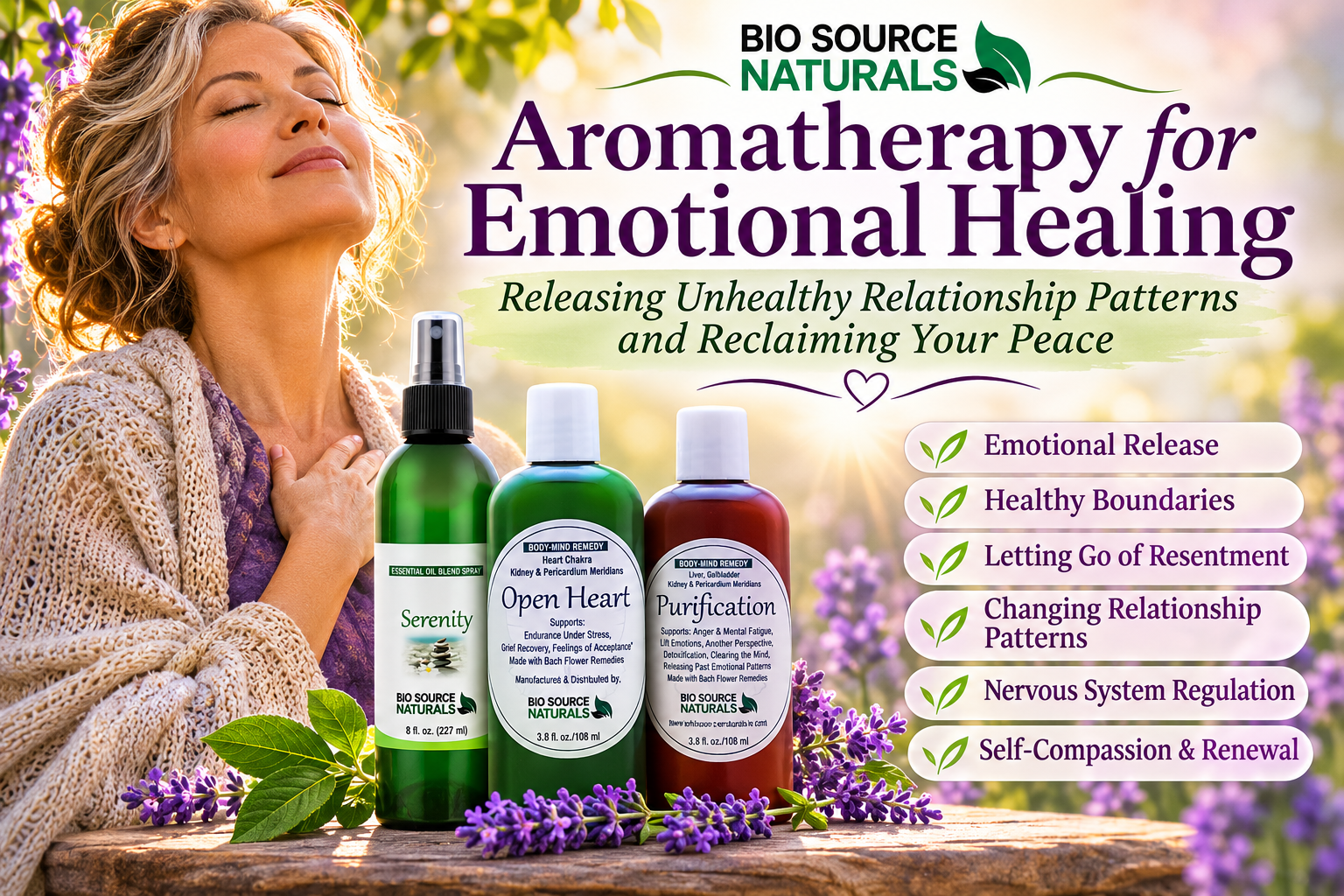
Aromatherapy for Emotional Healing: Releasing Unhealthy Relationship Patterns and Reclaiming Your Peace
Aromatherapy for Emotional Healing: Releasing Unhealthy Relationship Patterns and Reclaiming Your Peace
Click to Enlarge and Read
Aromatherapy for emotional healing can be a meaningful part of releasing unhealthy relationship patterns, processing disappointment, establishing healthy boundaries and reclaiming your emotional energy. Relationships can be genuinely meaningful and still be emotionally unsustainable. Someone can sincerely care about you, appreciate your contributions and want a healthy relationship with you, yet lack the emotional capacity or willingness to consistently maintain one.
Recognizing this can bring both relief and grief. Healing involves more than intellectually understanding what happened. It also involves processing disappointment, releasing resentment, supporting nervous system regulation and developing healthier emotional and behavioral patterns.
How Aromatherapy Supports Emotional Healing and Healthier Relationship Patterns
Aromatherapy, Emotional Freedom Technique (EFT tapping), conscious breathing, journaling and somatic self-care can work together as complementary practices to support emotional healing.
Our sense of smell is closely connected with brain systems involved in emotion and memory. Intentionally incorporating essential oils into emotional self-care practices may help bring feelings into awareness, create a calming environment and establish meaningful sensory associations with healthier emotional and behavioral responses.
At BioSource Naturals, aromatherapy provides the sensory foundation of our Layered Holistic Self-Care approach. Rather than expecting an essential oil to resolve an emotional issue, we combine complementary practices that encourage awareness, reflection, emotional processing and intentional change.
Our Emotional Healing Tree™ framework, introduced in our Emotional Healing Resource Center, organizes this process into five interconnected layers:
- Regulate: Develop grounding, relaxation and greater awareness of nervous system responses.
- Release: Acknowledge and explore difficult emotions, including anger, sadness, grief, guilt and resentment.
- Recognize: Identify recurring relationship patterns, learned beliefs, expectations and emotional triggers.
- Restore: Rebuild self-trust, establish healthy boundaries, practice self-forgiveness and develop healthier responses.
- Reconnect: Cultivate meaningful relationships, joy, purpose and authentic self-expression.
These layers are interconnected rather than strictly sequential. You may revisit them repeatedly as your emotional needs and life circumstances change.
The Four Foundations of Emotionally Healthy Relationships
Healthy, sustainable relationships generally require four important elements:
- Mutual willingness: Both people are willing to contribute to the relationship.
- Mutual capacity: Both have the emotional resources and skills necessary to sustain it.
- Reciprocity: Care, consideration, responsibility and effort flow in both directions.
- Consistency: Words, intentions and actions are reasonably aligned over time.
These principles apply to romantic relationships, friendships, family dynamics, business partnerships and professional relationships.
Someone’s willingness to change does not necessarily mean they have the capacity to sustain that change. Understanding this distinction can help us stop personalizing another person’s limitations.
Sometimes people genuinely recognize our value but lack the emotional maturity, self-awareness, communication skills or ability to consistently manage their own behavior in ways that sustain a healthy relationship.
Recognizing these limitations does not require assigning blame or denying the meaningful aspects of the relationship. It allows us to make decisions based on what the relationship consistently offers rather than what we hope it will eventually become.
For a deeper exploration of these relationship dynamics, read Willingness, Capacity and Reciprocity in Relationships at Holistic Healing & Wellness.
When You Become Emotionally Over-Responsible in Relationships
Many compassionate, conscientious women develop a pattern of compensating for what others are unwilling or unable to provide.
You may find yourself:
- Taking responsibility for other people’s emotions and problems.
- Working harder to compensate for another person’s lack of effort.
- Repeatedly explaining your needs while receiving little lasting change.
- Maintaining relationships through your own exceptional effort.
- Feeling guilty when establishing reasonable boundaries.
- Carrying responsibilities that were never yours alone.
- Prioritizing the potential of a relationship over your own emotional well-being.
These patterns sometimes begin in childhood or are passed down through generations of women who learned that love, loyalty and personal worth were connected to sacrifice, caregiving and emotional responsibility.
Over time, chronic emotional responsibility can contribute to stress, fatigue, muscle tension and difficulty relaxing. You may notice yourself physically bracing, clenching your jaw or carrying tension in your neck and shoulders.
When these patterns become familiar, we may not recognize how much emotional and physical energy we are investing in maintaining relationships.
Your capacity to carry more does not make it your responsibility to carry everything.
Aromatherapy and intentional self-care can become reminders to redirect some of the care and attention you provide to others toward yourself.
Learn more about Establishing Healthy Boundaries Without Guilt.
You may find this free resource helpful.
Why Meaningful Relationships Can Be So Difficult to Release
Not every emotionally unsustainable relationship is entirely negative. Some contain genuine affection, appreciation, shared accomplishments and meaningful experiences.
It may be the positive moments that repeatedly renew your hope that the relationship will eventually become more balanced.
Sometimes you are not grieving only the relationship itself. You are grieving what it repeatedly appeared capable of becoming.
You may also find yourself questioning your own decisions:
- Why did I continue investing so much?
- Why didn’t I recognize the pattern sooner?
- Could I have handled things differently?
- Why wasn’t my effort enough?
- Did I misunderstand how much the relationship meant to the other person?
These questions can become another form of emotional burden when reflection turns into self-blame.
You made decisions based on your values, understanding, circumstances and hopes at the time. Your loyalty, compassion and willingness to work through difficulties are not necessarily qualities you need to change. You may simply need to become more discerning about where and how you invest them.
You do not have to invalidate the good in a relationship to acknowledge the emotional harm it caused. Nor do you have to regret your past decisions to recognize that something needs to change.
Aromatherapy for Emotional Healing and Release
Different emotions may surface throughout the healing process. Anger, sadness, disappointment, guilt, fear and even relief can coexist.
Rather than expecting one aromatherapy blend to address everything, consider a layered approach that supports the different emotional aspects of your experience.
At BioSource Naturals, our intentional aromatherapy blends are designed to accompany emotional self-care practices such as EFT tapping, affirmations, meditation, journaling, conscious breathing and self-massage.
The following aromatherapy blends can be incorporated into a personalized emotional healing ritual according to your individual needs.
Purification Lotion – Releasing Anger and Resentment
Anger can be an important signal that your boundaries, needs or values have been repeatedly overlooked. Rather than judging yourself for feeling angry, consider what your anger may be communicating. It may be pointing toward an imbalance, an unacknowledged hurt or a responsibility you have carried for too long.
Use BioSource Naturals Purification Lotion as part of an intentional self-care ritual for processing anger, resentment, bitterness and accumulated emotional frustration. Combine it with EFT tapping, journaling or quiet reflection as you acknowledge what happened and explore what you no longer wish to carry emotionally.
Healing intention: I allow myself to acknowledge what hurt me without continuing to carry it.
Journaling prompt: What does my resentment tell me about a need, boundary or value that was repeatedly overlooked?
Open Heart – Healing Sadness and Disappointment
Recognizing that someone may never be able to provide what you reasonably hoped for can bring profound sadness. Sometimes emotional healing requires allowing yourself to grieve the difference between what a relationship was and what you believed it could become.
Open Heart aromatherapy can accompany practices focused on grief, emotional disappointment, self-compassion and remaining open to meaningful connections without abandoning yourself. Use your Open Heart aromatherapy product during meditation, journaling, EFT tapping or moments of intentional reflection.
Healing intention: I honor what this relationship meant to me while allowing myself to heal.
Journaling prompt: What am I grieving, the relationship itself, its unrealized potential, or both?
Courage and Clarity – Establishing Healthy Boundaries
Creating boundaries can feel uncomfortable, particularly if you have spent years accommodating others. You may worry that someone will be disappointed, misunderstand your intentions or perceive you as less caring. Healthy boundaries do not necessarily reflect a lack of compassion. They help clarify where your responsibilities end and another person’s responsibilities begin.
Courage and Clarity aromatherapy can accompany intentional practices focused on discernment, confidence, decision-making and honoring your own needs. Consider using it before difficult conversations, during EFT tapping or when reflecting on decisions that require you to prioritize your well-being.
Healing intention: I can care about others without taking responsibility for everything.
Journaling prompt: What would I choose if I were not afraid of disappointing someone?
Clearing Generational Patterns Spray – Changing Inherited Emotional Roles
Consider whether your relationship patterns reflect behaviors modeled by your mother, grandmother or other influential women in your life. Were women expected to maintain family harmony, tolerate emotional imbalance, sacrifice their needs or compensate for the limitations of others? Were they rewarded for loyalty, self-sacrifice and endurance but discouraged from prioritizing their own emotional well-being?
Many of these behaviors were adaptive responses to the social, cultural and economic circumstances of earlier generations. However, we may have opportunities to make different choices today. Use Clearing Generational Patterns Spray during journaling, EFT tapping or meditation to change help learned emotional and behavioral patterns.
Healing intention: I can honor the women who came before me without repeating every pattern they carried.
Journaling prompt: Which beliefs about love, loyalty, responsibility and sacrifice did I inherit, and which of those beliefs no longer serve me?
Neck and Shoulders and Stress Relief Lotions – Releasing Physical Tension
Emotional stress often has a physical component. Persistent responsibility, vigilance and frustration may contribute to muscle tension and difficulty relaxing. If you have spent years monitoring another person’s moods, anticipating conflict or compensating for their limitations, you may notice habitual tension in your neck, shoulders, jaw or other areas of your body.
Incorporate Neck and Shoulders Lotion or Stress Relief Lotion into gentle self-massage, stretching, conscious breathing and other body-centered practices. Use these moments to notice where you are holding tension and give yourself permission to rest without feeling responsible for everything happening around you.
Healing intention: I give myself permission to put down the burdens I no longer need to carry.
Journaling prompt: Where do I notice physical tension when I think about my responsibilities or relationships?
Serenity – Relaxation and Acceptance
Acceptance does not mean approving of what happened. It means gradually releasing the struggle against circumstances you cannot change. You may never receive the acknowledgment, apology, understanding or behavioral change you once hoped for. Your ability to move forward does not have to depend entirely on receiving those things.
Serenity Body Oil can become part of a relaxing evening ritual. Serenity Spray or diffusing Serenity Essential Oil Blend Concentrate according to product directions can help create a calming environment for meditation, breathing, journaling or quiet reflection.
Healing intention: I release the need for the past to have been different and make room for peace in the present.
Journaling prompt: What would acceptance look like if it did not require approval, reconciliation or forgetting what happened?
Using Aromatherapy Blends for Emotional Repatterning
Emotional healing is rarely a linear process. You may need to work with anger in the morning and sadness in the evening. On another day, your focus may be courage, boundaries or relaxation.
Consider selecting two complementary aromatherapy blends each day and alternating their use according to your emotional needs and the product directions.
Suggested Morning and Evening Aromatherapy Combinations
| Emotional focus | Morning aromatherapy | Evening aromatherapy |
|---|---|---|
| Releasing resentment | Purification | Serenity |
| Healing disappointment | Open Heart | Serenity |
| Establishing boundaries | Courage and Clarity | Stress Relief |
| Changing inherited patterns | Clearing Generational Patterns | Open Heart |
| Releasing excessive responsibility | Courage and Clarity | Neck and Shoulders |
| Moving toward acceptance | Open Heart | Serenity |
| Developing self-compassion | Open Heart | Stress Relief |
| Rebuilding confidence and self-trust | Courage and Clarity | Serenity |
Pairing a particular aroma with a healing intention, EFT tapping, breathing or relaxation may gradually create a learned association between that scent and a particular emotional state or self-care practice.
With repetition, the aroma can become a familiar sensory cue to practice self-awareness, relaxation or a healthier behavioral response.
For example, if you consistently use Courage and Clarity aromatherapy while practicing affirmations and reflecting on healthy boundaries, the aroma may eventually become a personal reminder of your intention to respond differently in challenging situations.
Similarly, using Serenity aromatherapy during an evening relaxation ritual may help establish an association between that scent and your intention to slow down, release the day’s responsibilities and prepare for rest.
This approach draws upon the relationship between scent, emotional memory and associative learning.
The essential oil itself is not expected to change a relationship pattern. Rather, the aroma becomes one component of a deliberate practice in which you repeatedly reinforce a healthier response.
Click to Enlarge and Read
Combining Aromatherapy and EFT Tapping for Emotional Healing
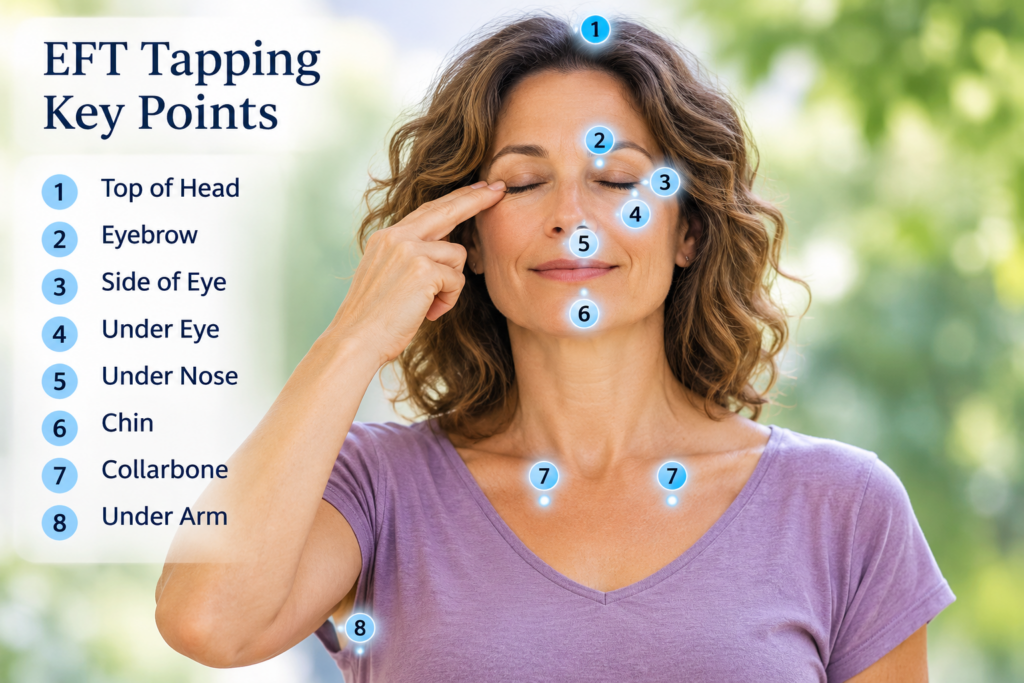
Emotional Freedom Technique (EFT tapping) combines gentle tapping on specific points of the body with focused attention on thoughts, emotions and experiences.
Combining aromatherapy with EFT creates a multisensory self-care ritual involving scent, touch, language, intention and emotional awareness.
Begin by applying your selected aromatherapy product as directed. Take several comfortable breaths and identify the emotion or relationship pattern you wish to address.
Notice what thoughts, memories, feelings or physical sensations arise. You do not need to force a particular emotional response.
EFT Tapping Statements for Emotional Healing and Relationship Patterns
You might use one of these EFT setup statements while tapping on the side of your hand:
- Even though I have spent years compensating for what others could not give, I am learning to honor my own needs.
- Even though I feel angry about how much responsibility I carried, I am open to releasing some of that burden.
- Even though I am disappointed that this relationship did not become what I hoped, I allow myself to acknowledge my sadness.
- Even though I learned that being loving meant being overly responsible, I am open to learning a healthier way.
- Even though establishing boundaries feels uncomfortable, I am learning that my well-being matters too.
- Even though I wish I had recognized these patterns sooner, I am willing to offer myself compassion for the choices I made.
- Even though part of me still hopes things will change, I am learning to make decisions based on what is rather than what could be.
- Even though I have carried resentment for a long time, I am open to creating more space for peace in my life.
Continue tapping through the EFT points while acknowledging the emotions that arise.
You do not need to force forgiveness, positivity or acceptance before you are ready. Emotional healing begins with honestly acknowledging your present experience.
If tapping brings up overwhelming memories or distress, discontinue the exercise and consider working with a qualified mental-health professional.
BioSource Naturals offers complimentary EFT tapping scripts and workbooks that can be used independently or combined with essential oils and other intentional self-care practices.
Explore our Free EFT Tapping Scripts and Workbooks for Use with Essential Oils.
Aromatherapy, Somatic Healing and Nervous System Regulation
Somatic practices bring awareness to the relationship between emotional experiences and physical sensations.
If you have spent years anticipating other people’s reactions, managing conflict or compensating for their limitations, your body may have become accustomed to remaining alert and prepared.
Even after a relationship changes or a stressful situation ends, familiar patterns of muscle tension, shallow breathing or heightened alertness may persist.
Supporting your emotional well-being involves more than changing how you think about a relationship. It can also involve creating opportunities for your body to experience relaxation and rest.
Support your nervous system through gentle, consistent practices such as:
- Slow, comfortable breathing with a slightly longer exhalation.
- Gentle neck and shoulder stretching.
- Aromatherapy self-massage.
- Mindful walking or gentle yoga.
- Relaxing your jaw, shoulders and abdomen.
- Grounding through awareness of your feet and physical surroundings.
- Noticing physical sensations without immediately trying to change them.
- Listening to calming music while using your preferred aromatherapy blend.
- Practicing meditation without feeling obligated to solve a problem.
Even five to ten minutes of intentional daily practice can help establish a healthier self-care routine.
The goal is not simply to think differently about relationships. It is also to practice experiencing rest, comfort and relaxation without feeling responsible for managing everything around you.
For additional guidance on combining aromatherapy, emotional awareness and body-centered practices, explore our Emotional Healing Resource Center.
Emotional Alchemy: Transforming Difficult Experiences Into Wisdom
Emotional healing does not require erasing the past or pretending that difficult experiences did not affect us.
Instead, we can gradually transform our relationship with those experiences, allowing them to contribute to greater awareness, discernment, self-compassion and personal growth.
At BioSource Naturals, we describe this process as Emotional Alchemy.
A disappointing relationship may teach us about reciprocity. Resentment may reveal where we need healthier boundaries. Grief may help us recognize what we genuinely value. Anger may illuminate circumstances in which we have repeatedly overlooked our own needs.
These emotions do not have to define our future. They may become sources of information that help us make more conscious choices.
Self-forgiveness is particularly important in this process.
You do not have to criticize the person you were in order to become the person you are evolving into.
Forgiveness toward others may also become meaningful, but it is a personal choice. Forgiveness does not require reconciliation, approval of someone else’s behavior or the abandonment of healthy boundaries.
Emotional freedom may develop as past experiences become less influential over your present choices, emotional energy and sense of personal possibility.
Learn more about our broader philosophy in From Emotional Healing to Conscious Manifestation.
Healing Over-Responsibility and Developing Healthy Reciprocity
Healing does not require becoming less compassionate, generous or loving. It involves becoming more discerning about where and how you invest those qualities.
You can understand someone’s limitations without volunteering to live within them.
You can appreciate what a relationship gave you without denying what it cost you.
You can care deeply about another person while recognizing that you cannot provide both sides of a relationship that requires reciprocity.
You can acknowledge someone’s good intentions without continuing to compensate for their inability to consistently act upon them.
And you can honor your past choices while choosing a different future.
Healthy relationships do not necessarily require perfectly equal contributions at every moment. People experience illness, grief, personal challenges and periods when they need additional support.
However, there is a meaningful difference between temporarily supporting someone through a difficult period and repeatedly compensating for an enduring imbalance that leaves you emotionally depleted.
Learning to recognize that distinction can help you remain compassionate without sacrificing your own well-being.
Your loyalty to others should never require abandoning your loyalty to yourself.
Create Your Own Aromatherapy and Emotional Healing Ritual
At BioSource Naturals, we believe emotional well-being can be supported through multiple complementary self-care practices. Our Layered Holistic Self-Care approach places aromatherapy at the foundation of an individualized wellness ritual. You do not need to use every technique or address every emotion at once. Begin with what feels most relevant to your present circumstances.
A Simple 10–15 Minute Emotional Healing Ritual
- Select your aromatherapy blend. Choose an aroma that corresponds with your emotional focus for the day. Use the product according to its directions.
- Regulate. Spend a few moments breathing comfortably, relaxing your shoulders and becoming aware of your physical surroundings.
- Release. Acknowledge the emotion that is present. You do not need to judge it, explain it away or immediately change it.
- Recognize. Use EFT tapping or journaling to explore the relationship pattern, expectation or belief associated with the emotion.
- Restore. Identify a healthier perspective, boundary or behavioral response that you would like to develop.
- Reconnect. Close your practice with a healing intention, affirmation or small action that supports your personal well-being.
By combining intentional aromatherapy with EFT tapping, conscious breathing, journaling and somatic awareness, you can create a personalized ritual that supports emotional awareness, relaxation and the development of healthier relationship patterns.
Over time, these practices may help you redirect emotional energy toward relationships, interests and experiences that are more consistent with your values and well-being.
Layered Holistic Self-Care is the method. The Emotional Healing Tree™ provides the framework. Emotional Alchemy is the transformation. Emotional freedom and vitality are the desired outcomes.
Explore our BioSource Naturals aromatherapy products and begin creating your own layered emotional self-care practice.
For personalized guidance incorporating aromatherapy, EFT tapping, mind-body holistic wellness practices, emotional self-care and life path guidance, visit Holistic Healing & Wellness.
Frequently Asked Questions About Aromatherapy for Emotional Healing
Can aromatherapy help with emotional healing?
Aromatherapy may support relaxation, emotional awareness and stress management as part of a broader self-care practice. Because scent is connected to emotional memory and learned associations, essential oils can serve as sensory anchors during EFT tapping, meditation, journaling and other intentional practices.
Essential oils alone have not been established as treatments for psychological trauma or unhealthy relationship patterns.
Which aromatherapy blends are best for emotional release?
The most appropriate aromatherapy blend depends on your individual preferences, emotional experiences and intentions.
Purification may accompany rituals focused on anger and resentment, Open Heart may accompany practices focused on grief, disappointment, and self-compassion, Courage and Clarity may be used while developing healthier boundaries, and Serenity may complement relaxation and acceptance rituals.
These are intentional wellness applications rather than scientifically established emotion-specific treatments.
Can I combine aromatherapy with EFT tapping?
Yes. Combining aromatherapy with EFT tapping creates a multisensory self-care experience involving scent, touch, language and focused attention. A preferred aroma may help you become more aware of your present emotional experience and serve as a familiar sensory anchor during your tapping practice.
Can aromatherapy help me change unhealthy relationship patterns?
Aromatherapy can be incorporated into a broader practice of emotional awareness, reflection, relaxation and behavioral change. Meaningful relationship changes generally require recognizing patterns, establishing boundaries, developing healthier responses and making practical decisions. Aromatherapy can accompany these efforts rather than replace them.
Can aromatherapy help release generational emotional patterns?
Aromatherapy can serve as a symbolic and sensory component of practices focused on recognizing and changing learned family patterns.
Journaling, EFT tapping, reflection, supportive counseling and intentional behavioral changes may help individuals explore beliefs about caregiving, loyalty, responsibility and self-worth that have been modeled across generations.
How often should I use aromatherapy for emotional healing?
Aromatherapy can be incorporated into a daily self-care routine according to your preferences and the individual product’s safety instructions. Some people prefer a morning grounding ritual and an evening relaxation ritual. Others use aromatherapy during EFT tapping, journaling, meditation or periods of intentional reflection.
Consistency may be more meaningful than trying to incorporate numerous products or techniques at once.
Do I have to forgive someone to achieve emotional healing?
No. Emotional healing may involve acceptance, grief, self-forgiveness, changed expectations, healthy boundaries or choosing not to continue a relationship. Forgiveness is personal and voluntary. It does not require reconciliation, excusing harmful behavior or continuing an emotionally unsustainable relationship.
Related Articles: Aromatherapy, Emotional Healing and Layered Holistic Self-Care
Emotional healing is rarely accomplished through a single practice. Explore our educational resources to learn how aromatherapy, EFT tapping, emotional awareness, nervous system regulation and other complementary self-care practices can work together to support emotional well-being, healthier relationships and personal growth.
BioSource Naturals Cornerstone Articles and Resources
- Emotional Healing Resource Center – Aromatherapy and EFT — Explore our comprehensive collection of emotional wellness resources, including the Emotional Healing Tree™ framework, emotional release, healthy boundaries, self-forgiveness and personal transformation.
- Layered Holistic Self-Care – Aromatherapy and a Personalized Wellness Practice — Discover how essential oils, EFT tapping, journaling, meditation, flower essences, somatic awareness and other complementary practices can become layers of a personalized wellness routine.
- From Emotional Healing to Conscious Manifestation — Explore the relationship between emotional healing, Emotional Alchemy, emotional freedom, physical vitality, energetic alignment and intentional living.
- Free EFT Tapping Scripts and Workbooks for Use with Essential Oils — Download complimentary resources to incorporate EFT tapping, aromatherapy, affirmations and reflection into your personal emotional wellness practice.
Additional Relationship Healing and Holistic Wellness Articles
Explore these related articles from Holistic Healing & Wellness for a deeper understanding of relationship dynamics, emotional responsibilities and personalized holistic self-care.
- Willingness, Capacity and Reciprocity in Relationships — Understand why meaningful relationships sometimes never reach their potential and how to move forward without regret, resentment or self-blame.
- Healthy Boundaries Without Guilt — Learn how to establish healthier emotional boundaries while remaining compassionate, caring and connected to your personal values.
- Your Relationship With Your Adult Child — Explore the emotional complexities of relationships with adult children and the importance of self-care, acceptance and healthy boundaries.
Scientific References: Aromatherapy and Emotional Well-Being
Research exploring olfactory stimulation, emotional memory, mood and stress suggests that aromatherapy may be a useful complementary self-care practice. Intentionally pairing aromas with relaxation exercises, emotional awareness and healthier behavioral responses also draws upon principles of associative learning and sensory memory.
- Herz, R. S. (2009). Aromatherapy facts and fictions: A scientific analysis of olfactory effects on mood, physiology and behavior. International Journal of Neuroscience, 119(2), 263–290. Read scientific research.
- Tan, L., Liao, F. F., Long, L. Z., et al. (2023). Essential oils for treating anxiety: A systematic review of randomized controlled trials and network meta-analysis. Frontiers in Public Health, 11, 1144404. Read scientific research.
- Hedigan, F., Sheridan, H., & Sasse, A. (2023). Benefit of inhalation aromatherapy as a complementary treatment for stress and anxiety in a clinical setting: A systematic review. Complementary Therapies in Clinical Practice, 52, 101750. Read scientific research.
- Gong, M., Dong, H., Tang, Y., Huang, W., & Lu, F. (2020). Effects of aromatherapy on anxiety: A meta-analysis of randomized controlled trials. Journal of Affective Disorders, 274, 1028–1040. Read scientific research.
- Lee, M. S., et al. (2014). Aromatherapy for stress reduction in healthy adults: A systematic review and meta-analysis of randomized clinical trials. Read scientific research.
Although research suggests potential benefits of aromatherapy for mood, stress, anxiety and relaxation, the quality and consistency of the evidence vary. Further research is needed to establish its role in emotional processing and long-term behavioral change.
The specific BioSource Naturals blends, healing intentions and layered practices described in this article reflect our educational wellness philosophy and formulation approach rather than independently validated clinical treatment protocols.
About the Author
Lezlie Cebulski, N.D., Aromatherapist, EFT-ADV, Reiki Master Teacher

🔍 Click Image to Enlarge and Read
Lezlie Cebulski is a Traditional Naturopath, founder and formulator of BioSource Naturals, and the holistic wellness practitioner behind Holistic Healing & Wellness. She brings more than 35 years of experience in health and wellness, more than 15 years in private holistic wellness practice, a Doctorate in Naturopathy, a bachelor’s degree in Human Development and Psychology, and an extensive professional background in specialty chemistry and product formulation.
Her work explores the interconnected relationships between physical health, emotional well-being, nervous system regulation, sensory experience and personal growth.
She developed the Layered Holistic Self-Care approach and Emotional Healing Tree™ educational framework to help individuals create personalized wellness practices incorporating aromatherapy, Emotional Freedom Technique (EFT tapping), flower essences, conscious breathing, meditation, journaling, somatic awareness, affirmations and other complementary approaches. Her philosophy emphasizes Emotional Alchemy, the possibility of transforming difficult emotional experiences into greater awareness, wisdom, self-compassion, discernment and personal empowerment. She is particularly passionate about helping individuals recognize patterns of emotional over-responsibility, establish healthy boundaries, reconnect with their own needs and develop sustainable self-care practices that support body, mind and spirit.
Personalized holistic wellness consultations are available in New Boston, Michigan, serving Downriver and Southeast Michigan, with virtual consultations available for selected services.
Important Wellness Disclaimer
The information provided in this article is intended for educational and general wellness purposes only. It is not intended to diagnose, treat, cure or prevent any disease or mental-health condition. Aromatherapy, EFT tapping, somatic practices, flower essences, meditation and other complementary wellness approaches are not substitutes for appropriate medical or mental-health care.
Individuals experiencing trauma-related symptoms, severe emotional distress, persistent depression or anxiety, or other significant health concerns should seek guidance from qualified healthcare professionals.
Essential oils and aromatherapy products should always be used according to appropriate safety guidelines, dilution recommendations and individual product instructions.
Statements regarding BioSource Naturals products have not been evaluated by the Food and Drug Administration.
BioSource Naturals — Pure Aromatherapy for Body, Mind & Spirit.