
Pure Aromatherapy for Body, Mind & Spirit
DIY Solid Deodorant with Essential Oils
DIY Solid Deodorant with Essential Oils
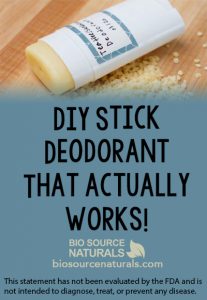
DIY solid deodorant with essential oils is a simple, customizable alternative to conventional scented deodorants. This water-free recipe combines arrowroot powder, jojoba oil, shea butter or coconut oil, beeswax and aromatic essential oils in an easy-to-use deodorant stick.
It is important to understand that deodorant and antiperspirant serve different purposes. Deodorant helps manage odor but does not prevent normal perspiration. Antiperspirants use active ingredients such as aluminum salts to temporarily reduce perspiration. Sweating is therefore normal when transitioning from an antiperspirant to this homemade deodorant.
This recipe includes tea tree essential oil and Bandits Essential Oil Blend to provide a fresh, cleansing aroma. Because underarm odor develops when naturally occurring skin bacteria break down components of perspiration, regular washing and a clean deodorant application can help keep the area feeling fresh.
Arrowroot powder absorbs some surface moisture, while beeswax gives the deodorant its solid structure. Baking soda can provide additional odor control, but it may cause redness or irritation in sensitive skin. Leave it out if your underarms are easily irritated.
Recipe below. Grab our 10 DIY Natural Beauty Recipes Using Essential Oils Free Download!
DIY Solid Deodorant Recipe
Ingredients
- 2¼ teaspoons shea butter or coconut oil
- 1 tablespoon grated beeswax or beeswax pastilles
- 2½ tablespoons jojoba oil
- 1 tablespoon arrowroot powder
- 1 teaspoon baking soda, optional
- 2 drops tea tree essential oil
- 2 drops Bandits Essential Oil Blend
- One clean, empty deodorant container
Directions
- Create a double boiler by placing a heat-safe glass or stainless-steel bowl over a saucepan containing gently simmering water.
- Add the beeswax and jojoba oil to the bowl. If using coconut oil, add it at this stage. Heat gently, stirring occasionally, until completely melted.
- Remove the bowl from the heat. If using shea butter, add it now and stir until melted. Avoid overheating shea butter, as excessive heat can sometimes create a grainy texture as it cools.
- Whisk in the arrowroot powder and optional baking soda until the mixture is smooth and free of lumps.
- Allow the mixture to cool slightly while remaining liquid. Stir in the tea tree essential oil and Bandits Essential Oil Blend.
- Carefully pour the mixture into a clean deodorant container. Leave the cap off until the deodorant has cooled and hardened completely.
- Label the container with the ingredients and preparation date.
How to Use Homemade Solid Deodorant
Apply a light layer to clean, dry underarms. The warmth of your skin will soften the deodorant as you glide it over the area.
More product is not necessarily better. Start with one or two light passes and adjust according to your preference. Allow the deodorant to absorb for a moment before dressing to reduce the possibility of transferring oils onto clothing.
Because this is a deodorant rather than an antiperspirant, it will not stop you from sweating. Arrowroot may help absorb a modest amount of surface moisture, but its primary purpose is to improve the feel and performance of the formula.
Adjusting the Texture
The consistency of homemade deodorant may change with room temperature:
- If the deodorant is too soft, remelt it and add a small amount of beeswax.
- If it is too firm or drags across the skin, remelt it and add a little more jojoba oil.
- If the formula feels gritty, the baking soda or arrowroot may not have been dispersed completely.
- If shea butter becomes grainy, remelt the mixture gently and cool it more quickly.
Coconut oil softens considerably in warm conditions, so a shea-butter version may maintain its structure better during hot weather.
Baking Soda and Sensitive Skin
Baking soda has an alkaline pH and can cause itching, redness or a rash in some people. Sensitivity may develop immediately or after repeated use.
If you have sensitive skin, make the recipe without baking soda. You may also reduce the essential oils or prepare an unscented version containing only the base ingredients.
Discontinue use if you experience burning, persistent itching, swelling or a rash.
Essential-Oil and Underarm Safety
The underarms can be particularly sensitive because of friction, perspiration and shaving. Follow these precautions:
- Perform a patch test before regular use.
- Do not apply the deodorant immediately after shaving.
- Do not use it on broken, inflamed or freshly irritated skin.
- Keep the deodorant away from the eyes and mucous membranes.
- Discontinue use if irritation develops.
- Consult an appropriate healthcare professional before using essential oils during pregnancy or breastfeeding.
- Keep the finished deodorant and all essential oils away from children and pets.
Bandits Essential Oil Blend contains strongly aromatic oils, so do not increase the number of drops without checking the skin-safe dilution of every oil in the blend.
Storage and Shelf Life
Store the deodorant tightly covered in a cool, dry location away from direct sunlight and excessive heat. Since this formula does not contain water, it does not require the same type of broad-spectrum preservative used in water-based cosmetics. Clean preparation and storage practices are still important.
Use clean, dry equipment when preparing the recipe. Discard the deodorant if its aroma, color or texture changes noticeably or if you see any signs of contamination. For best quality, make a fresh batch within approximately four months.
Frequently Asked Questions
Does this DIY deodorant stop perspiration?
No. This is a deodorant, not an antiperspirant. It is intended to help manage odor and absorb a limited amount of surface moisture without stopping the body’s natural perspiration process.
Can I make it without baking soda?
Yes. Baking soda is optional and is often best omitted for sensitive underarms. The texture may be slightly softer, but the other ingredients will still create a usable solid deodorant.
Can I substitute cornstarch for arrowroot powder?
Cornstarch may be used, although its texture and absorbency can feel somewhat different. Choose a finely milled cosmetic or food-grade product and discontinue use if it causes irritation.
Can I use different essential oils?
Yes, but select oils appropriate for leave-on skin products and calculate a conservative dilution for the underarm area. Avoid highly irritating oils and remember that citrus oils may require additional attention to phototoxicity.
Why did my deodorant become soft?
Coconut oil and other plant butters soften when the room is warm. Store the deodorant in a cooler location or add a little more beeswax when making your next batch.
Can homemade deodorant cause a rash?
Yes. Baking soda, essential oils, friction, shaving and individual sensitivities can all contribute to irritation. Stop using the product if a rash develops rather than attempting to “push through” an adjustment period.
Complete your personal-care routine with one of our natural perfume fragrances made with essential oils.
Explore More DIY Natural Body Care Recipes
This article is part of our complete DIY Natural Body Care Recipes with Essential Oils guide, featuring natural skin-care, hair-care, bath, beauty and personal-care recipes.
Source
Adapted from Goodall, Claire, Everyday Roots, everydayroots.com.
*These statements have not been evaluated by the Food and Drug Administration. This content is not intended to diagnose, treat, cure or prevent any disease.
Written by BioSource Naturals Editorial Team
Reviewed by Lezlie Cebulski, Traditional Naturopath, Aromatherapist, Formulator & Founder
About the Reviewer

 Click Image to Enlarge and Read