
Pure Aromatherapy for Body, Mind & Spirit
DIY Soothing Bug Bite Roll-On
DIY Soothing Bug Bite Roll-On
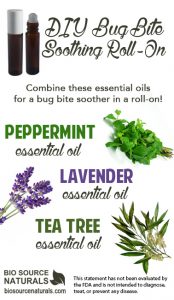
Bug bites are an uncomfortable part of summer. Mosquito, flea and mite bites commonly cause temporary itching, redness or localized swelling. A DIY soothing bug-bite roll-on can provide a cooling, aromatic skin-care option for occasional, uncomplicated bites.
You may not always be able to identify what caused a bite or sting. More important than identifying the insect is watching how your body responds. Bee, wasp, hornet and fire-ant stings can cause significant pain, swelling or—in susceptible individuals—a potentially life-threatening allergic reaction.
This homemade roll-on is intended only for temporary comfort on intact skin. It does not treat an allergic reaction, prevent infection or replace appropriate medical care.
Essential Oils in This Bug-Bite Roll-On
Peppermint Essential Oil
Peppermint essential oil contains menthol and creates a cooling sensation when properly diluted. Because peppermint can feel intense and may irritate sensitive skin, only a small amount is used.
Lavender Essential Oil
Lavender adds a soft floral aroma and is commonly included in gentle, soothing skin-care blends. It also helps balance peppermint’s sharper scent.
Tea Tree Essential Oil
Tea tree essential oil provides a fresh, cleansing aroma. It must be properly diluted and should not be applied to open, scratched or weeping skin.
The recipe is below. Grab our free downloads about natural outdoor aromas and using essential oils in the garden.
DIY Soothing Bug-Bite Roll-On Recipe
Ingredients
- One clean amber glass roll-on bottle
- 5 drops peppermint essential oil
- 3 drops lavender essential oil
- 1 drop tea tree essential oil
- 1 tablespoon sweet almond oil or another suitable carrier oil
This amount of carrier oil produces an essential-oil dilution of approximately 1%. The mixture will not fill a bottle larger than approximately 15 ml. Use an appropriately sized container or increase the carrier oil proportionally without increasing the essential-oil concentration.
People with almond or tree-nut allergies should select a different carrier oil, such as jojoba or fractionated coconut oil.
Directions
- Add the peppermint, lavender and tea tree essential oils to a clean, completely dry roller bottle.
- Add one tablespoon of carrier oil.
- Insert the roller mechanism and attach the cap securely.
- Shake gently to combine.
- Label the bottle with the ingredients and preparation date.
How to Use the Roll-On
First wash the bite gently with soap and water. If the skin remains intact, apply a small amount of the diluted blend around the affected area.
Do not roll the applicator repeatedly over scratched or damaged skin. Avoid the face and areas near the eyes, nostrils and mouth. Wash your hands after applying the blend.
A cool compress may also help provide temporary relief. Try to avoid scratching because damaged skin is more susceptible to infection.
Stop using the roll-on if it increases burning, redness, swelling or irritation.
When Not to Use This Recipe
Do not apply the roll-on to:
- Open, bleeding, blistered or weeping skin
- A bite that appears infected
- An embedded tick
- A retained insect stinger
- A bite or sting near the eye or inside the mouth
- Rapidly expanding redness or swelling
- Skin that is already sensitive to essential oils
Remove an attached tick promptly with fine-tipped tweezers according to current public-health guidance. Do not apply essential oils, petroleum jelly or heat to an attached tick to try to make it release.
If a stinger remains visible after a bee sting, remove it promptly without delaying care for concerning symptoms.
Recognizing a Serious Allergic Reaction
Call 911 immediately if a bite or sting is followed by:
- Difficulty breathing, wheezing or chest tightness
- Swelling of the tongue or throat
- Difficulty swallowing or a suddenly hoarse voice
- Dizziness, fainting or confusion
- Widespread hives
- Vomiting, diarrhea or abdominal cramping with other symptoms
- Rapidly worsening swelling of the face or body
Use prescribed epinephrine immediately if the affected person has it, and then seek emergency medical care. A DIY roll-on cannot stop anaphylaxis.
When to Contact a Healthcare Professional
Seek medical advice if:
- Pain, redness or swelling continues to worsen
- Redness spreads significantly beyond the bite
- The area becomes hot, increasingly tender or begins draining
- Fever or other signs of illness develop
- A large blister or unusual skin lesion appears
- Symptoms develop after a tick bite
- The bite is not improving as expected
- You are uncertain whether the area can safely be managed at home
Safety for Children
This recipe is not intended for babies or young children. Peppermint essential oil can be too intense for use near a young child’s face or airways.
For an older child, consult a pediatrician or qualified aromatherapy professional about age-appropriate oils and dilution. Keep all essential-oil bottles and completed roll-ons where children cannot reach them.
Storage and Shelf Life
Store the roll-on tightly closed in a cool, dark place. Since the recipe contains no water, it does not require the same preservative system used in water-based cosmetics. Clean preparation and handling are still important.
Do not share the roller bottle because rolling it directly over skin can transfer debris or microorganisms to the applicator. Discard the product if its aroma, color or consistency changes.
For best quality, prepare a small batch and use it within approximately six months.
Frequently Asked Questions
Will this roll-on make a bug bite heal faster?
The blend may provide temporary cooling and aromatic comfort, but it has not been established as a treatment that accelerates healing. Most minor bites improve with time and basic skin care.
Can I apply it to a scratched mosquito bite?
No. Essential oils should not be applied to broken, bleeding or weeping skin. Gently wash the area and watch for signs of infection.
Can this roll-on treat a bee or wasp sting?
It may provide temporary comfort around a minor localized reaction, but it cannot treat venom allergy or anaphylaxis. Seek emergency care for breathing difficulty, throat or tongue swelling, widespread hives, dizziness or other systemic symptoms.
Can I add more peppermint for stronger cooling?
No. A stronger concentration may increase burning and irritation, especially on already-sensitive skin.
Is this recipe an insect repellent?
No. It is an after-bite comfort blend, not a repellent. Use an EPA-registered insect repellent according to its label when protection against mosquitoes or ticks is needed.
Explore our collection of convenient essential-oil roll-ons for additional aromatic personal-care options.
Explore More DIY Natural Body Care Recipes
This article is part of our complete DIY Natural Body Care Recipes with Essential Oils guide, featuring natural skin-care, hair-care, bath, beauty and personal-care recipes.
*These statements have not been evaluated by the Food and Drug Administration. This content is intended for general educational purposes and is not intended to diagnose, treat, cure or prevent any disease.
Written by BioSource Naturals Editorial Team
Reviewed by Lezlie Cebulski, Traditional Naturopath, Aromatherapist, Formulator & Founder
About the Reviewer

 Click Image to Enlarge and Read
Instant relief!
My daughter swears this is the best stuff ever made. She’s my biggest fan of concoctions we make at home. Thanks for the recipe!!
Hi! I am wondering what 1 tbs means for the carrier oil. I thought maybe it’s tablespoons but that over fills the 10ml roller bottle without the essential oils added
yes for the carrier oil