
Pure Aromatherapy for Body, Mind & Spirit
When Belonging Feels Exhausting: The Nervous System Cost of Being the One Who Holds Everything Together
When Belonging Feels Exhausting: The Nervous System Cost of Being the One Who Holds Everything Together
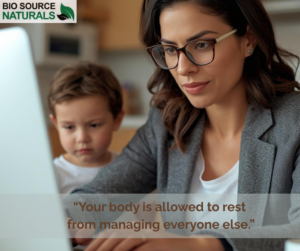 Emotional exhaustion related to chronic responsibility is often rooted in patterns within the nervous system. This article explores how early relational experiences can shape long-term physiological responses such as hypervigilance, over functioning, and difficulty resting. It also introduces supportive approaches, including aromatherapy, EFT (Emotional Freedom Techniques), and somatic practices that may help individuals reconnect with a sense of internal safety and restore balance over time.
This content is intended for educational purposes and offers a body-based perspective on emotional resilience, regulation, and healing.
Some people don’t experience belonging as rest.
For many people, emotional exhaustion doesn’t come from doing too much; it comes from carrying too much responsibility for too long.
They experience it as vigilance.
They learned early that staying connected meant staying alert, watching moods, anticipating needs, being useful, emotionally responsible, and quietly available. Not because they wanted control or attention, but because it felt safer than being rejected, ignored, or destabilized.
Over time, this pattern becomes invisible, not only to others, but to the person living inside it.
This blog explores:
- How this pattern forms
- Why it follows people into family, marriage, work, and community life
- How the body eventually says “no”
- And how healing happens without requiring emotional withdrawal or abandonment of care
This is not about blame.
It’s about biology, adaptation, and repair.
Part 1: When Belonging Became Conditional
For many people, belonging was never unconditional.
It was subtly linked to:
- Being emotionally easy
- Being helpful
- Being competent
- Being “the strong one”
- Not needing too much
Children don’t consciously decide this.
Their nervous systems learn it.
If love, safety, or attention felt inconsistent, or if adults were overwhelmed, unpredictable, emotionally fragile, or unavailable, the child’s body adapted by becoming vigilant.
They learned:
- Who needs soothing
- What topics create tension
- How to keep things calm
- When to stay quiet
- When to step in
This isn’t emotional maturity.
It’s early nervous system responsibility.
The child becomes skilled at relational regulation before they are skilled at self-regulation.
This pattern often gets praised:
“You’re so mature.”
“You’re so responsible.”
“You’re the easy one.”
But what’s missing is protection.
Part 2: The Nervous System Pattern That Forms
When belonging is paired with responsibility, the nervous system learns a rule:
Connection requires vigilance.
That creates a chronic low-grade stress response.
Not panic.
Not anxiety attacks.
Just constant readiness.
Signs include:
- Difficulty fully relaxing, even in safe environments
- Feeling responsible for other people’s emotions
- Guilt when resting or choosing yourself
- Hyper-attunement to tone, mood, and shifts in energy
- Feeling “on” all the time
- Trouble receiving care without discomfort
This is not personality.
It’s adaptive physiology.
And because it works – for a long time; it gets reinforced across life stages.
Over time, this constant state of readiness can quietly lead to emotional exhaustion, even when everything appears “manageable” on the surface.
Part 3: How the Pattern Follows You Into Adult Roles
In Family Systems
You become:
- The emotional translator
- The peacemaker
- The organizer
- The stabilizer
You often feel like things would fall apart without you.
In Marriage or Long-Term Partnership
You may unconsciously take on:
- Emotional management
- Anticipating needs
- Carrying relational tone
- Smoothing conflict before it erupts
You may feel lonely even while partnered—because you’re rarely met, only leaned on.
In Work, Volunteer, or Community Life
You become:
- The dependable one
- The uncomplaining one
- The one who “can handle it”
- The one who fills gaps others avoid
And because you’re capable, systems quietly depend on your overfunctioning.
Over time, these roles can quietly build into emotional exhaustion, especially when support is never fully received in return.
Part 4: Emotional Exhaustion and the Body’s Breaking Point
The nervous system can substitute belonging with function only for so long.
Eventually, the body starts sending messages:
- Chronic fatigue
- Inflammation
- Pain syndromes
- Autoimmune flares
- Digestive issues
- Brain fog
- Emotional numbness
- Sudden intolerance for what was once “fine”
Burnout is not failure.
It’s biological truth.
The body is saying:
I can’t keep paying this cost.
This is often the moment people feel shame.
Why can’t I do what I used to do?
Why am I falling apart now?
Because your nervous system is no longer willing to trade survival for connection.
This is often where emotional exhaustion becomes impossible to ignore, as the body begins to override long-standing patterns of overfunctioning.
Part 5: Why “Just Set Boundaries” Isn’t Enough
For people with this pattern, boundaries aren’t just behavioral.
They’re neurological.
Setting a boundary can trigger:
- Guilt
- Fear of abandonment
- Somatic anxiety
- A sense of danger or wrongness
Because historically, disconnection was dangerous.
This is why top-down advice fails.
The body needs to feel safe first.
Part 6: Healing Through the Body (Not Against It)
Aromatherapy Support for Nervous System Regulation
Aromatherapy works through the limbic system, the emotional processing center of the brain, where many of these patterns are stored and reinforced.
Certain essential oils are traditionally used to support emotional balance and nervous system regulation:
- Rose Geranium – May support emotional balance and help soften patterns of over-responsibility
- Frankincense – May support grounding, inner awareness, and a sense of stability
- Lavender – Commonly used to promote relaxation and signal safety to the body
- Sweet Orange or Bergamot – May support a lighter emotional state and gentle uplift
- Cedarwood – Often associated with grounding and internal steadiness
Use may include gentle inhalation, personal inhalers, or properly diluted topical application.
Optional Supportive Blends
You may also explore ready-to-use formulations designed to support different aspects of nervous system balance:
- Peace Essential Oil Blend – May support relaxation and help the body access calmer states more consistently
- Protection Essential Oil Blend – May support emotional boundaries and reduce feelings of overstimulation
- Body-Mind Lotions and Massage Oils – Combine aromatherapy with touch to support both physical and emotional relaxation
Aromatherapy is often used as part of broader nervous system regulation practices, supporting emotional balance through consistent sensory input.
These statements have not been evaluated by the Food and Drug Administration. This content is not intended to diagnose, treat, cure, or prevent any disease.
EFT (Tapping) Phrases
These phrases are not affirmations.
They are acknowledgements, which the nervous system trusts.
You don’t need to believe them.
Just say them while tapping.
Sample phrases:
- “Even though I learned that staying connected meant staying alert, my body is allowed to rest now.”
- “I carried responsibility that was never meant to be mine.”
- “My nervous system learned this to keep me safe.”
- “I don’t have to earn belonging through exhaustion anymore.”
- “It’s safe to let others manage their own emotions.”
- “I can care without abandoning myself.”
Somatic Healing Exercises
1. Orientation Practice (2 minutes)
Slowly look around the room.
Name:
- 5 things you can see
- 3 things you can hear
- 1 thing you can feel in your body
This tells the nervous system: I am here, and I am safe now.
2. Weight Shift Grounding
Stand or sit.
Slowly shift weight from one foot (or hip) to the other.
Notice the support underneath you.
This helps the body release readiness and settle into support.
3. Hand-on-Heart / Hand-on-Belly Breathing
One hand on heart, one on belly.
Slow inhale through the nose.
Long exhale through the mouth.
This restores internal regulation rather than external scanning.
Part 7: Rewriting the Contract of Belonging
Healing doesn’t mean becoming detached, cold, or uncaring.
It means updating the rule:
Belonging does not require self-erasure.
You may lose relationships that depended on your overfunctioning.
That grief is real.
But what emerges is something truer:
- Cleaner boundaries
- Quieter authority
- Deeper rest
- Mutual connection
- Embodied presence
You are not here to hold everything together.
You are here to belong—without disappearing.
Frequently Asked Questions About Emotional Exhaustion and Nervous System Patterns
Q: Why does belonging feel exhausting for some people?
A. For some individuals, belonging becomes associated with responsibility and vigilance, which can create ongoing nervous system activation rather than rest.
Q: Is this pattern emotional or physical?
Al It is both. These patterns are rooted in nervous system responses, meaning they are physiological as well as emotional.
Q: Can aromatherapy support emotional regulation?
A. Certain essential oils may support relaxation, grounding, and emotional balance when used as part of a broader self-regulation practice.*
Q: Why do boundaries feel uncomfortable?
If connection was historically tied to safety, setting boundaries can feel like a threat to belonging, triggering a nervous system response.
Q: Can these patterns change over time?
With consistent, body-based support and awareness, the nervous system may gradually learn new patterns of safety and regulation.
Useful Resources
- Books on nervous system regulation (polyvagal-informed work)
- Trauma-informed somatic practices
- EFT (Emotional Freedom Techniques)
- Gentle body-based therapies
- Supportive aromatherapy
(These can be linked or expanded later depending on how you want to present them.)
Supporting Your Nervous System Gently
Healing from emotional exhaustion is not about doing less—it’s about no longer carrying what was never yours to hold.
If you’re exploring ways to support your nervous system, tools such as aromatherapy, EFT tapping, and somatic practices can be integrated gradually and at your own pace.
For those interested, BioSource Naturals offers essential oil blends and body-based products designed to complement these practices and support emotional balance.
Some individuals may also recognize aspects of the freeze response in this pattern, where the nervous system shifts into shutdown as a way to maintain safety.
These statements have not been evaluated by the Food and Drug Administration. This content is not intended to diagnose, treat, cure, or prevent any disease.
About the Author

🔍 Click Image to Enlarge and Read