
Pure Aromatherapy for Body, Mind & Spirit
7 Essential Oils for Better Sleep – A Natural Bedtime Routine for Mind and Body
7 Essential Oils for Better Sleep – A Natural Bedtime Routine for Mind and Body
By Lezlie Cebulski is a Traditional Naturopath and the founder of BioSource Naturals. Her work blends science, spirit, and emotional healing through essential oils, EFT, and vibrational formulas.
Essential Oils for Better Sleep
Many people turn to essential oils for better sleep as part of a calming bedtime routine that supports relaxation, emotional balance, and a sense of well-being.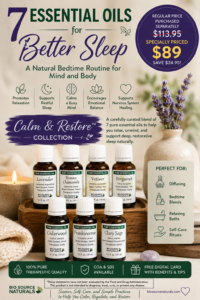 Essential oils for better sleep may help create an environment that encourages rest, supports nervous system regulation, and promotes healthy sleep habits.
When combined with calming rituals, EFT tapping, somatic breathwork, and good sleep hygiene, essential oils can become part of a supportive evening routine for both mind and body.
Poor sleep often affects more than energy levels. Stress, caregiving responsibilities, hormonal changes, emotional overwhelm, and daily demands may make it difficult to fully relax at bedtime. Supporting the nervous system through intentional self-care practices may help prepare the body for restorative sleep.
While essential oils for nervous system regulation are suggested below, they are not intended to diagnose or treat medical conditions. Aromatherapy may become one part of a comprehensive self-care approach.
The Calm & Restore™ Collection
Each of the pure essential oils discussed below is available individually or as part of the specially priced Calm & Restore™ Collection, created to support relaxation, emotional balance, and bedtime routines.
The collection was developed to help support nervous system regulation and encourage calming evening rituals that may promote restful sleep.
Each pure essential oil features:
- 15 ml bottle — 50% more pure oil than the standard 10 ml industry bottle
- Free Emotional & Spiritual Benefits Affirmation Digital Card
- Certificate of Analysis (COA)
- Safety Data Sheet (SDS)
- Product Bulletin with usage information and application ideas
The Calm & Restore™ Collection is specially priced at $89, representing a savings compared to purchasing each oil separately.
Sleep and Nervous System Regulation
The nervous system continually evaluates whether we feel safe, supported, and relaxed. Chronic stress, emotional demands, caregiving responsibilities, work pressures, and life changes may keep the body in a heightened state of alertness.
This may contribute to:
- Racing thoughts
- Difficulty falling asleep
- Frequent waking
- Muscle tension
- Feeling tired but wired
- Restless sleep
- Morning fatigue
Supporting the nervous system through calming rituals may help create the conditions necessary for restorative sleep.
1. Lavender Essential Oil
Lavender remains one of the most popular essential oils for better sleep. Its soft floral aroma is widely used during bedtime routines.
Lavender may help support:
- Relaxation
- Evening calm
- Emotional balance
- Restful environments
Diffuse lavender before bedtime or apply to a personal inhaler as part of an evening ritual.
2. Roman Chamomile Essential Oil
Roman chamomile offers a gentle, comforting aroma that many people associate with relaxation.
This oil may support:
- Emotional comfort
- Relaxation
- Stress reduction
- Calming bedtime routines
Roman chamomile is often used when emotional tension interferes with sleep.
3. Vetiver Essential Oil
Vetiver has a rich, earthy aroma that many individuals find grounding.
Its deep scent may support:
- Grounding
- Centering
- Emotional balance
- Relaxation
Vetiver blends particularly well with lavender and cedarwood for evening diffusion.
4. Cedarwood Essential Oil
Cedarwood provides a warm, woodsy aroma that creates a sense of comfort and stability.
Potential benefits include:
- Relaxation
- Grounding
- Emotional support
- Bedtime comfort
Many people enjoy cedarwood during quiet evening rituals.
5. Bergamot Essential Oil
Bergamot is unique among citrus oils because it offers both uplifting and calming aromatic qualities.
Bergamot may support:
- Emotional balance
- Stress relief
- Relaxation
- Positive mood
It is often used during periods of stress or overwhelm.
6. Frankincense Essential Oil
Frankincense has been used for centuries during meditation and contemplative practices.
Its aroma may encourage:
- Mindfulness
- Relaxation
- Centering
- Quiet reflection
Frankincense pairs beautifully with breathing exercises before bed.
7. Clary Sage Essential Oil
Clary sage offers a calming herbal aroma and is especially popular among women experiencing stress or hormonal changes.
Clary sage may support:
- Relaxation
- Emotional balance
- Evening calm
- Stress management
Its aroma blends well with lavender and bergamot.
EFT Tapping for Better Sleep
Emotional Freedom Techniques (EFT) may help quiet a busy mind before bed.
While gently tapping acupressure points, repeat:
Even though my mind feels busy, I allow myself to relax.
Even though today was stressful, I choose rest and calm.
My body knows how to relax and sleep.
Applying lavender or frankincense to the wrists before tapping may create an additional sensory cue for relaxation.
Somatic Breathwork Exercise
Somatic practices may help the body shift toward a more relaxed state.
Try this simple exercise:
- Inhale through the nose for four counts.
- Exhale slowly for six counts.
- Place one hand on your chest and one on your abdomen.
- Notice the support beneath your body.
- Repeat for five minutes.
Diffusing your favorite essential oils for better sleep during this exercise can enhance the bedtime ritual.
Creating a Natural Bedtime Routine
A simple bedtime routine may include:
- Dimming lights
- Limiting screens
- Diffusing essential oils
- Gentle stretching
- Journaling
- EFT tapping
- Somatic breathing
- Gratitude practice
Consistency often matters more than perfection. Small nightly rituals may help support nervous system healing over time.
You can read more in this related guide, How to Regulate Your Nervous System Naturally, where you can explore aromatherapy, EFT tapping, somatic practices, emotional wellness, and other supportive mind-body approaches.
Final Thoughts
Finding the best essential oils for better sleep is often a personal journey. The aromas that feel most comforting can vary from person to person. Lavender, Roman chamomile, vetiver, cedarwood, bergamot, frankincense, and clary sage provide a versatile collection of oils that support relaxation and evening self-care.
When combined with EFT tapping, somatic breathing, and intentional bedtime rituals, these essential oils for better sleep may become a valuable part of your nightly routine.
The Calm & Restore™ Collection brings these seven oils together to support relaxation, nervous system regulation, and restorative sleep through the power of aromatherapy and simple self-care practices.
These statements have not been evaluated by the Food and Drug Administration. These products are not intended to diagnose, treat, cure, or prevent any disease.
References
Buckle, J. (2015). Clinical Aromatherapy: Essential Oils in Healthcare (3rd ed.). Elsevier.
Craig, G. (2011). The EFT Manual. Energy Psychology Press.
Salvatore Battaglia. (2018). The Complete Guide to Aromatherapy (3rd ed.). The Perfect Potion.
Sleep Foundation. (2024). Sleep Hygiene and Relaxation Techniques for Better Sleep.
World Health Organization. (2022). Mental Health and Stress Management Guidelines.
Author Note
This article is intended for educational purposes only. Aromatherapy, EFT tapping, somatic practices, and self-care rituals are complementary wellness approaches and are not intended to diagnose, treat, cure, or prevent disease. Individuals with medical conditions, pregnancy, sleep disorders, or concerns about medication interactions should consult a qualified healthcare professional before using essential oils.
About the Author

🔍 Click Image to Enlarge and Read
* Statements made on this website have not been evaluated by the FDA, and are not intended to diagnose, treat, cure, or prevent any disease. The information provided on this website is for informational purposes. Information is not intended as a substitute for advice from a qualified health care professional that you trust, it and should not be construed as individual medical advice. If you are under a doctor’s care, please consult with her/him prior to use of these products. If a condition persists, please contact a qualified health care professional for advice.