
Pure Aromatherapy for Body, Mind & Spirit
DIY Hair Detangler Using Essential Oils
DIY Hair Detangler Using Essential Oils
Make an easy DIY hair detangler using essential oils – conditioner and vegetable glycerin to help smooth knots, reduce tugging and leave hair feeling soft and manageable.
Tangles can turn brushing or combing into an unnecessary battle, especially with long, curly, dry or easily knotted hair.
This DIY hair detangler using essential oils combines conditioner, vegetable glycerin and the fresh botanical aromas of Lavender, Rosemary, Peppermint and Tea Tree.
The conditioner provides slip to help knots release more easily, while glycerin acts as a humectant and the essential oils add a fresh, herbaceous aroma.
Used with gentle detangling techniques, a detangling spray can also help reduce the pulling and mechanical breakage that can occur when you force a brush or comb through tangled hair.
Benefits of a DIY Hair Detangler Spray
A good detangler doesn’t need to make exaggerated promises about hair growth.
Its primary job is much simpler: make tangled hair easier to comb.
A detangling spray can help:
- Add slip to tangled hair.
- Make knots easier to work through.
- Reduce pulling during combing and brushing.
- Help minimize mechanical breakage caused by aggressive detangling.
- Leave hair feeling softer and more manageable.
- Refresh hair with a light botanical aroma.
The way you detangle is important, too. Always start at the ends and gradually work toward the roots rather than pulling a comb from the scalp through a large knot.
DIY Hair Detangler Using Essential Oils Recipe
Ingredients
- 1 teaspoon vegetable glycerin
- 1 tablespoon of your favorite conditioner
- Distilled water
- 6 drops Lavender essential oil
- 6 drops Rosemary essential oil
- 6 drops Peppermint essential oil
- 6 drops Tea Tree essential oil
- Clean 4 oz spray bottle
Directions
- Add 1 teaspoon of vegetable glycerin to a clean 4 oz spray bottle.
- Add 1 tablespoon of your favorite conditioner.
- Add the essential oils.
- Add distilled water, leaving approximately 1 inch of space at the top of the bottle.
- Close tightly and shake thoroughly.
- Label the bottle with the ingredients and date.
Humidity tip: Glycerin is a humectant, meaning it attracts water. Some hair types become frizzier when glycerin-containing products are used in very humid conditions. If that’s your experience, simply leave the glycerin out.
Important Formulation & Storage Note
This DIY recipe combines a commercially prepared conditioner with additional distilled water.
Although your conditioner likely contains a preservation system, adding water changes the original formulation and its preservative concentration. You should not assume that the diluted finished product has the same shelf life as the original conditioner.
Make small batches, use clean equipment and avoid introducing contamination into the bottle.
For a product intended to be stored for an extended period, a properly formulated cosmetic product requires an appropriate preservation system.
Also remember that essential oils don’t truly dissolve in water simply because the bottle has been shaken. The conditioner may help disperse the aromatic ingredients throughout this particular DIY mixture, but this shouldn’t be considered equivalent to professional cosmetic solubilization.
Why Use Conditioner in a DIY Hair Detangler?
Conditioner is the powerhouse ingredient in this recipe.
Conditioning ingredients help provide slip along the hair shaft, making strands easier to separate and allowing a wide-tooth comb or brush to move through knots with less resistance.
That can be particularly useful for hair that is:
- Long
- Curly or wavy
- Dry
- Easily tangled
- Frequently exposed to wind
- Difficult to comb after washing
Reducing resistance during detangling can also help reduce unnecessary mechanical breakage.
Why Use Vegetable Glycerin?
Vegetable glycerin is a humectant commonly used in hair and skin-care formulations.
It attracts moisture and can contribute to a softer, more conditioned hair feel.
However, glycerin isn’t ideal for every head of hair or every climate.
If you find that glycerin makes your hair feel sticky or increases frizz during humid weather, omit it from the recipe.
DIY formulation is partly about learning what your hair prefers.
Essential Oils in This DIY Hair Detangler Spray
The essential oils in this recipe provide a fresh botanical aroma and can complement a scalp and hair-care routine.
Lavender Essential Oil
Lavender essential oil has a soft floral-herbal aroma and is widely used in natural hair, scalp and body-care formulations.
Its gentle aromatic character helps soften the stronger herbal notes of Rosemary, Peppermint and Tea Tree.
Rosemary Essential Oil
Rosemary essential oil has a strong, crisp herbal aroma and is one of the most recognizable essential oils used in botanical hair and scalp-care products.
Rosemary gives this detangler its fresh, invigorating aromatic character.
If you’re interested in learning more about the traditional use of essential oils in hair-care routines, explore our guides to essential oils and hair care and essential oils traditionally used in scalp and hair formulations.
Peppermint Essential Oil
Peppermint essential oil provides an unmistakably fresh mint aroma and characteristic cooling sensation.
That fresh sensory experience makes Peppermint popular in shampoos and scalp-care products.
Because Peppermint is potent, avoid the eyes and discontinue use if the cooling sensation becomes uncomfortable.
Tea Tree Essential Oil
Tea Tree essential oil has a distinctive fresh, herbaceous aroma and is commonly incorporated into cleansing-oriented scalp and hair-care formulations.
Its sharper aromatic character combines particularly well with Rosemary and Peppermint.
For additional scalp-care information, see our guide to essential oils for dandruff-prone scalp care.
How to Use DIY Hair Detangler Spray
This DIY hair detangler using essential oils can be used lightly on damp or dry hair.
- Shake the bottle before use.
- Spritz lightly over tangled areas rather than saturating the hair.
- Divide very tangled hair into manageable sections.
- Begin detangling at the ends.
- Gradually work upward toward the roots.
- Use a wide-tooth comb or detangling/paddle brush appropriate for your hair type.
- Add another light mist only where needed.
Avoid spraying the product toward the face or eyes.
Why Detangling Technique Matters
Sometimes what appears to be “hair loss” during brushing is actually hair breakage. Pulling forcefully through knots places mechanical stress on the hair shaft and can cause strands to snap. A detangler provides slip, but technique still matters.
Hold a section of hair above the knot while gently working through the ends. Once the ends are free, move progressively higher. Patience usually works better than force.
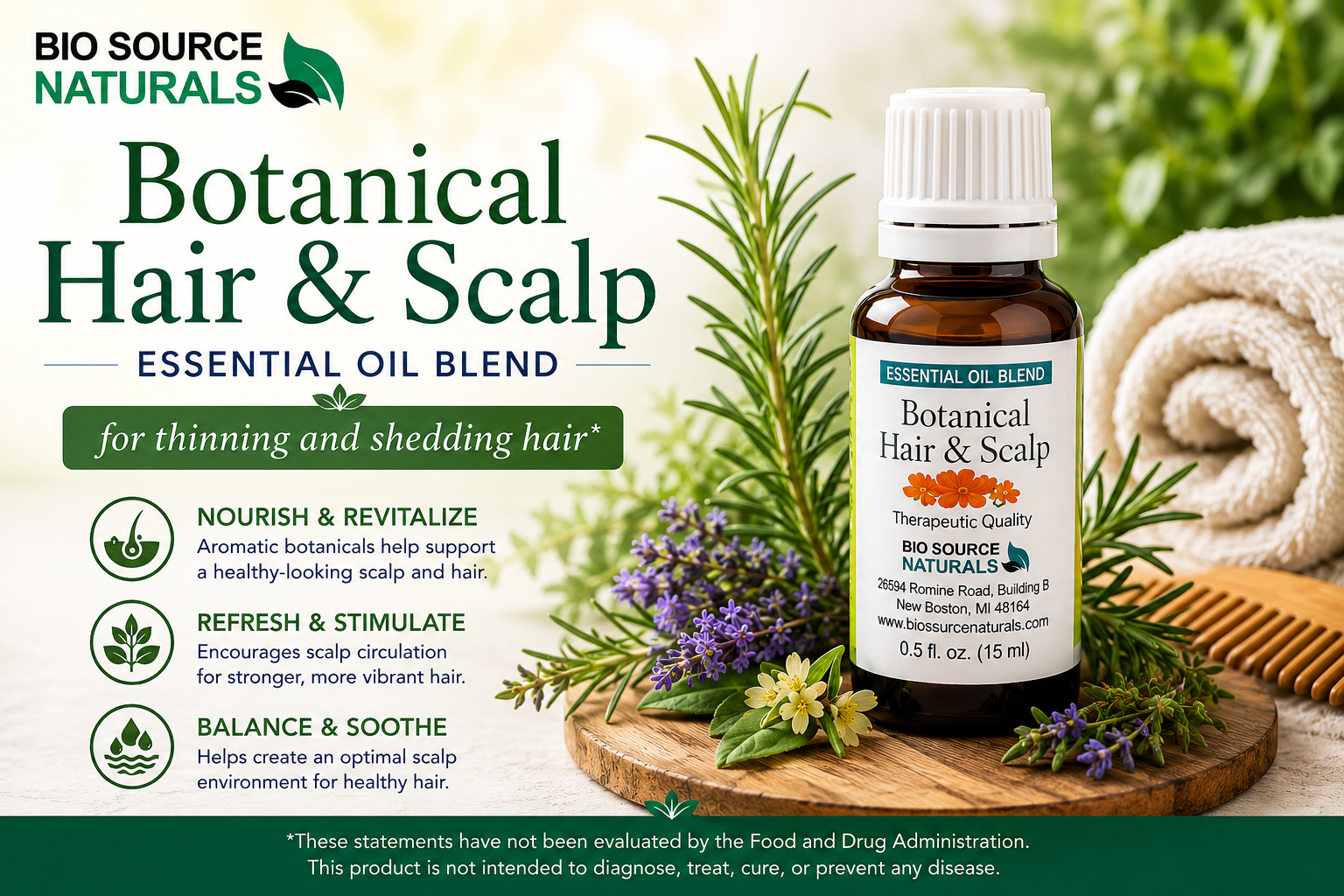
Click to Enlarge and Read
Botanical Hair & Scalp Essential Oil Blend
Want to incorporate essential oils into your hair-care routine without creating your own blend?
Botanical Hair & Scalp Essential Oil Blend combines Rosemary, Lavender, Cedarwood and Thyme.
This aromatic blend was created for use as part of a botanical hair and scalp-care routine. Its fresh, herbaceous and woody aroma makes it easy to incorporate aromatherapy into shampooing and scalp care.
To use in shampoo: Add approximately 2–3 drops per ounce of shampoo and mix thoroughly before use.
Avoid the eyes and discontinue use if irritation occurs.
Learn more about the relationship between essential oils, scalp care and circulation.
Explore More DIY Natural Body Care Recipes
This article is part of our complete DIY Natural Body Care Recipes with Essential Oils guide, featuring natural skin-care, hair-care, bath, beauty and personal-care recipes.
Frequently Asked Questions About DIY Hair Detangler Using Essential Oils
What Is a DIY Hair Detangler?
A DIY hair detangler is a homemade hair-care product designed to provide slip so knots and tangles are easier to comb through.
This recipe combines conditioner, water and optional glycerin with aromatic essential oils.
Does Hair Detangler Prevent Breakage?
A detangler can make knots easier to comb, which may reduce the pulling and mechanical stress associated with brushing tangled hair.
It doesn’t make hair impossible to break, so gentle technique remains important.
Can I Use DIY Hair Detangler on Dry Hair?
Yes. Apply a very light mist to tangled areas and work through the hair gently.
Start with less product and add more only if necessary, particularly if you have fine hair.
Can I Use DIY Hair Detangler on Wet Hair?
Yes. After washing, gently remove excess water and apply a small amount of detangler before combing.
Wet hair can be vulnerable to mechanical damage, so avoid forcefully pulling through knots.
Why Is Glycerin Used in Hair Detangler?
Vegetable glycerin is a humectant and can contribute to a softer, conditioned hair feel.
However, some people find glycerin contributes to frizz in humid conditions. It is optional in this recipe.
Which Essential Oils Are Used in This DIY Hair Detangler?
This recipe uses Lavender, Rosemary, Peppermint and Tea Tree essential oils to create a fresh herbal and minty aroma.
Does Rosemary Essential Oil Make Hair Grow?
Rosemary is widely used in botanical scalp and hair-care products, and there is research interest surrounding Rosemary and hair/scalp applications.
A DIY detangler, however, should not be presented as a treatment for hair loss or as a product guaranteed to regrow hair. Its primary cosmetic purpose is to help condition and detangle hair.
Can I Use This DIY Hair Detangler Every Day?
That depends on your hair type and how your hair responds to the formulation.
Fine or easily weighed-down hair may need only occasional application, while dry, curly or frequently tangled hair may benefit from more frequent use.
Use the smallest amount needed to make your hair manageable.
How Long Does Homemade DIY Hair Detangler Last?
Because this recipe adds distilled water to an already formulated conditioner, you should not assume that the preservative system of the original conditioner will adequately protect the diluted product for an extended period.
Make small batches, use clean equipment and discard the product if you notice an unexpected change in odor, color, texture or appearance.
For longer-term storage, use a properly formulated and preserved cosmetic recipe.
Can I Leave the Essential Oils Out?
Yes. The conditioner is primarily responsible for the detangling action, so you can make a simpler version without essential oils if you have a sensitive scalp, dislike fragrance or simply prefer a fragrance-free detangler.
DIY Hair Detangler – Make Detangling Easier, Not More Complicated
A good DIY hair detangler using essential oils doesn’t need to promise miraculous hair growth to be useful.
The conditioner provides slip. Glycerin can contribute moisture and softness. Lavender, Rosemary, Peppermint and Tea Tree provide a fresh botanical aroma.
Most importantly, the spray can make it easier to gently work through knots without unnecessarily pulling and breaking the hair.
Use a small amount, start at the ends and work your way toward the roots.
Your hair doesn’t need to fight with your brush.
The information provided on this page is for educational and cosmetic hair-care purposes only. Statements regarding essential oils and natural products have not been evaluated by the Food and Drug Administration. This recipe and the products discussed are not intended to diagnose, treat, cure or prevent any disease. Hair loss can have many causes. If you are experiencing sudden, unexplained or significant hair loss or have a persistent scalp condition, consult an appropriately qualified healthcare professional.
About the Author

🔍 Click Image to Enlarge and Read