
Pure Aromatherapy for Body, Mind & Spirit
Protection Natural Perfume Recipe with Essential Oils
Protection Natural Perfume Recipe with Essential Oils
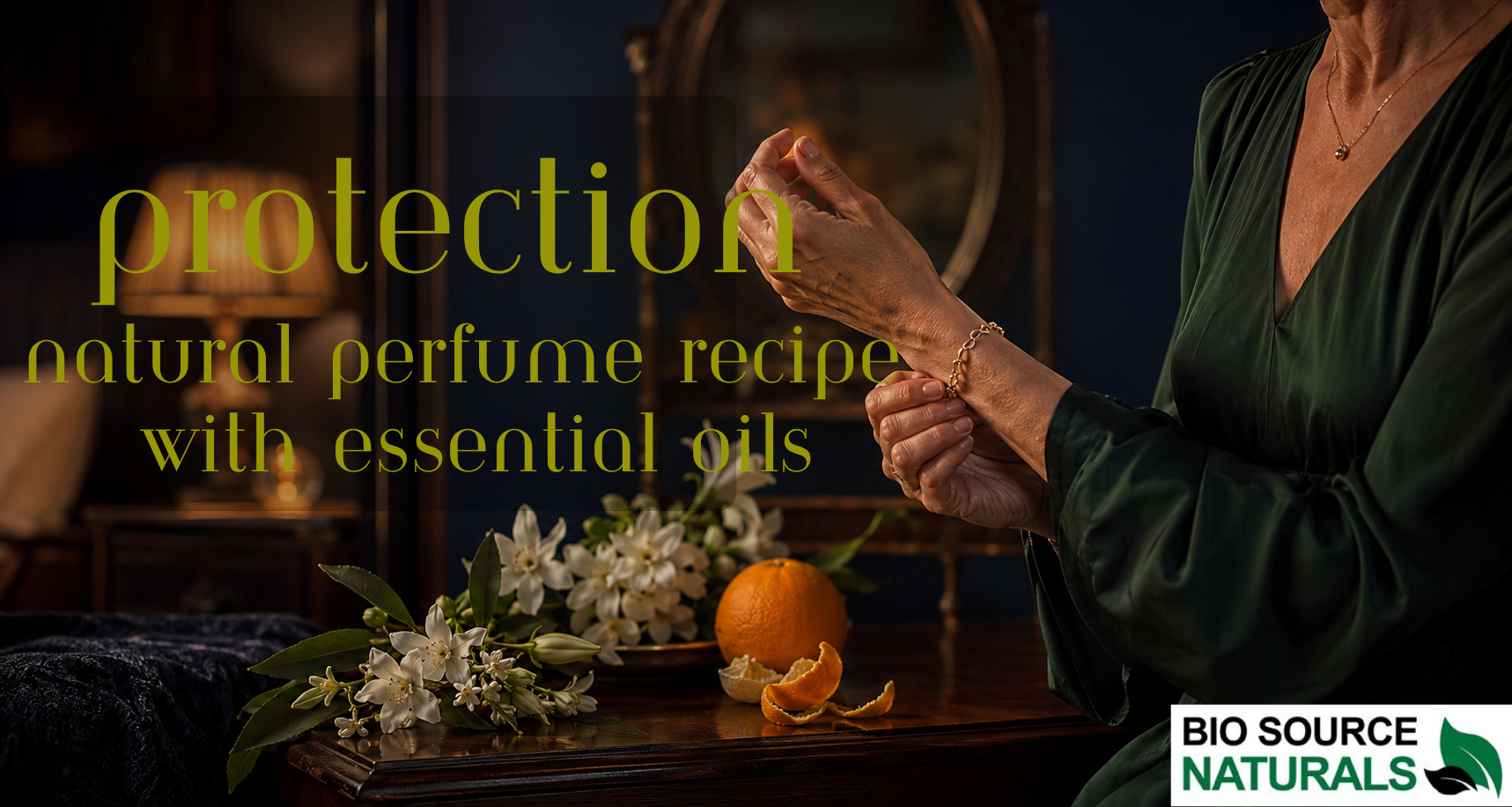 DIY Protection Natural Perfume Recipe with essential oils combines jasmine, neroli and sweet orange to create a luminous floral-citrus fragrance. Its aroma can become part of an intentional ritual for reconnecting with yourself, honoring your personal boundaries and deciding how you want to feel as you enter a social or romantic setting.*
The word protection in this recipe’s name refers to personal intention and self-awareness. The perfume is not intended to provide physical, medical or guaranteed energetic protection.
How to Make Natural Perfume With Essential Oils
Making natural perfume is a satisfying way to explore fragrance and create a scent that feels personal. Handmade perfumes can also make thoughtful gifts.
This recipe uses jojoba oil and vodka as its base. Jojoba has a light texture and relatively long shelf life, while vodka helps disperse the aromatic ingredients.
What You Will Need
- 1 teaspoon jojoba oil or another skin-safe carrier oil
- 1 teaspoon vodka
- One small, clean perfume bottle
- The essential oils listed below
Instructions
- Pour the jojoba oil and vodka into the perfume bottle.
- Add the essential oils one drop at a time.
- Secure the bottle’s closure and lid.
- Gently shake the bottle to combine the ingredients.
- Store the perfume in a cool, dark place for approximately two weeks.
- Gently shake the bottle every few days as the fragrance matures.
- After two weeks, smell the perfume. If desired, allow it to mature longer so the individual fragrance notes can become more integrated.
- Shake before each use because the oil and alcohol components may separate.
Protection Natural Perfume Recipe
Add the following essential oils to the prepared perfume base:
- 3 drops Jasmine Essential Oil
- 3 drops Neroli Essential Oil
- 4 drops Orange Essential Oil
This natural perfume develops into a radiant floral-citrus fragrance:
- Sweet orange creates a bright, cheerful citrus opening.
- Neroli adds a refined orange-blossom aroma with fresh green undertones.
- Jasmine contributes a rich, warm floral note that gives the perfume depth.
Create a Personal-Protection Ritual
Before a special evening, apply the perfume and take a quiet moment to reconnect with yourself. Consider what you want to welcome into the experience and what personal boundaries you want to honor.
You might pair the fragrance with a simple affirmation such as:
I can remain connected to myself while connecting with others.
The perfume does not create or enforce boundaries for you. Instead, its familiar aroma can serve as a sensory reminder of the intention you established.
How to Use Your Protection Natural Perfume
Shake the bottle, then apply a small amount to pulse points such as the wrists or sides of the neck. Avoid the eyes, mucous membranes, broken skin and other sensitive areas.
Natural perfumes interact with individual body chemistry. Allow the fragrance to settle on your skin for several minutes before evaluating its complete aroma.
Essential-Oil Safety
Sweet orange essential oil is generally not considered phototoxic. However, bitter orange and some other expressed citrus oils can increase sensitivity to ultraviolet light. Confirm the botanical identity and safety information for the orange oil you use.
Perform a patch test before using the perfume more broadly, particularly before wearing it to a special event. Discontinue use if redness, burning, itching or irritation occurs. Do not swallow essential oils or the completed perfume.
Consult a qualified healthcare professional or clinical aromatherapist before use if you are pregnant, breastfeeding, taking medication, managing a medical condition or preparing the perfume for a child. Keep the perfume away from children and pets.
This statement has not been evaluated by the FDA. This recipe is not intended to diagnose, treat, cure or prevent any disease.
Recipe adapted from: William Ziegler, Perfume Made Easy at Home (2010).
Learn More About DIY Natural Perfume
This recipe is part of the BioSource Naturals complete guide to DIY Perfume With Essential Oils.
Explore fragrance families, top, middle and base notes, oil-based and alcohol-based perfume methods, formulation tips, essential-oil safety and dozens of natural perfume recipes you can make at home.