
Pure Aromatherapy for Body, Mind & Spirit
How to Choose High-Quality Essential Oils: What Every Buyer Should Know
How to Choose High-Quality Essential Oils: What Every Buyer Should Know
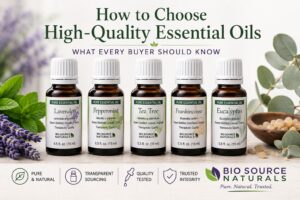 Learning how to choose quality essential oils can help consumers make informed purchasing decisions and better understand what separates a reputable essential oil from a lower-quality product. Essential oils have become increasingly popular for aromatherapy, diffuser blends, self-care routines, and natural home fragrance. However, not all essential oils are created equal. With hundreds of brands on the market and no universal grading system, choosing a quality essential oil can be confusing for both new and experienced users.
Understanding what to look for can help you make informed decisions and identify companies that prioritize transparency, sourcing, purity, and quality testing.
Shop the essential oils and aromatherapy products mentioned in this article at the bottom of the page.
How to Choose Quality Essential Oils
The quality of an essential oil begins long before it reaches the bottle. Plant species, growing conditions, harvesting methods, distillation techniques, storage practices, and testing procedures can all influence the final product.
Because there is no government-regulated grading system for terms such as “therapeutic grade,” consumers must rely on the information provided by the company and the transparency of its manufacturing practices.
Look for the Latin Botanical Name
One of the first indicators when purchasing quality essential oils is the inclusion of the plant’s Latin botanical name.
Many plants share common names, but different species can have very different aromatic profiles and traditional uses.
Examples include:
- Lavender Essential Oil (Lavandula angustifolia)
- Peppermint Essential Oil (Mentha × piperita)
- Tea Tree Essential Oil (Melaleuca alternifolia)
- Frankincense Essential Oil (Boswellia carterii)
- Eucalyptus Globulus Essential Oil (Eucalyptus globulus)
A reputable company should clearly identify the botanical species used in each product.
Understand the Country of Origin
The region where a plant is grown can influence the aroma and composition of an essential oil.
For example:
- Lavender is commonly sourced from Bulgaria and France.
- Frankincense may originate from Somalia, Oman, or India.
- Tea Tree is most commonly produced in Australia.
- Eucalyptus is often sourced from Australia, Spain, Portugal, or China.
Transparent sourcing information helps consumers understand where their oils originate and demonstrates a commitment to product traceability.
Choose Essential Oils Packaged in Dark Glass Bottles
Quality essential oils are typically packaged in amber, cobalt blue, or other dark-colored glass bottles.
Essential oils are sensitive to light, heat, and oxygen exposure. Dark glass helps protect the oil and supports product stability over time.
Be cautious of essential oils packaged in clear glass or plastic containers, as these materials may provide less protection for long-term storage.
Why Purity and Transparency Matter
Because essential oils vary widely in quality, it is important to purchase from companies that provide clear information about their products.
In some cases, lower-quality products may contain added ingredients, substitutes, or undisclosed materials that can affect the aroma, consistency, and overall quality of the oil.
Examples may include:
- Synthetic fragrance ingredients
- Undisclosed carrier oils
- Added aroma compounds
- Substitution of a different botanical species than what appears on the label
This is why transparency matters. Reputable essential oil companies typically provide botanical identification, sourcing information, product details, and quality standards that help consumers better understand what they are purchasing.
Choosing companies that emphasize purity, transparency, and quality control can help consumers make more informed purchasing decisions and feel confident about the products they select.
Organic vs. Conventional Essential Oils: What’s the Difference?
As consumers become more interested in natural products, many people wonder whether organic essential oils are always better than conventional essential oils. The answer is not always straightforward.
Organic essential oils are produced from plants grown according to certified organic agricultural standards. These standards generally prohibit the use of synthetic pesticides, herbicides, genetically modified organisms (GMOs), and certain synthetic fertilizers. Organic certification may also include requirements for harvesting, processing, and handling practices.
Conventional essential oils are produced from plants that may not be certified organic. However, this does not automatically mean they are lower quality. Many conventional essential oils are carefully sourced, properly distilled, and extensively tested for purity and authenticity.
When evaluating an essential oil, it is important to consider the complete picture rather than focusing solely on whether it is organic. Factors such as botanical identification, country of origin, harvesting practices, distillation methods, storage conditions, and quality testing all contribute to the final product.
In many cases, both organic and conventional essential oils can be excellent choices when sourced from reputable companies committed to transparency and quality control.
For consumers who prioritize organic agriculture and environmental stewardship, certified organic essential oils may be preferred. Others may focus primarily on purity, aroma, sourcing, and testing regardless of certification status.
Ultimately, the goal is to purchase essential oils from companies that clearly communicate how their products are sourced, tested, and produced so you can make informed decisions based on your individual preferences and priorities.
Both organic and conventional quality essential oils can be excellent choices when sourced from reputable companies.
Ask About Quality Testing
Many reputable essential oil suppliers utilize testing methods such as:
- GC/MS (Gas Chromatography–Mass Spectrometry)
- Organoleptic evaluation
- Identity verification testing
- Quality control screening
These testing methods help verify that an essential oil meets established quality specifications and supports consistency from batch to batch.
At BioSource Naturals, we work with trusted suppliers and place a strong emphasis on sourcing transparency, product integrity, and quality standards when selecting the essential oils we offer.
Read Labels Carefully
A quality essential oil label should typically include:
- Common plant name
- Latin botanical name
- Plant part used
- Country of origin (when available)
- Extraction method
- Net contents
- Company information
The more transparent a company is about its products, the easier it becomes for consumers to make informed purchasing decisions.
Be Cautious of Marketing Claims
Terms such as:
- Therapeutic Grade
- Certified Pure
- Premium Grade
- Medical Grade
do not have universal regulatory definitions within the essential oil industry.
Instead of relying solely on marketing terminology, look for objective information such as sourcing details, botanical identification, packaging standards, and testing practices.
Consumers can also review educational information about aromatherapy through the National Center for Complementary and Integrative Health (NCCIH).
 Questions to Ask Before Purchasing Essential Oils
Before buying an essential oil, consider asking:
- Is the Latin botanical name listed?
- Is the country of origin identified?
- What extraction method was used?
- How is the oil tested?
- Is the oil packaged in dark glass?
- Does the company provide educational information and safety guidance?
- Is sourcing information available?
These questions can help consumers evaluate quality beyond marketing claims.
These questions can help consumers identify quality essential oils and avoid misleading marketing claims.
BioSource Naturals’ Commitment to Transparency
At BioSource Naturals, we believe consumers deserve clear, transparent information about the essential oils they purchase. Our products include botanical identification, sourcing information when available, quality testing procedures, and packaging designed to help preserve product integrity.
We are committed to providing educational resources that help customers make informed decisions while exploring the benefits of aromatherapy and essential oil wellness practices.
Explore Pure Essential Oils from BioSource Naturals
Choosing a quality essential oil involves more than reading the front label. Understanding botanical names, sourcing, packaging, testing, and transparency can help you identify quality essential oils from companies committed to education and product integrity.
By learning what to look for, you can confidently select quality essential oils that align with your aromatherapy goals and wellness routines.
Ready to explore pure essential oils? Browse our collection of single essential oils, organic essential oils, blends, hydrosols, and aromatherapy products sourced from trusted suppliers and backed by our commitment to transparency and quality.
*These statements have not been evaluated by the Food and Drug Administration. This product is not intended to diagnose, treat, cure, or prevent any disease.
Written by BioSource Naturals Editorial Team
Reviewed by Lezlie Cebulski, Traditional Naturopath, Aromatherapist, Formulator & Founder
About the Reviewer

 Click Image to Enlarge and Read