
Pure Aromatherapy for Body, Mind & Spirit
Happiness Natural Perfume Recipe With Essential Oils
Happiness Natural Perfume Recipe With Essential Oils
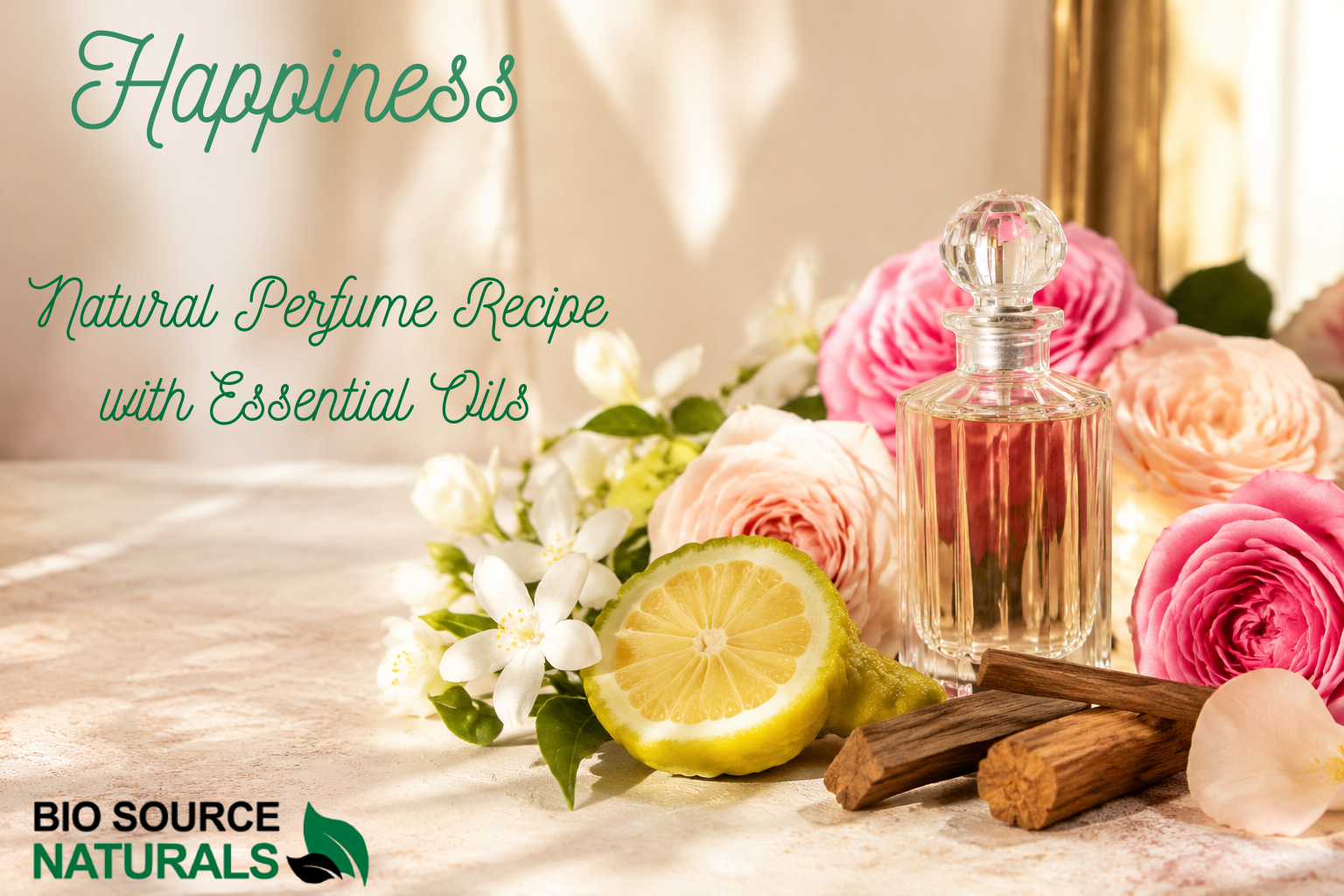 This Happiness natural perfume recipe blends bright bergamot with luxurious jasmine, rose and sandalwood to create an elegant floral-citrus fragrance. It’s warm, uplifting aroma can become part of an intentional ritual for relaxation, mindfulness and appreciating small moments of contentment.
How to Make Happiness Natural Perfume with Essential Oils
Making natural perfume allows you to experiment with fragrance and create a scent that feels personal. Handmade perfumes can also become thoughtful gifts for friends and family.
This recipe uses jojoba oil and vodka as its base. Jojoba has a light texture and relatively long shelf life, while vodka helps disperse the aromatic ingredients.
What You Will Need
- 1 teaspoon jojoba oil or another skin-safe carrier oil
- 1 teaspoon vodka
- One small, clean perfume bottle
- The essential oils listed below
Instructions
- Pour the jojoba oil and vodka into the perfume bottle.
- Add the essential oils one drop at a time.
- Secure the bottle’s closure and lid.
- Gently shake the bottle to combine the ingredients.
- Store the perfume in a cool, dark place for approximately two weeks.
- Gently shake the bottle every few days as the fragrance matures.
- After two weeks, smell the perfume. You may allow it to mature longer if you would like the individual fragrance notes to become more integrated.
Happiness Natural Perfume Recipe with Essential Oils
Add the following essential oils to the prepared perfume base:
- 2 drops Bergamot Essential Oil
- 1 drop Jasmine Essential Oil
- 1 drop Rose Essential Oil
- 2 drops Sandalwood Essential Oil
This perfume develops into a graceful, layered fragrance:
- Bergamot contributes a fresh, gently sweet citrus opening.
- Jasmine adds a rich and sensual floral heart.
- Rose brings a soft, timeless floral character.
- Sandalwood creates a warm, smooth base that grounds the fragrance.
How to Use Your Natural Perfume
Apply a small amount to pulse points such as the wrists or sides of the neck. Avoid the eyes, mucous membranes, broken skin and other sensitive areas.
Natural perfumes interact with individual body chemistry, so allow the fragrance to settle on your skin for several minutes before evaluating its full aroma.
Essential-Oil Safety
Use bergamot FCF, also called bergapten-free bergamot, when preparing a leave-on perfume. Cold-pressed bergamot essential oil can increase the skin’s sensitivity to sunlight and other ultraviolet light. If you use cold-pressed bergamot, do not expose the application area to sunlight or tanning lamps for at least 12 to 18 hours.
Perform a patch test before using the perfume more broadly. Discontinue use if redness, burning, itching or irritation occurs. Do not swallow essential oils or the completed perfume.
Consult a qualified healthcare professional or clinical aromatherapist before use if you are pregnant, breastfeeding, taking medication, managing a medical condition or preparing the perfume for a child. Keep the perfume away from children and pets.
This statement has not been evaluated by the FDA. This recipe is not intended to diagnose, treat, cure or prevent any disease.
Recipe adapted from: William Ziegler, Perfume Made Easy at Home (2010).
Learn More About DIY Natural Perfume
This recipe is part of the BioSource Naturals complete guide to DIY Perfume with Essential Oils.
Explore fragrance families, top, middle and base notes, oil-based and alcohol-based perfume methods, formulation tips, essential-oil safety and dozens of natural perfume recipes you can make at home.
Oh, I love this, and need to read it again! you have the basics laid out so clearly! Great job,
Very nicely explained recipe instructions. Made the process sound so easy, thank you!