Why Smell Is Different From Other Senses
Unlike sight, hearing, or touch, your sense of smell has a uniquely direct connection to areas of the brain involved in memory, emotion, and learning. This close relationship helps explain why certain aromas can instantly bring back a memory or create a feeling of calm, comfort, or alertness.
Olfactory signals are closely connected with areas involved in:
- Memory
- Emotion
- Learning
- Survival responses
- Autonomic nervous system regulation
Because of these connections, a familiar scent may quickly evoke:
- A vivid memory
- An emotional response
- A feeling of comfort or relaxation
- A renewed sense of alertness
Researchers have also observed that changes in the sense of smell can occur as people age and may be associated with certain neurodegenerative conditions. Scientists continue to study these relationships to better understand how the olfactory system reflects overall brain health.
This growing body of research has led to an important question:
Could stimulating the olfactory system help support cognitive function and healthy brain aging?
The Mouse Study That Sparked Interest
A widely discussed study published in Experimental Neurobiology explored whether exposure to pleasant scents could influence the brain.
In the study, researchers exposed mice to a variety of novel aromas over several weeks. Compared to the control group, the mice showed:
- Increased neuronal cell numbers in the hippocampus
- Increased neurogenesis in olfactory regions
- Increased cellular proliferation in the olfactory bulb
The hippocampus plays an important role in:
- Memory formation
- Learning
- Emotional regulation
- Spatial navigation
These findings generated excitement because they suggested that sensory experiences may influence brain plasticity.
However, there is an important limitation. This research was conducted in mice, not humans. While animal studies often provide valuable insights, they do not automatically predict the same outcomes in people.
Instead of viewing this research as proof that scent can dramatically change the human brain, it is more appropriate to see it as an encouraging area of ongoing scientific investigation.
One important takeaway is that sensory enrichment appears to influence how the brain adapts and responds to new experiences. Researchers continue to explore whether similar benefits may occur in humans.
What Is “Olfactory Enrichment”?
Olfactory enrichment is the intentional practice of exposing yourself to a variety of pleasant scents over time. Researchers use the term to describe structured scent experiences designed to stimulate the olfactory system through both variety and repetition.
In research settings, olfactory enrichment often includes:
- Rotating different aromas
- Introducing new scents regularly
- Using pleasant natural fragrances
- Repeating exposure over time
Scientists believe that novelty may play an important role. The brain naturally responds to new sensory experiences, especially those that capture attention or create positive emotional associations.
This concept is similar to other activities that are often encouraged as part of a healthy lifestyle, such as:
- Learning a new skill
- Traveling or exploring new places
- Listening to music
- Staying socially engaged
- Exercising regularly
Each of these activities provides new experiences that may help support the brain’s ability to adapt and respond over time. Researchers are exploring whether intentional scent experiences may offer another way to encourage this natural process.
Human Research Is Expanding
While much of the early research on olfactory enrichment was conducted in animals, scientists are now exploring its potential in human studies.
One study published in 2023 examined overnight olfactory enrichment in older adults. Participants were exposed to pleasant aromas while they slept, and researchers reported improvements in certain measures of cognitive performance compared with the control group.
Other emerging studies suggest that olfactory training may help support:
- Cognitive performance
- Memory-related functions
- Emotional well-being
- Verbal ability in some individuals
Researchers are also investigating how scent-based approaches may contribute to:
- Olfactory rehabilitation after illness
- Multisensory cognitive stimulation
- Healthy aging
- A better understanding of the relationship between smell loss and cognitive decline
Although this field is still developing, interest in the connection between smell, cognition, and the nervous system continues to grow. Additional human studies will help clarify how olfactory enrichment may fit into broader wellness and healthy aging strategies.
Lavender, Linalool, and the Nervous System
Among essential oils, lavender is one of the most extensively studied for its effects on relaxation and the nervous system. One of its primary naturally occurring constituents, linalool, has been the focus of numerous laboratory and clinical studies.
Researchers have explored lavender and linalool for their potential role in supporting:
- Relaxation
- Healthy stress responses
- Restful sleep routines
- Emotional well-being
Some studies suggest lavender aromatherapy may help promote feelings of calm in certain situations. Researchers continue to investigate how linalool may interact with pathways involved in the body’s natural stress response, including GABA and other neurotransmitter systems. These findings are promising, but additional research is needed to better understand how these mechanisms apply to everyday aromatherapy use.
While lavender is widely used in aromatherapy to encourage relaxation, it is not intended to diagnose, treat, cure, or prevent any medical condition. Instead, it can be part of a calming self-care routine that supports overall well-being.
Why the Nervous System Matters
One of the most important parts of this conversation is the role of the nervous system.
Everyday stress can influence many aspects of overall well-being, including:
- Sleep quality
- Memory and concentration
- Emotional balance
- Mood
- The body’s ability to adapt to daily challenges
Pleasant scents may support the nervous system indirectly by creating opportunities to slow down and engage in intentional self-care. Whether used during quiet reflection, deep breathing, meditation, journaling, or a relaxing evening routine, aromatherapy can help create an environment that encourages calm and relaxation.
For many people, the value of aromatherapy is not found in a single essential oil or one specific benefit. Instead, it comes from the consistent practice of creating moments that help the body and mind shift into a more relaxed state.
Rather than serving as a replacement for medical care, aromatherapy can be one supportive tool within a broader wellness routine that also includes healthy sleep habits, movement, balanced nutrition, and stress management.
Why Ritual and Emotional Meaning Matter
The emotional meaning we attach to a scent may be just as important as the aroma itself.
Our sense of smell is closely connected to memory and emotion. When a particular aroma is repeatedly paired with calming or meaningful experiences, the brain begins to associate that scent with those moments.
For example, you might use the same essential oil while:
- Practicing deep breathing
- Meditating or praying
- Journaling
- Reading before bed
- Enjoying a quiet evening routine
- Practicing EFT tapping
Over time, simply recognizing that familiar aroma may help signal that it is time to slow down, relax, and become more present. This process is based on repetition and association rather than the scent itself having a magical effect.
This is one reason many people enjoy creating personal aromatherapy rituals. A familiar scent can become part of a routine that supports relaxation, mindfulness, and emotional well-being.
A Balanced Perspective
Current research on olfactory enrichment and aromatherapy continues to evolve. While the findings are encouraging, it is important to separate well-supported evidence from exaggerated claims.
At this time, research does not show that essential oils:
- Regrow the human brain
- Cure or prevent dementia
- Dramatically improve memory or intelligence
- Replace medical treatment for neurological conditions
However, research does support several important observations:
- The olfactory system is closely connected to memory and emotional processing.
- Sensory enrichment may help support healthy brain function.
- Olfactory training is being studied for its potential role in supporting cognition in some populations.
- Lavender and certain aromatic compounds may help promote relaxation and support healthy stress responses.
- Creating meaningful scent rituals may encourage mindfulness and emotional well-being.
Rather than focusing on a single essential oil or one dramatic outcome, the research points toward something broader. Intentional sensory experiences, including the use of pleasant aromas, may become one part of an overall lifestyle that supports healthy aging, emotional balance, and nervous system wellness.
Practical Ways to Explore Olfactory Enrichment
If you’re interested in exploring olfactory enrichment, the goal isn’t to use large amounts of essential oils. Instead, it’s to create enjoyable, intentional scent experiences that become part of your daily routine.
Here are a few simple ideas to get started:
- Rotate different essential oils or natural aromas throughout the week.
- Diffuse a favorite scent while reading, journaling, meditating, or practicing deep breathing.
- Pair a calming aroma with your evening routine to help create a relaxing environment before bedtime.
- Spend time outdoors and notice the natural scents of flowers, herbs, trees, or the ocean.
- Experiment with new aromas from time to time, since variety may play an important role in olfactory enrichment.
There is no single “best” scent for everyone. The most meaningful aromas are often the ones you personally enjoy and associate with positive experiences.
As with any aromatherapy practice, always use high-quality essential oils and follow appropriate safety guidelines for diffusion and topical use.
Explore Essential Oils for Olfactory Enrichment
If you’re interested in incorporating scent into your daily wellness routine, choosing high-quality essential oils can help create enjoyable and meaningful aromatherapy experiences. Whether you prefer floral, citrus, woodsy, or resinous aromas, rotating different scents over time may help keep your olfactory experiences fresh and engaging.
- 🌿 Lavender Essential Oil – Lavender is one of the most extensively studied essential oils in aromatherapy. It is commonly used to create a calm, relaxing atmosphere and is a popular choice for evening routines, meditation, and quiet moments of reflection.
- 🍊 Sweet Orange Essential Oil – Sweet Orange offers a fresh, uplifting citrus aroma that many people enjoy during the day. It is commonly diffused to create a bright, cheerful environment and pairs well with other citrus or floral oils.
- 🌲 Frankincense Essential Oil – Frankincense has a rich, grounding aroma that has been valued for centuries in meditation, prayer, and mindfulness practices. Many people enjoy diffusing it during quiet routines or combining it with lavender or citrus oils.
- 🌱 Rosemary Essential Oil – Rosemary has a fresh, herbaceous aroma often used when creating a focused or energizing atmosphere. Its distinctive scent makes it a popular choice for study spaces, creative work, or morning aromatherapy routines.
Continue Exploring
If you’re inspired to explore olfactory enrichment, choosing high-quality essential oils is an important first step. BioSource Naturals offers a wide selection of 100% pure essential oils that can be incorporated into relaxation rituals, diffusion, and other aromatherapy practices.
Whether you enjoy floral, citrus, herbal, or woodsy aromas, selecting scents you genuinely enjoy can help create positive sensory experiences that become part of your daily wellness routine.
Suggested links:
Final Thoughts
The growing field of olfactory enrichment offers an interesting look at how our sense of smell may influence memory, emotion, and the nervous system. While researchers are still exploring many of these connections, the current evidence suggests that intentional scent experiences may play a supportive role in overall wellness.
Rather than looking for a single essential oil or a quick solution, consider how aromatherapy can become part of a balanced self-care routine. Pairing pleasant aromas with relaxation, mindfulness, quality sleep, and other healthy lifestyle habits may help create meaningful sensory experiences that support emotional well-being.
As research continues to evolve, one thing remains clear. Our sense of smell is deeply connected to how we experience the world around us. Taking time to enjoy natural aromas may be a simple way to bring more awareness, comfort, and intention into everyday life.
FDA Disclaimer: These statements have not been evaluated by the Food and Drug Administration. BioSource Naturals products are not intended to diagnose, treat, cure, or prevent any disease.

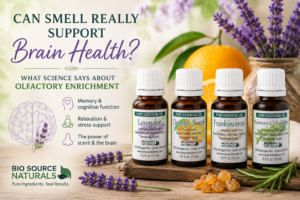 Your sense of smell is closely connected to the parts of the brain involved in memory, emotion, and learning. Emerging research on olfactory enrichment, the intentional use of varied pleasant scents, suggests it may help support cognitive function, relaxation, and healthy nervous system activity. While scientists continue to study these connections, aromatherapy offers a simple way to create meaningful sensory experiences that may complement an overall wellness routine.