
Pure Aromatherapy for Body, Mind & Spirit
How to Care for Yourself When You Have a Covert Narcissist in Your Life | Emotional Boundaries & Self-Regulation
How to Care for Yourself When You Have a Covert Narcissist in Your Life | Emotional Boundaries & Self-Regulation
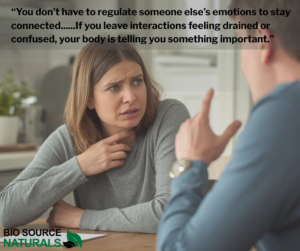 If you are trying to understand how to deal with a covert narcissist, you may have noticed that these relationships can feel confusing, draining, and emotionally destabilizing over time. Nervous system regulation can become affected by subtle, ongoing relational stress patterns that influence both emotional and physical well-being.
This article explores how interactions involving emotional ambiguity, guilt dynamics, or boundary confusion can impact your internal sense of stability over time. It also introduces supportive, body-based approaches, including aromatherapy, emotional boundary work, and gentle somatic practices, that may help restore clarity, steadiness, and a more grounded sense of self-regulation.*
Nervous System Support, Emotional Boundaries, and Aromatherapy for Grounded Stability
There are some relationships that don’t look obviously toxic on the surface, but they feel confusing, draining, or emotionally destabilizing over time.
You may find yourself asking:
- “Why do I feel so off after talking to them?”
- “Why do I feel guilty when I set a simple boundary?”
- “Why do I feel like I’m always trying to keep the peace?”
If you have someone in your life who fits the pattern often described as covert narcissism, the impact can be subtle but deeply felt in your nervous system, your body, and your emotional energy.
Ongoing relational stress in these types of dynamics can challenge your sense of internal steadiness, especially when emotional responsibility and self-protection patterns are activated repeatedly over time.
This post isn’t about diagnosing the other person.
It’s about learning how to care for yourself in the presence of difficult, emotionally confusing dynamics.
Understanding the Covert Dynamic (Without Over-Pathologizing)
What people often call “covert narcissism” is less about overt arrogance and more about indirect emotional control.
It can show up as:
- Chronic victimhood or martyr patterns.
- Passive-aggressive behavior.
- Emotional withdrawal or withholding.
- Subtle guilt or obligation pressure.
- Fragility around feedback.
- Making you responsible for their emotional state.
This dynamic can be especially difficult for empaths, caregivers, and highly responsible personalities – people who naturally tune in, help, and stabilize others understand how to deal with a covert narcissist.
If you’ve spent years in environments where you had to:
- keep things calm
- anticipate emotional reactions
- over-function to maintain stability
…you may feel almost magnetically pulled into this kind of dynamic.
Not because something is wrong with you, but because your nervous system learned patterns that once helped you stay safe and navigate difficult situations.
The Nervous System Impact: Why It Feels So Draining
When you interact with someone whose emotional responses are unpredictable, indirect, or guilt-based, your nervous system shifts into a protective, heightened state.
This can look like:
- muscle tension
- shallow breathing
- mental scanning and overthinking
- emotional hyper-awarenesssubtle anxiety or dread before interactions
Over time, this pattern can affect your ability to stay regulated, keeping the body in a low-level state of sympathetic activation, always ready to adjust, smooth, or manage.
For many women in their 50s and 60s, especially those with histories of caregiving, corporate responsibility, or emotionally demanding family systems, this may contribute to:
- chronic inflammation
- lymphatic stagnation
- fascial tightness
- hormonal stress patterns
The body is not separate from emotional dynamics.
It is recording and responding to them.
Step One: Shift the Focus Back to Yourself
When learning how to deal with a covert narcissist, one of the most important shifts you can make is this:
Stop trying to understand or fix the other person, and start supporting your own internal state.
This is not avoidance.
It’s self-awareness and personal responsibility.
You don’t need to:
- win the argument
- make them see your perspective
- get validation from them
Your goal becomes:
“How do I stay grounded, steady, and self-honoring in this interaction?”
Step Two: Reset and Support Yourself Before and After Interactions
Before contact with this person, take 2–5 minutes to settle your body.
You might try:
- Slow inhale through the nose for 4.
- Exhale for 6.
- Drop your shoulders.
- Feel your feet on the floor.
You are reminding your body:
“I am safe. I am grounded in myself.”
After interactions, take a few moments to reset:
- Shake out your arms.
- Take a walk.
- Place one hand on your heart and one on your abdomen.
- Breathe and release anything you may have taken on that isn’t yours.
These small resets help you return to your own center more quickly and reduce the buildup of emotional tension over time and make sense of how to deal with a covert narcissist.
Aromatherapy Support for Nervous System Regulation
Aromatherapy can be a supportive ally in helping your body return to a state of calm, clarity, and a greater sense of self-possession.
Here are some specific essential oils and blends that may support you:
Grounding and Protection
- Frankincense – may support emotional spaciousness and grounding.*
- Cedarwood – may support stability and a sense of internal support.*
- Vetiver – may support deep calm and emotional settling.*
Emotional Clarity and Release
- Lemon – may support mental clarity and a refreshed emotional state.*
- Rosemary – may support focus and cognitive clarity.*
- Eucalyptus – may support a sense of openness and breathing space.*
Heart Protection Without Closing the Heart
- Rose or Geranium – may support heart-centered balance while maintaining boundaries.*
- Cypress – may support emotional flow and release.*
Calming and Soothing
- Lavender – commonly used to promote relaxation and a sense of calm.*
- Roman Chamomile – may support emotional sensitivity and soothing.*
BioSource Naturals Aromatherapy Support Products
You may also find it helpful to use pre-blended formulations designed to support emotional balance, clarity, and a steadier internal state—especially when navigating relationships that feel confusing, draining, or emotionally demanding.
Blends for Calm and Emotional Balance
Formulations such as Peace Essential Oil Blend or Calming Essential Oil Blend may support a more grounded, settled state, particularly after interactions that leave you feeling overwhelmed or unsettled.*
Blends for Emotional Boundaries and Clarity
Formulations such as Protection Essential Oil Blend or Courage & Clarity Body-Mind Lotion may support emotional clarity, focus, and a stronger sense of internal boundaries—helping you stay centered when faced with guilt, pressure, or emotional confusion.*
Massage Oils, Roll-Ons, and Body-Mind Lotions
For those who prefer simple, ready-to-use application, many blends are also available in roll-on and massage oil formats. These topical options may support both emotional and physical aspects of stress by combining aromatherapy with touch and can be applied to areas where tension is commonly held, such as the neck, shoulders, or abdomen, especially after emotionally charged interactions.*
Discover the best BioSource Naturals Body-Mind Remedy Lotion for your emotional needs with our interactive quiz.
Lymphatic and Fascia-Support Formulations
Certain formulations, including products such as Flow Lymph Support Massage Oil or Mobility Ease Essential Oil Blend Massage Oil, are designed to support the physical systems affected by ongoing stress patterns, including fascia and lymphatic flow. These may be especially helpful when emotional strain begins to show up physically as tension, heaviness, or fatigue.*
These products can be integrated into a daily routine to reinforce a sense of grounding, clarity, and internal stability over time.*
*These statements have not been evaluated by the Food and Drug Administration. This content is not intended to diagnose, treat, cure, or prevent any disease.
How to Use Aromatherapy in These Situations
You can create a simple personal boundary ritual:
- Apply a grounding oil or blend to your wrists or back of neck.
- Inhale slowly.
- Set an intention such as:
“I remain grounded in my truth.
I release what is not mine.
I interact with clarity and calm.”
After the interaction, you can apply a calming or clearing blend and consciously release any emotional residue.
This small ritual helps your body understand that:
You are safe to return to yourself.
Step Three: How to Deal with a Covert Narcissist Without Losing Yourself
With covert dynamics, emotional engagement often fuels the cycle.
Instead, practice clear, simple, low-emotion responses.
Examples:
- “I’m not able to do that.”
- “That doesn’t work for me.”
- “I’m going to step away from this conversation.”
- “I’m not comfortable with that.”
Notice:
These are not long explanations.
They are statements of self-respect.
You do not need to justify your boundaries to someone who does not respect them.
A key part of how to deal with a covert narcissist is learning to hold clear, low-emotion boundaries without getting pulled into the dynamic.
When emotional clarity feels difficult to access, supportive tools such as aromatherapy may help you reconnect with a more centered, steady response.
Blends such as Courage & Clarity Body-Mind Lotion or Protection Essential Oil Blend are often used to support mental clarity, emotional steadiness, and a stronger sense of internal boundaries during challenging interactions.*
What people often call “covert narcissism” is less about overt arrogance and more about indirect emotional control.
Step Four: Release the Guilt Pattern
Many people who find themselves in these dynamics carry an old internal program:
“I am responsible for other people’s feelings.”
This often comes from:
- childhood conditioning
- religious or cultural messaging
- caregiving roles
- professional roles where emotional management was required
It can feel deeply uncomfortable to stop over-functioning.
This is where emotional release work like EFT and aromatherapy can be very supportive.
A simple tapping affirmation you might use:
Understanding how to deal with a covert narcissist often begins with recognizing how these patterns affect your own emotional and physical well-being.
Step Five: Limit Exposure When Needed
Not every relationship needs to be:
- fully engaged
- emotionally intimate
- frequently accessed
Sometimes the healthiest choice is:
- shorter interactions
- less frequent contact
- more structured communication
This is not punishment.
This is self-preservation.
Understanding how to deal with a covert narcissist also includes adjusting how much access they have to your time and energy.
Step Six: Strengthen Your Own Inner Anchor
The more connected you are to your own internal stability, the less these dynamics will pull on you.
Ways to strengthen this:
- journaling your own truth after interactions
- bodywork, stretching, or fascia release
- time in nature
- spiritual practices that reconnect you to the Light (your natural resonance)
- creative expression
When your internal anchor is strong, you are less likely to get pulled into emotional confusion or guilt.
The Body Connection: Fascia, Lymph, and Emotional Holding
From a body-based perspective, ongoing relational stress can influence nervous system regulation and may begin to show up physically as:
- tight hips and IT bands
- shoulder and neck tension
- lymphatic congestion
- fluid retention
- inflammatory flares
This highlights the importance of a combined approach that supports both emotional and physical regulation.
This may be especially relevant for women experiencing chronic stress patterns, inflammatory tendencies, or conditions where the body holds tension over time.
When the nervous system is under subtle, ongoing relational strain, the body’s drainage and repair processes may become less efficient.
This is why a combined approach is often most supportive:
- emotional boundary work
- nervous system regulation
- gentle movement
- lymphatic support
- anti-inflammatory lifestyle practices
- and supportive aromatherapy blends
Your body is not failing you.
It is responding intelligently to the environment it perceives.
Because the body often holds stress in the tissues, supportive topical products may also be incorporated into your routine.
Massage oils such as Flow Lymph Support Massage Oil or Mobility Ease Essential Oil Blend Massage Oil may be used to support areas where tension, fluid retention, or physical holding patterns are commonly experienced.*
Body-based products such as Body-Mind Support Lotions may also be used as part of a daily self-care routine, combining aromatherapy with gentle touch to support both emotional steadiness and physical release.*
A Simple Daily Self-Support Ritual
You might try a simple daily support rhythm like this:
Morning
- Apply a grounding oil or blend such as Frankincense or Cedarwood Essential Oil, Peace Essential Oil Blend, or Courage & Clarity Body-Mind Lotion to support emotional steadiness and clarity.*
- Set an intention for self-respect and grounded presence.
Midday Reset
- Take a few slow, steady breaths.
- Gently stretch or step outside for a moment.
- Use a roll-on or calming oil such as Lavender or Roman Chamomile Essential Oil to reconnect with your breath and reset your internal state.*
Evening Release
- Take a warm shower or bath.
- Apply a massage oil such as Flow Lymph Support Massage Oil or a calming blend such as Calming Essential Oil Blend to support relaxation and release of accumulated tension.*
- Journal or take a few quiet moments to release emotional residue from the day.
These small, consistent practices help reinforce a sense of calm, clarity, and internal steadiness through both scent and touch.*
You Are Allowed to Feel Peace in Your Own Life
One of the quiet realizations that often comes with this work is:
You are allowed to feel calm, respected, and emotionally safe in your relationships.
If an interaction consistently leaves you feeling:
- confused
- drained
- guilty
- or small
…it is valid to step back, adjust, or redefine the relationship.
Not with anger.
Not with blame.
But with clarity and self-respect.
During periods of emotional heaviness or overwhelm, some individuals also find it supportive to incorporate more uplifting aromatic elements into their day.
Citrus-based formulations such as Citrus Essential Oil Blend are often used to support a refreshed emotional state, mental clarity, and a gentle sense of lightness.*
Closing Reflection
If you have someone in your life who fits this pattern, the most important work is not changing them.
It is learning how to:
- stay grounded in your own body
- regulate your nervous system
- release responsibility for their emotions
- and return to your own center again and again
With the support of aromatherapy, gentle somatic awareness, and clear emotional boundaries, it is possible you can discover how to deal with a covert narcissist and strengthen your sense of internal stability and respond from a place of steadiness rather than reactivity.*
You can remain a compassionate person without sacrificing your own well-being and begin choosing interactions that feel more aligned with the life you are consciously creating.
Over time, understanding how to deal with a covert narcissist becomes less about changing them and more about strengthening your own internal stability.
*These statements have not been evaluated by the Food and Drug Administration. This content is not intended to diagnose, treat, cure, or prevent any disease.
About the Author

🔍 Click Image to Enlarge and Read