
Pure Aromatherapy for Body, Mind & Spirit
Essential Oils for Bruises and Bruising
Essential Oils for Bruises and Bruising
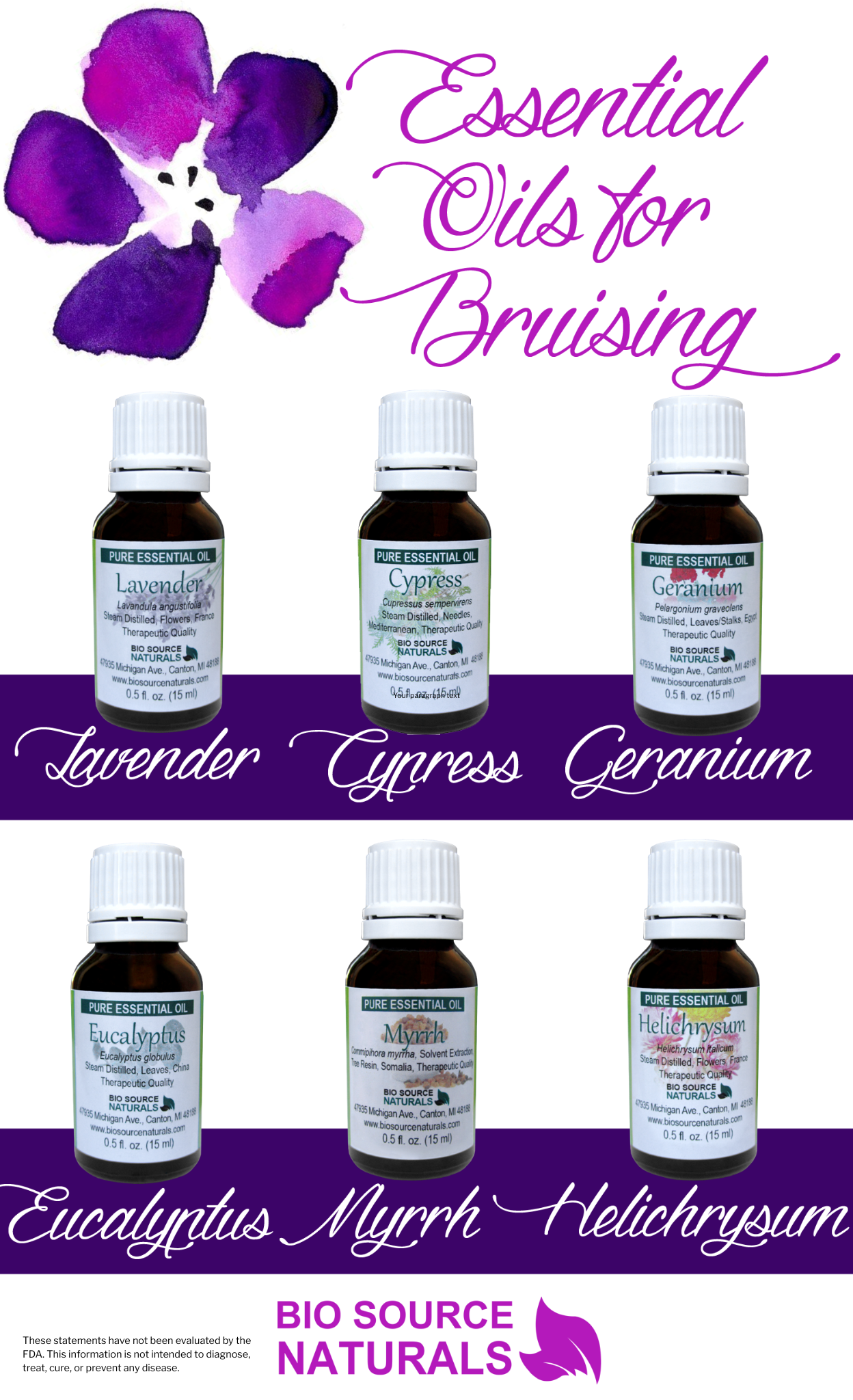 If you’re interested in essential oils for bruises and bruising, it’s important to understand what aromatherapy can and cannot do. Essential oils should not be presented as treatments that make a bruise heal faster, repair damaged blood vessels, or eliminate inflammation. However, appropriately diluted essential oils can be incorporated into gentle skin-care and body-care rituals around intact skin.
Should You Apply Essential Oils Directly to a Bruise?
Essential oils are highly concentrated botanical substances. Applying them undiluted can increase the risk of irritation, sensitization, and other adverse skin reactions.
Instead, dilute essential oils appropriately in a carrier oil before topical use.
Essential oils should also not be applied to broken, scraped, bleeding, or otherwise damaged skin.
Essential Oils Traditionally Associated With Bruise & Body-Care Blends
Several essential oils have traditionally appeared in aromatherapy preparations intended for skin and body care.
The following oils can be considered for their aromatic and cosmetic qualities rather than as medical treatments for bruising.
Lavender Essential Oil
Lavender Essential Oil is one of the most versatile oils used in aromatherapy and natural skin-care formulations.
Its soft floral-herbal aroma makes lavender particularly appropriate when you want your body-care ritual to feel calming and relaxing.
Lavender combines especially well with helichrysum, geranium, and many carrier oils.
Helichrysum Essential Oil
Helichrysum Essential Oil has a distinctive warm, herbaceous aroma and has a long history of use in European herbalism and aromatherapy skin-care preparations.
You’ll frequently see helichrysum described online as an essential oil for bruises. While its traditional use helps explain its popularity, it should not be presented as proven to make bruises disappear or heal damaged capillaries.
For home use, incorporate helichrysum into an appropriately diluted topical preparation rather than applying it neat.
Cypress Essential Oil
Cypress Essential Oil has a fresh, woody-green aroma.
It has a long history of aromatic use and works particularly well in body-care and massage blends when you want a fresh, clean fragrance rather than a predominantly floral scent.
Geranium Essential Oil
Geranium Essential Oil has a rich floral-green aroma and is frequently incorporated into natural skin-care preparations.
Geranium pairs beautifully with lavender and can add a softer floral element to a diluted body oil.
Myrrh Essential Oil
Myrrh Essential Oil has a deep, warm, resinous aroma and centuries of traditional use in botanical preparations.
Rather than claiming myrrh repairs broken capillaries or reduces swelling, consider it an aromatic ingredient for appropriately formulated body-care products.
Eucalyptus Essential Oil
Eucalyptus Essential Oil has a penetrating, fresh aroma associated with many traditional massage and body-care preparations.
Because eucalyptus is potent, appropriate dilution and individual safety precautions are important.
A Simple Aromatherapy Body Oil
For an easy body-care preparation, choose one or two of the essential oils above and dilute them appropriately in a carrier oil.
Good carrier-oil options include jojoba, sweet almond, apricot kernel, or fractionated coconut oil.
Apply gently to intact skin. If an area is freshly bruised and tender, don’t aggressively massage it. The purpose of the aromatherapy preparation is complementary body care—not forcing the bruise to disappear faster.
What Should You Do for a New Bruise?
For an ordinary minor bruise following a bump or minor injury, time is usually the biggest part of the healing process.
Depending on the injury, conventional self-care may include protecting and resting the area and using a wrapped cold pack for short periods during the early stage.
Avoid putting essential oils into an ice pack or directly onto injured skin.
As tenderness subsides, gentle skin care can be incorporated if desired.
Why Do Some People Bruise Easily?
Some people simply notice bruises more readily than others, but easy or unexplained bruising can have many causes.
Age-related skin changes, medications, supplements, medical conditions, and other factors can affect bruising.
Rather than assuming that frequent bruising means you’re deficient in vitamin C, vitamin K, B12, folate, zinc, or another nutrient, discuss significant or unexplained changes with a healthcare professional.
When Should You Be Concerned About Bruising?
An occasional bruise after bumping into something is usually quite different from unexplained or unusual bruising.
Consider seeking medical advice if you experience:
- Frequent bruises without an obvious reason
- Bruises that are unusually large or severe
- A sudden change in how easily you bruise
- Significant swelling or severe pain after an injury
- Bruising accompanied by unusual bleeding
- Bruises that aren’t improving as expected
- Bruising that began after starting a medication or supplement
Seek prompt medical attention after a significant injury or when bruising is accompanied by other concerning symptoms.
Frequently Asked Questions About Essential Oils for Bruises
What are the most commonly used essential oils for bruises?
Lavender and helichrysum are probably among the essential oils most commonly associated with traditional aromatherapy preparations for bruised or stressed skin. Cypress, geranium, myrrh, and eucalyptus also appear in body-care formulations. Traditional use, however, does not establish that an oil will make a bruise heal faster.
Does helichrysum essential oil make bruises disappear faster?
Helichrysum is widely associated with bruise-care aromatherapy, but there isn’t sufficient clinical evidence to promise that topical helichrysum will speed the disappearance of a bruise.
Can I apply lavender or helichrysum directly to a bruise?
We recommend diluting essential oils rather than applying them neat. Dilution reduces the risk of skin irritation and sensitization.
Can I massage essential oils into a fresh bruise?
Avoid vigorous massage of a fresh, painful bruise. If you later incorporate an aromatherapy body oil, use it gently on intact skin.
Can essential oils reduce swelling from an injury?
Essential oils should not be relied upon to treat significant swelling following an injury. Significant, persistent, or unexplained swelling should be appropriately evaluated.
Can essential oils be used on broken skin?
Do not apply ordinary essential-oil preparations to cuts, scrapes, bleeding areas, or other broken skin.
Why am I suddenly bruising more easily?
There are many possible explanations, ranging from relatively minor factors to medications or medical conditions. A new or significant increase in unexplained bruising is something to discuss with a healthcare professional rather than attempting to diagnose through aromatherapy.
Learn More About Essential Oils for Physical Comfort
Looking for more information? Explore our comprehensive guide to Essential Oils for Pain Relief & Physical Comfort, including aromatherapy for sore muscles, joint comfort, back and neck tension, headaches, massage, relaxation, and everyday physical comfort.
You can also explore our guide to essential oils and physical comfort for additional aromatherapy and body-care ideas.
Research & References
National Library of Medicine / MedlinePlus. Bruises. General information about how bruises develop and when unusual bruising may warrant medical attention.
Mayo Clinic. Easy bruising: Why does it happen? Overview of factors associated with easy bruising and circumstances in which medical evaluation may be appropriate.
Tisserand, R., & Young, R. Essential Oil Safety: A Guide for Health Care Professionals, 2nd ed. Churchill Livingstone Elsevier, 2014. Reference for essential-oil dermal safety, dilution, sensitization, and individual oil precautions.
National Association for Holistic Aromatherapy (NAHA). Safety Information. General guidance regarding essential-oil dilution and safe topical use.
The information provided on this page is for educational purposes only. Essential oils and aromatherapy are complementary wellness practices and are not intended to diagnose, treat, cure, or prevent bruising, injuries, bleeding disorders, or any other disease or medical condition. Significant, unexplained, worsening, or unusual bruising should be evaluated by an appropriate healthcare professional.
You left out my favorite oil for bruising as well as for painful bruises!
Arnica essential oil is outstanding for bruising. I use it often it in small amounts and dilute it with a carrier oil like almond or coconut oil.
I also use a mix of geanium, lavender, carrot seed and frankincense for cuts and bruises. You can also add arnica to this all along with a carrier oil.
When using arnica it important to dilute it and also not to apply it to an open wound.