
Pure Aromatherapy for Body, Mind & Spirit
When the Nervous System Won’t Settle: A Holistic Guide to Reorienting After Trauma with Aromatherapy, EFT, and Gentle Body-Based Tools
When the Nervous System Won’t Settle: A Holistic Guide to Reorienting After Trauma with Aromatherapy, EFT, and Gentle Body-Based Tools
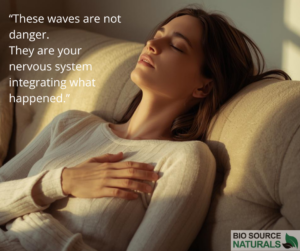 Nervous system regulation after trauma can become disrupted following a stressful or overwhelming experience can continue even after the event has passed. This article explores how the body processes and integrates stress over time, and how gentle, body-based approaches may support recovery. It introduces supportive practices such as aromatherapy, EFT (Emotional Freedom Techniques), and sensory awareness techniques that may help the nervous system reorient to safety and restore balance gradually.
This content is intended for educational purposes and offers a holistic perspective on nervous system regulation, emotional processing, and recovery.
There are moments in life when something intense happens, an accident, a medical scare, a relational shock, a sudden loss, or a period of sustained stress, and even after the situation has passed, the body doesn’t immediately return to normal.
Instead, you may notice waves of:
- fear or panic
- sadness or grief
- vulnerability or shakiness
- fatigue or emotional overwhelm
You might find yourself thinking, “Why do I feel like this when everything is okay now?”
This is not a personal failure.
This is how the human nervous system integrates stress.
And there are gentle, effective ways to help your body reorient to safety again.
Supporting Nervous System Regulation After Trauma
When we go through something stressful or overwhelming, the body prioritizes survival.
During the event, your nervous system may:
- suppress emotions
- increase adrenaline and cortisol
- narrow your focus to immediate action
But when the event ends, the nervous system after trauma begins to release what it could not process at the time.
This release often comes in waves.
These waves are not signs of danger.
They are signs of discharge and integration.
Your body is saying:
“Now that it’s over, I can finally feel and process what happened.”
What Reorientation Means
Reorientation is the process of gently reminding your body:
“I am safe now. I am here. The event is over.”
This does not happen through logic alone.
It happens through:
- sensory awareness
- breath and body connection
- emotional permission
- supportive tools such as aromatherapy and EFT tapping
Sensory Orientation: Returning to the Present Moment
One of the simplest ways to support nervous system regulation after trauma is by orienting to your environment.
When a wave of fear or sadness arises, pause and slowly name:
- 3 things you can see
- 2 things you can physically feel
- 1 thing you can hear
This practice helps signal to the brain:
“I am here in the present moment, not in the past.”
You can enhance this by gently turning your head and allowing your eyes to scan your surroundings, activating the body’s natural orienting response.
Gentle Touch and Breath
Place one hand over your heart or upper chest, and the other on your belly.
Let your breath be natural.
Do not force it.
This type of self-contact may support a sense of safety and internal awareness.
You can softly say:
“I’m here with myself.”
“This feeling can move through.”
“I’m safe right now.”
Aromatherapy Support for Nervous System Regulation
Aromatherapy works through the olfactory system, which connects directly to the limbic system, the part of the brain involved in emotional processing and memory.
Certain essential oils are traditionally used to support emotional balance and nervous system regulation after trauma:
Grounding and Safety
Calming the Stress Response
Emotional Release and Grief Support
Clarity and Re-centering
- Lemon
- Rosemary
- Peppermint (in small amounts)
A Simple Aromatherapy Ritual for Reorientation
Place 1–2 drops of your chosen oil on a cotton pad or use a diffuser.
Inhale slowly and gently.
As you inhale, say silently:
“Breathing in safety”
As you exhale:
“Releasing what I no longer need to hold”
Over time, this may become a sensory anchor associated with calm and safety.*
*These statements have not been evaluated by the Food and Drug Administration. This content is not intended to diagnose, treat, cure, or prevent any disease.
EFT Tapping for Emotional Release
Emotional Freedom Techniques (EFT) combine acupressure points with intentional phrases to help the body process and release stored emotional stress.
EFT is especially helpful when waves of:
- panic
- fear
- sadness
- or overwhelm
feel “stuck” in the system.
Basic EFT Setup Phrase
While tapping the side of your hand (karate chop point), repeat:
“Even though I feel this wave of fear/sadness in my body, I deeply and completely accept myself and how I feel.”
Tapping Points and Phrases
Move through each point gently, using simple phrases:
Eyebrow:
“This wave of fear”
Side of Eye:
“My body still feels it”
Under Eye:
“It’s releasing now”
Under Nose:
“I don’t have to hold it anymore”
Chin:
“This is my body processing”
Collarbone:
“I am safe now”
Under Arm:
“I can let this move through”
Top of Head:
“I am here. I am okay.”
Repeat 2–3 rounds, letting the intensity naturally rise and fall.
Allowing Sadness and Emotional Processing
Often after fear, sadness may arise.
This can be part of the body’s natural processing.
Rather than pushing it away, you may gently:
- sit with the feeling
- place your hand on your heart
- breathe slowly
- allow emotional release if it arises
This is not weakness.
It is part of integration.
Gentle Movement to Support Release
The body may hold residual stress after intense experiences.
Gentle movement may help support release:
- slow walking
- stretching
- light shaking of arms and legs
- swimming or floating
- fascia or lymphatic movement
These approaches may support circulation and relaxation.
Creating a Daily Sense of Safety
During recovery, predictable signals of safety may support nervous system regulation after trauma.
You might create a simple daily rhythm:
Morning:
- inhale a grounding oil
- place your hand on your heart
- set a gentle intention
Evening:
- slow breathing
- light tapping
- calming aromas such as lavender or frankincense
Consistency helps reinforce safety over time.
Supportive Aromatherapy Blends
Some individuals prefer ready-to-use formulations to support their routine.
BioSource Naturals offers blends designed to complement body-based practices:
- Stress-support blends for nervous system balance
- Emotional support blends for release and processing
- Clarity blends for focus after overwhelm
- Body-based oils to support physical tension patterns
These may be used alongside practices such as breathwork, EFT, and sensory awareness.
The Role of BioSource Naturals Blends
Supportive Aromatherapy Options
At BioSource Naturals, certain formulations are designed to support both emotional and physical aspects of stress recovery:
- Calming and stress-support blends, such as the Calming Essential Oil Blend and Calming Essential Oil Blend Massage Oil, may support emotional balance and help the nervous system settle during periods of overwhelm.*
- Open Heart Body-Mind Lotion and other Body-Mind Lotions are designed to support emotional release and gentle processing during times of grief, transition, or emotional integration.*
- Clarity-focused blends, including formulations with rosemary and citrus essential oils, may support mental focus and re-centering after overwhelm.*
- Flow – Lymph Support Massage Oil is designed to support circulation-focused self-care and may help encourage a sense of movement and physical release in the body.*
Each blend is paired with EFT scripts, affirmations, and body-mind awareness, creating a full-spectrum approach to healing.
Explore our cornerstone guide, Essential Oils for Grief and Loss: A Complete Guide to Aromatherapy and Emotional Healing, for comforting aromas, grounding practices, EFT tapping, remembrance rituals, and compassionate support for moving through loss.*
What to Expect During Recovery
As your nervous system begins to settle, you may notice:
- reduced intensity of emotional waves
- increased stability
- gradual return of energy
You may also experience:
- tiredness
- tenderness
- introspection
This is part of the body recalibrating.
When to Seek Additional Support
Additional support may be helpful if you experience:
- persistent panic
- difficulty sleeping
- intrusive thoughts or memories
- ongoing numbness or disconnection
Working with a qualified professional can provide added support.
The Emotional Healing Tree™: A Layered Approach to Emotional Recovery
Experiences of trauma can affect a person’s sense of safety, emotional responses, physical sensations, and ability to feel connected with everyday life. While nervous system regulation may help individuals develop greater awareness of stress responses, emotional recovery is not always linear and cannot be reduced to a single technique. BioSource Naturals’ Emotional Healing Tree™ offers a five-layer educational self-care framework: Regulate, Release, Recognize, Restore, and Reconnect. Regulate emphasizes developing a sense of present-moment safety and grounding, while Release and Recognize encourage the gradual acknowledgment of emotions and patterns when an individual feels ready. Restore and Reconnect focus on self-compassion, supportive relationships, personal values, and rebuilding a meaningful connection with everyday life.
These interconnected layers reflect BioSource Naturals’ Layered Holistic Self-Care philosophy, which integrates aromatherapy with mindful breathing, gentle movement, journaling, somatic awareness, and other supportive practices. A familiar, pleasant aroma may serve as an optional sensory anchor during grounding exercises, although fragrance can also trigger distressing memories and should never be imposed. EFT tapping and reflective exercises may be explored according to individual comfort, without pressuring anyone to revisit traumatic memories, disclose experiences, or force emotional release. The Emotional Healing Tree™ is an educational self-care framework rather than a clinically validated trauma treatment, and individuals experiencing significant trauma-related symptoms may benefit from working with a qualified, trauma-informed mental health professional.
Frequently Asked Questions About Nervous System Recovery
Q: Why doesn’t the body calm down after stress?
A. The nervous system may continue processing after an event, releasing what could not be processed during the experience.
Q: What is reorientation?
A, Reorientation is the process of helping the body recognize that the stressful event has passed and that safety is present.
Q: Can aromatherapy help with nervous system regulation after trauma?
A. Certain aromas may support relaxation and emotional balance when used alongside other supportive practices.*
Q: How long does recovery take?
A. Recovery varies for each individual and may unfold gradually over time.
A Final Word: You Are Not Broken
If you are experiencing waves of fear, sadness, or overwhelm after a stressful experience, your body is not working against you.
It is working for you.
It is releasing what it held.
It is restoring balance.
With gentle support—through awareness, breath, aromatherapy, EFT, and self-connection—you can help your nervous system reorient to safety.
Take your time.
Move gently.
You are allowed to heal at the pace of your body.
*These statements have not been evaluated by the Food and Drug Administration. This content is not intended to diagnose, treat, cure, or prevent any disease.
About the Author

🔍 Click Image to Enlarge and Read