
Pure Aromatherapy for Body, Mind & Spirit
When Calm Is Mistaken for Chemistry A Nervous System Perspective on Workplace Enmeshment
When Calm Is Mistaken for Chemistry A Nervous System Perspective on Workplace Enmeshment
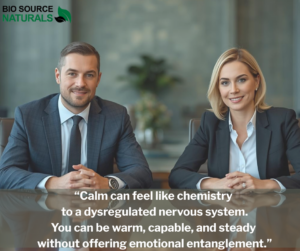 This article explores workplace emotional enmeshment through a nervous system and polyvagal lens, explaining how perceived chemistry between colleagues is often rooted in co-regulation rather than attraction. In high-pressure environments, individuals may unconsciously rely on calm, regulated coworkers for emotional stability, creating a sense of closeness that can blur professional boundaries. By understanding the role of neuroception, attachment activation, and nervous system responses, professionals can reframe these dynamics with greater clarity. The article also highlights how practices like aromatherapy, breathwork, and EFT may support emotional regulation, helping individuals maintain boundaries, autonomy, and a grounded presence in complex workplace relationships.
In high-pressure work environments, what feels like chemistry between colleagues is often a nervous system response known as workplace emotional enmeshment. This occurs when individuals unconsciously rely on each other for emotional regulation during stress, creating a sense of closeness that can be mistaken for attraction.
From a polyvagal perspective, calm, regulated individuals can signal safety to others, leading to co-regulation rather than romance. This article explores how nervous system dynamics, emotional boundaries, and supportive practices like aromatherapy may help professionals maintain clarity, stability, and autonomy in complex workplace relationships.
There’s a kind of closeness that can develop in high-pressure work environments that looks like chemistry; but isn’t.
In many cases, this reflects workplace emotional enmeshment, where nervous systems begin regulating each other under stress.
It isn’t flirtation.
It isn’t suppressed attraction.
It isn’t an affair waiting to happen.
Often, it’s regulation.
In leadership roles, especially in fast-paced, high-demand systems, certain people become stabilizers. They are calm under pressure, think clearly, and don’t escalate emotionally. They don’t yell, collapse, or create chaos.
They anchor the room.
From a nervous system perspective, this matters more than we realize.
What Is Workplace Emotional Enmeshment?
Workplace emotional enmeshment occurs when professional relationships begin to take on emotional regulation roles that typically belong in personal relationships. In high-demand environments, individuals may unconsciously rely on a colleague’s presence to stabilize their nervous system during stress.
This dynamic does not necessarily involve romantic interest or inappropriate behavior. Instead, it reflects a natural human process known as co-regulation, where one nervous system helps another return to a more balanced state.
Over time, however, this reliance can blur emotional boundaries, creating confusion about whether the connection is professional, personal, or something in between.
Why Calm Feels Magnetic (Polyvagal Perspective)
The nervous system is always scanning for safety or threat — a process called neuroception (a term from Dr. Stephen Porges’ Polyvagal Theory).
In workplace emotional enmeshment, this process can become especially important, as individuals unconsciously respond to cues of safety and stability in high-pressure environments.
When someone has lived for years in emotional volatility, criticism, unpredictability, tension, their body becomes used to cycling between stress activation and shutdown.
Then they encounter someone who is grounded, emotionally intelligent, and regulated, someone operating primarily from a ventral vagal state.
Calm voice.
Measured reactions.
Steady presence.
Clear thinking.
To a dysregulated nervous system, that can feel magnetic.
Not because it’s romantic.
Because it’s safe.
From a nervous system perspective, humans are wired to move toward cues of safety. Calm, consistent behavior can signal stability, allowing stress responses to settle and a greater sense of ease to emerge.
When Regulation Feels Like Intimacy
When two people spend extended time together in focused collaboration, especially under stress, their nervous systems begin to co-regulate.
Heart rate slows.
Breathing synchronizes.
Tone of voice softens.
Stress responses may begin to settle.
This is sometimes described as co-regulation, a concept explored in nervous system-based approaches to emotional balance.
It is a healthy and necessary human process.
But it is not romance.
For someone who hasn’t experienced calm, stable connection in their personal life, this kind of regulated professional interaction can feel deeply intimate, even confusingly so.
The body experiences relief.
The mind labels it connection.
The ego may label it chemistry.
But nervous system relief is not the same as romantic attraction.
In workplace emotional enmeshment, this distinction becomes especially important. What feels like closeness may actually be the nervous system responding to safety, not emotional or romantic attachment.
Aromatherapy and the Nervous System
One of the reasons aromatherapy can be supportive in emotionally complex environments is that scent communicates directly with the limbic system, the part of the brain involved in memory, emotional processing, and autonomic regulation.
In high-pressure environments where workplace emotional enmeshment can develop, sensory cues like scent may help reinforce a sense of internal stability and personal awareness.
Certain essential oils have been traditionally used, and in some cases studied, for their role in supporting:
- parasympathetic activation (rest-and-repair)
- a reduction in stress-related signaling
- emotional grounding
- mental clarity and focus
- a felt sense of calm awareness
For example:
- Lavender and Cypress Essential Oils are commonly used to support emotional steadiness and grounding
- Frankincense Essential Oil is often used to support breath awareness, presence, and reflective focus
- Citrus Essential Oils like Lemon may support mental clarity and cognitive engagement during high-demand work
BioSource Naturals blends such as Calming Essential Oil Blend, Serenity Essential Oil Blend, Relaxing Essential Oil Blend, Grounding Essential Oil Blend, Stress Relief Body-Mind Lotion and Courage & Clarity Body-Mind Lotion are often incorporated into personal rituals designed to support emotional balance and clarity throughout the workday.
When used intentionally, even as a simple inhale or a diluted application to the back of the neck or heart area, these scents can act as sensory anchors, helping reinforce a more regulated internal state during demanding interactions.
This can be especially supportive for individuals who naturally become stabilizers for others, allowing them to remain present without becoming emotionally overextended.
When Admiration Becomes Attachment Activation
In professional environments, admiration can quietly shift into emotional reliance.
You may be:
- the stabilizer
- the strategic thinker
- the one who can handle pressure without escalation
- the one others turn to for clarity
If someone begins to rely on your presence for emotional regulation, a subtle attachment can form, even if neither of you names it.
In workplace emotional enmeshment, this can feel confusing because the connection is real, but its source is often nervous system regulation, not personal or romantic intention.
From a polyvagal perspective, when that stabilizing presence is reduced or withdrawn, the other person’s system may respond with:
- increased pursuit or contact (sympathetic activation)
- sudden coolness or withdrawal (dorsal self-protection)
- tension or mixed signals
What once felt confusing later becomes more understandable when viewed through a nervous system lens, as attachment activation, not personal rejection or punishment.
Enmeshment in Leadership Happens Quietly
Workplace emotional enmeshment rarely begins with anything inappropriate or intentional.
It develops gradually through patterns such as:
- shared stress
- prolonged proximity
- blurred time boundaries
- emotional processing mixed with strategy
- validation loops
- unspoken reliance
Over time, two nervous systems begin to lean on each other in a way that exceeds role clarity.
- Not romantic.
- Not intentional.
- But binding.
In high-demand leadership environments, this can happen more easily, as individuals often rely on each other to maintain stability under pressure.
When you begin to step back to reclaim time, privacy, or autonomy, that system can destabilize.
Sometimes the only way to untangle that dynamic is a clean shift.
- Not dramatic.
- Not reactive.
- Just clear.
From a nervous system perspective, creating space can allow both individuals to return to a more balanced and self-regulated state.
Using Aromatherapy to Maintain Boundaries and Clarity
For professionals who naturally provide stability to others, aromatherapy can be used as a self-regulation tool, not as a way to manage other people’s emotions.
In environments where workplace emotional enmeshment may develop, having simple, consistent practices can help reinforce a sense of internal clarity and personal boundaries.
Simple practices may include:
- applying a grounding blend before entering a high-demand meeting
- inhaling a calming scent before difficult conversations
- using a clarity-focused blend when making boundary decisions
- pairing scent with EFT tapping or breathwork to reinforce autonomy
BioSource Naturals blends such as Courage & Clarity Body-Mind Lotion, Stress Relief Body-Mind Lotion, Relaxing Essential Oil Blend, Serenity Essential Oil Blend, and Calming Essential Oil Blend are often used as part of daily routines designed to support emotional balance, focus, and a steady presence.
When paired with intentional breathing or brief moments of awareness, scent can serve as a consistent anchor, helping the body return to a more centered state during demanding interactions.
The goal is not to withdraw warmth, but to maintain a regulated presence with clear emotional and energetic boundaries.
Calm Is Not Chemistry
For emotionally intelligent women, especially those who are competent, grounded, collaborative, and not reactive, this dynamic is more common than it appears.
In situations involving workplace emotional enmeshment, steady presence and regulation can sometimes be misinterpreted as emotional or romantic connection.
Your steadiness may be misread as warmth.
Your presence may be misread as intimacy.
Your collaboration may be misread as attraction.
But regulation is not romance.
You are allowed to:
- be calm
- be capable
- be kind
- be attractive
- be present
without offering romantic availability.
And you are not responsible for how someone else interprets your steadiness.
Clarity Brings Softness
When you look back at a dynamic like this through a nervous system lens, something begins to shift.
What once felt:
- confusing
- tense
- or even personal
becomes more understandable.
In experiences of workplace emotional enmeshment, what feels emotionally charged is often rooted in nervous system responses rather than intentional behavior.
Sometimes what felt like distance was self-protection.
Sometimes what felt like tension was attachment activation.
Sometimes what felt like chemistry was simply nervous system relief.
With that clarity, emotional intensity can soften.
Compassion can remain without self-blame.
And what remains is understanding.
Supportive Aromatherapy Blends for Daily Balance
For those looking to incorporate aromatherapy into daily routines, blends focused on clarity, calm awareness, and emotional balance may be helpful as part of personal grounding practices.
You may wish to explore:
- Courage & Clarity Body-Mind Lotion
- Stress Relief Body-Mind Lotion
- Serenity Essential Oil Blend
- Relaxing Essential Oil Blend
- Calming Essential Oil Blend
- Grounding Essential Oil Blend
These blends are often used alongside breathwork, mindfulness, or EFT practices to support a steady and balanced presence throughout the day.
Related Articles
This article is part of the BioSource Naturals emotional healing and personal growth library. Explore our complete guide, Outgrowing an Environment When You Can’t Leave Yet, for compassionate guidance on protecting your energy, strengthening boundaries, preserving your identity, regulating your nervous system, and preparing for change before you are able to move on.
Workplace emotional enmeshment can develop when professional relationships become intertwined with personal identity, self-worth, approval seeking, or a heightened sense of responsibility for others’ emotions. Establishing healthier boundaries begins with recognizing these patterns and learning to regulate emotional responses before making decisions. BioSource Naturals’ Emotional Healing Tree™ offers a five-layer educational framework for this process: Regulate, Release, Recognize, Restore, and Reconnect. These interconnected practices encourage individuals to develop emotional awareness, examine habitual reactions, release unhelpful patterns, rebuild self-trust, and reconnect with their values. Aromatherapy, EFT tapping, journaling, and somatic awareness can complement this reflective work while supporting a more intentional relationship with professional responsibilities and personal well-being.
Common Questions About Workplace Emotional Enmeshment
Q: What is workplace emotional enmeshment?
A. Workplace emotional enmeshment occurs when colleagues begin to rely on each other for emotional regulation during stress, creating a sense of closeness that may blur professional boundaries.
Q: Why does calm feel like attraction at work?
A. From a nervous system perspective, calm and regulated individuals can signal safety. This can create a feeling of connection that may be mistaken for attraction, when it is actually co-regulation.
Q: Is emotional attachment to a coworker always romantic?
A. Not necessarily. In many cases, emotional attachment may reflect shared stress, co-regulation, or reliance on another person’s steady presence rather than romantic interest.
Q: Can aromatherapy support emotional balance at work?
A. Some people use aromatherapy as part of routines that support calm awareness, focus, and emotional clarity in demanding environments.
Final Thought
Calm is powerful.
But calm with boundaries is sovereignty.
You can collaborate deeply without entangling your energy.
You can offer stability without becoming someone’s emotional anchor.
And you can step back quietly and clearly when a dynamic no longer supports your sense of balance or autonomy.
Calm is not chemistry.
It’s clarity.
These statements have not been evaluated by the Food and Drug Administration. Aromatherapy products are not intended to diagnose, treat, cure, or prevent any disease.
About the Author

🔍 Click Image to Enlarge and Read