
Pure Aromatherapy for Body, Mind & Spirit
Natural Recipes to Relieve Headaches with Essential Oils
Natural Recipes to Relieve Headaches with Essential Oils
By Lezlie Cebulski is a Traditional Naturopath and the founder of BioSource Naturals. Her work blends science, spirit, and emotional healing through essential oils, EFT, and vibrational formulas.

People searching for essential oils for headaches are often looking for a complementary, non-drug way to create a cooling or relaxing sensory experience when occasional head tension occurs. Headaches can happen for many reasons. Stress, muscle tension, dehydration, disrupted sleep, skipped meals, eyestrain, hormonal changes, illness and other factors can all contribute to head discomfort. Migraine is a neurological disorder and is different from an occasional tension-type headache.
Essential oils do not treat or cure migraine or an underlying headache disorder. However, aromatherapy can be incorporated into a broader self-care routine that includes rest, hydration, regular meals, sleep, relaxation and appropriate medical care.
For some people, aromas such as peppermint and eucalyptus provide a refreshing, cooling sensory experience, while lavender and other softer aromas are better suited to relaxation.
Headaches, Stress & Muscle Tension
Stress is not the cause of every headache, but stress and physical tension often occur together.
When we’re concentrating, worrying or rushing, we may unconsciously tighten the jaw, raise the shoulders or tense muscles in the neck and upper back. Long periods spent looking at a computer or phone can add another physical component.
This is why a head-comfort routine doesn’t necessarily have to focus only on the temples or forehead.
Taking a break, closing your eyes, relaxing your shoulders, gently stretching when appropriate and enjoying a preferred aroma can become part of a broader relaxation ritual.
Sleep, Hydration & Everyday Head Comfort
Basic habits can also matter.
Try to maintain a reasonably consistent sleep schedule and create a dark, quiet sleeping environment when possible. Regular meals and adequate hydration are also important for general wellness.
Rather than following a specific restrictive diet for headaches unless medically advised, focus on balanced nutrition and pay attention to your own patterns.
Some people with migraine identify individual triggers, but these vary considerably from person to person.
Keeping a headache diary can sometimes help identify patterns involving sleep, stress, foods, menstrual cycles, weather, activity or other circumstances.
Essential Oils Commonly Used in Head-Comfort Aromatherapy
Peppermint Essential Oil
Peppermint essential oil contains menthol, which contributes to peppermint’s characteristic cooling sensation and intensely refreshing aroma.
This sensory effect makes peppermint particularly popular in aromatherapy products designed for the temples, forehead, neck and shoulders.
Peppermint should be appropriately diluted for topical use and kept away from the eyes.
Lavender Essential Oil
Lavender essential oil has a familiar floral-herbal aroma and is especially well suited to relaxation rituals.
It may be particularly appealing when occasional head tension occurs during periods of stress or when you’re trying to wind down at the end of the day.
Eucalyptus Essential Oil
Eucalyptus essential oil provides a fresh, penetrating aroma.
Some people enjoy eucalyptus when they want an invigorating rather than floral aromatherapy experience.
Rosemary Essential Oil
Rosemary essential oil has a strong, fresh herbal aroma that pairs naturally with peppermint and eucalyptus.
Spearmint Essential Oil
Spearmint essential oil provides a softer mint aroma than peppermint and can be used when you want a fresh aromatic profile.
Frankincense Essential Oil
Frankincense has a warm, resinous aroma that works especially well in quiet relaxation and breathing rituals.
Rather than providing the intense cooling sensation of peppermint, frankincense offers a grounding aromatic experience.
DIY Diffuser Blend for a Fresh, Relaxing Atmosphere
Try this simple blend when you want to step away from activity and create a fresh aromatic environment:
- 2 drops Peppermint essential oil
- 2 drops Lavender essential oil
- 1 drop Eucalyptus essential oil
- 1 drop Rosemary essential oil
Add the oils to your diffuser according to the manufacturer’s directions.
Diffuse intermittently in a well-ventilated room rather than continuously.
If you share your home with children, pets or people with respiratory sensitivities, check the safety considerations for the individual oils before diffusing.
DIY Cooling Aromatherapy Roll-On
Your old recipe contained 40 drops of essential oil in a 9 ml roll-on, which is unnecessarily concentrated for a general DIY recipe.
For a gentler personal aromatherapy roll-on, try:
- 2 drops Peppermint essential oil
- 2 drops Lavender essential oil
- 1 drop Spearmint essential oil
- Fractionated Coconut Oil
- One 9 ml roller bottle
Add the essential oils to the bottle and fill the remainder with fractionated coconut oil.
Use according to appropriate topical aromatherapy practices. Keep the blend away from the eyes, eyelids and mucous membranes.
Rather than thinking of this as a migraine treatment, think of it as a portable cooling aromatherapy ritual for occasional head tension and stressful days.
DIY Relaxing Massage Oil for Neck & Shoulder Tension
When head discomfort occurs alongside tight shoulders or neck tension, a relaxing massage ritual may be another option.
For a simple massage blend, combine an appropriately diluted amount of:
Add to Fractionated Coconut Oil or Sunflower Carrier Oil.
Massage the shoulders or other appropriate areas rather than applying concentrated essential oils directly to the skin.
If using expressed bergamot topically, check the product’s phototoxicity precautions before exposing the area to UV light.
What About Essential Oils in the Bath?
I would remove the old “Sinus Headache Relief” bath recipe.
Essential oils do not dissolve in water, and mixing them with Epsom salts or baking soda does not adequately disperse them. Adding concentrated peppermint, eucalyptus or other oils this way can result in undiluted essential oil contacting the skin.
If you enjoy aromatherapy baths, use a properly formulated bath product or an appropriate essential-oil dispersing system rather than adding essential oils directly to bath water.
A warm bath without essential oils can still be incorporated into a relaxing evening ritual.
BioSource Naturals Stress Relief Body Mind Lotion
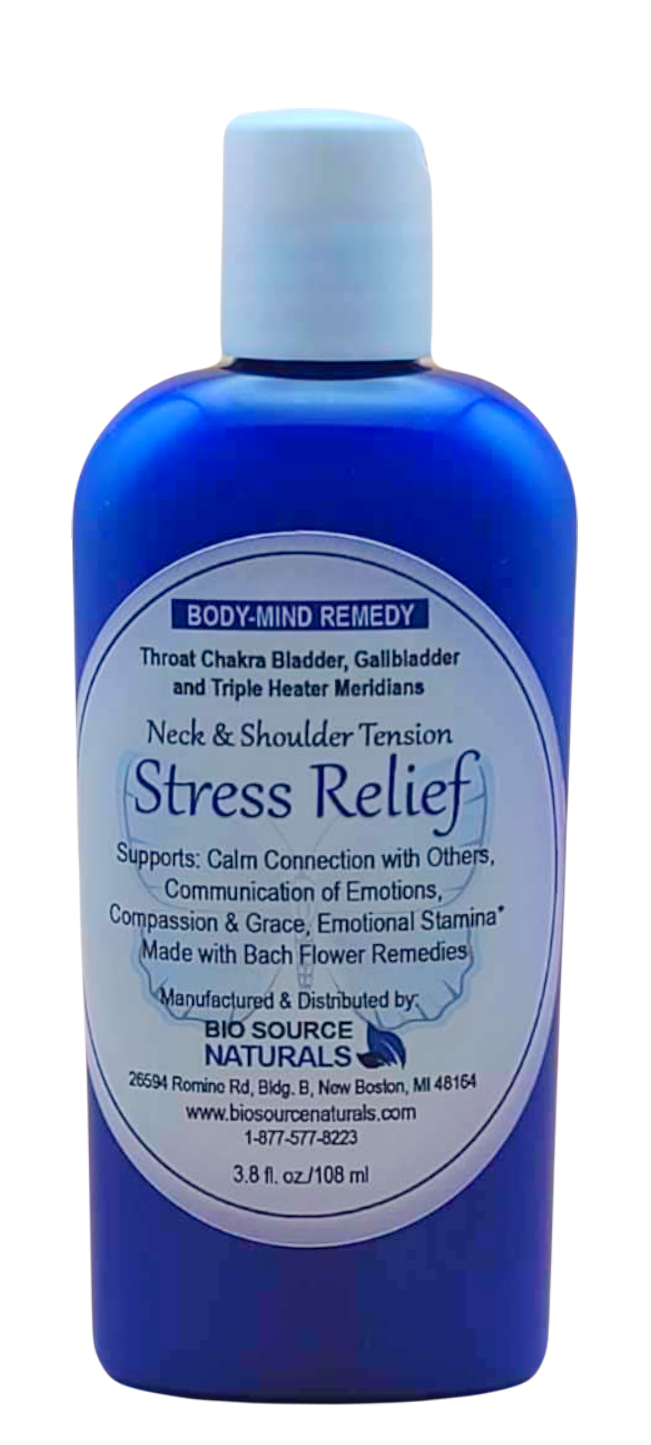
BioSource Naturals Stress Relief Body Mind Lotion was created for aromatherapy and emotional self-care during stressful periods.
It has a mellow, softly citrus aroma featuring pure essential oils of Ylang Ylang and Orange.
The formula also incorporates Bach Flower Essences of Water Violet, Crab Apple, Oak, Vervain and Willow, along with Quartz Crystal and Aquamarine gem elixirs.
Use Stress Relief Body Mind Lotion as part of a relaxing body-care ritual when you want to slow down, take a break and create a calmer sensory environment.
Temple Cooling Comfort Essential Oil Blend
Formerly Headache Essential Oil Blend
BioSource Naturals Temple Cooling Comfort Essential Oil Blend was formerly called Headache Essential Oil Blend.
The updated name better reflects the product’s intended role as an aromatherapy blend for cooling sensory comfort, head tension, mental fatigue and occasional stress, rather than implying that the product treats headaches or migraine.
Temple Cooling Comfort combines: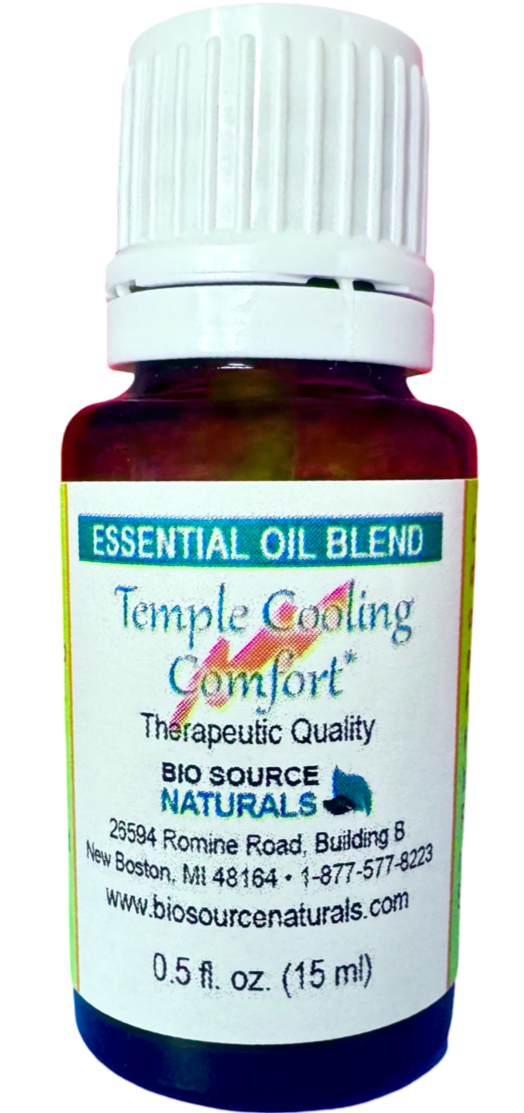
- Peppermint
- Lavender
- Eucalyptus
- Rosewood
- Rosemary
Peppermint provides the blend’s distinctive cooling sensory quality, while lavender contributes a softer relaxing aroma. Eucalyptus and rosemary add fresh herbal notes.
Temple Cooling Comfort Concentrate
The Temple Cooling Comfort Essential Oil Blend Concentrate must be appropriately diluted before topical application.
Follow the current product directions for dilution rather than assuming that stronger concentrations provide greater benefit.
You can dilute concentrated essential oils in an appropriate carrier oil or compatible unscented body-care base.
Temple Cooling Comfort Roll-On
Prefer something already diluted?
The Temple Cooling Comfort Essential Oil Roll-On provides a convenient ready-to-use aromatherapy format.
Follow the product directions and avoid applying essential oils close to the eyes.
Migraine Is Different From an Occasional Headache
It’s important not to treat the words headache and migraine as interchangeable.
Migraine is a neurological disorder that may involve head pain as well as nausea, sensitivity to light or sound, visual disturbances and other neurological symptoms.
Some people with migraine are also particularly sensitive to odors. An aroma that one person finds relaxing can actually be unpleasant or triggering to someone else during a migraine attack.
If scent worsens your symptoms, aromatherapy is not an appropriate choice at that time.
Essential oils should not be used as a substitute for prescribed migraine treatment or appropriate medical evaluation.
When Should a Headache Be Medically Evaluated?
Occasional headaches are common, but some situations require medical attention.
Seek prompt medical evaluation for a sudden or unusually severe headache, a headache following significant head trauma, or a headache accompanied by concerning neurological symptoms, confusion, fainting, significant weakness, fever with neck stiffness, or other severe or unusual symptoms.
Also talk with your healthcare provider about headaches that are becoming more frequent, changing significantly in character, interfering with daily life or requiring frequent medication.
Frequently Asked Questions About Essential Oils for Headaches
Can essential oils cure a headache or migraine?
No. Essential oils do not cure headache disorders or migraine. Aromatherapy may be incorporated as a complementary self-care practice for cooling sensory comfort, relaxation or stress management.
What essential oils are commonly used for head-comfort aromatherapy?
Peppermint, lavender, eucalyptus and rosemary are common choices. Peppermint provides a cooling sensation, while lavender is often selected for relaxation.
Where should I apply an essential oil roll-on?
Follow the directions for the particular product. Keep essential oils away from the eyes, eyelids and mucous membranes. A topical product can also be incorporated into a neck or shoulder relaxation ritual when appropriate.
Can I apply peppermint essential oil directly to my temples?
I would not recommend applying undiluted peppermint essential oil directly to the temples. Use an appropriately diluted or professionally formulated topical product and keep it well away from the eyes.
Can essential oils help with migraine?
Aromatherapy is not a treatment for migraine. Some people enjoy particular aromas as complementary self-care, while others with migraine become more sensitive to smells and may find aromatherapy unpleasant or triggering.
Is Temple Cooling Comfort the old Headache Essential Oil Blend?
Yes. Temple Cooling Comfort Essential Oil Blend is the updated name for the former BioSource Naturals Headache Essential Oil Blend. The new name better describes its intended use for cooling aromatherapy and everyday physical-comfort rituals.
Can I diffuse essential oils all day?
Continuous diffusion generally isn’t necessary. Short periods of intermittent diffusion in a well-ventilated space provide plenty of aromatic exposure for most aromatherapy routines.
Essential Oil Safety
Essential oils are highly concentrated botanical substances.
Concentrated essential oils generally require appropriate dilution before topical use. Keep essential oils away from the eyes and mucous membranes, and discontinue topical or aromatic use if irritation or other unwanted symptoms occur.
Individual oils have different precautions. Consider age, pregnancy or breastfeeding, medications, medical conditions, respiratory sensitivity, children and pets when choosing how and where essential oils are used.
More essential oil does not necessarily produce a better aromatherapy experience.
Learn More About Essential Oils for Physical Comfort
Looking for more information? Explore our comprehensive guide to Essential Oils for Pain Relief & Physical Comfort, including aromatherapy for sore muscles, joint comfort, back and neck tension, headaches, massage, relaxation and everyday physical comfort.
The information provided on this page is for educational purposes only. Essential oils and aromatherapy are complementary wellness practices and are not intended to diagnose, treat, cure or prevent headaches, migraine or any other disease or medical condition. Persistent, severe, worsening or unusual headaches should be evaluated by an appropriate healthcare professional.
About BioSource Naturals
BioSource Naturals was founded in 2006 by Lezlie Cebulski, Traditional Naturopath, aromatherapist, EFT practitioner, Reiki Master Teacher, and formulator. Her background combines decades of experience in essential oil formulation, holistic wellness, and wet chemistry.
* Statements made on this website have not been evaluated by the FDA, and are not intended to diagnose, treat, cure, or prevent any disease. The information provided on this website is for informational purposes. Information is not intended as a substitute for advice from a qualified health care professional that you trust, it and should not be construed as individual medical advice. If you are under a doctor’s care, please consult with her/him prior to use of these products. If a condition persists, please contact a qualified health care professional for advice.