Pure Aromatherapy for Body, Mind & Spirit
When Love Breaks Perfectionism: How the Nervous System Softens When Control Is No Longer the Answer
When Love Breaks Perfectionism: How the Nervous System Softens When Control Is No Longer the Answer
 Perfectionism is often about more than high standards. It can become a nervous system response that creates a need for control, especially when you care deeply about someone. This article explores how love can soften perfectionism, why letting go of control supports healthier relationships, and how aromatherapy, EFT tapping, somatic awareness, and healthy boundaries may help you respond with greater compassion and clarity.
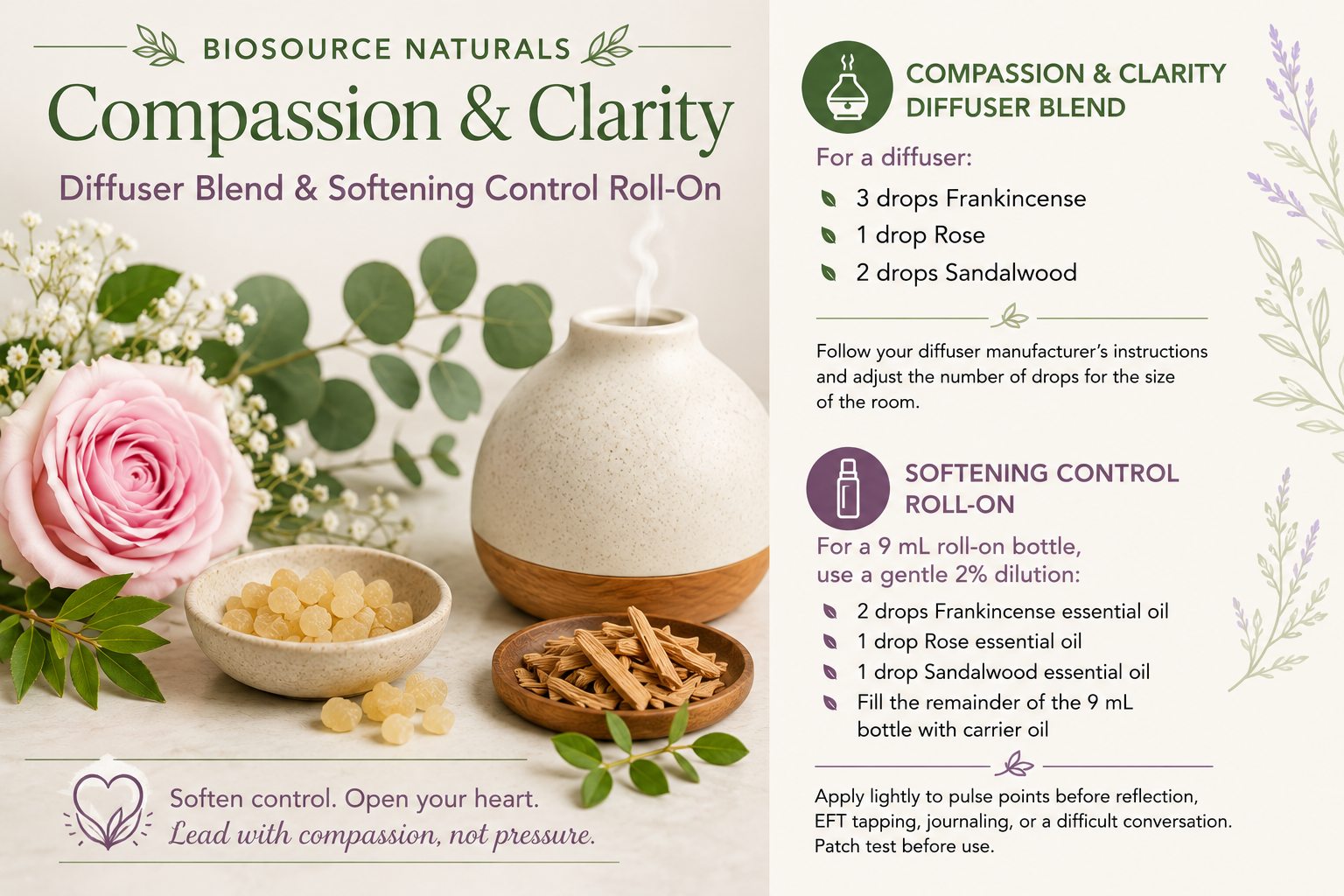
Shop supportive aromatherapy and free resources mentioned in this article near the bottom of the page.
When love breaks perfectionism, you may begin to realize that caring for someone does not require controlling the outcome.
There’s a version of strength many women are taught early in life.
Be responsible.
Be capable.
Do things the right way.
Hold yourself to a high standard.
Over time, those expectations may extend beyond you. Because you expect so much from yourself, you may begin expecting the same from the people you love.
This does not always come from criticism. It may come from a sincere belief that if everyone makes the right choices, tries hard enough, or follows the plan, things will work out.
But love sometimes asks for something different.
It asks you to remain compassionate without controlling the outcome. It asks you to recognize another person’s capacity without taking over their responsibilities. Most importantly, it asks you to stay connected to yourself while caring for someone else.
That is where perfectionism may begin to soften, healthy boundaries can become clearer, and a more aligned form of love can emerge.
💠Understanding Perfectionism, Love, and Control
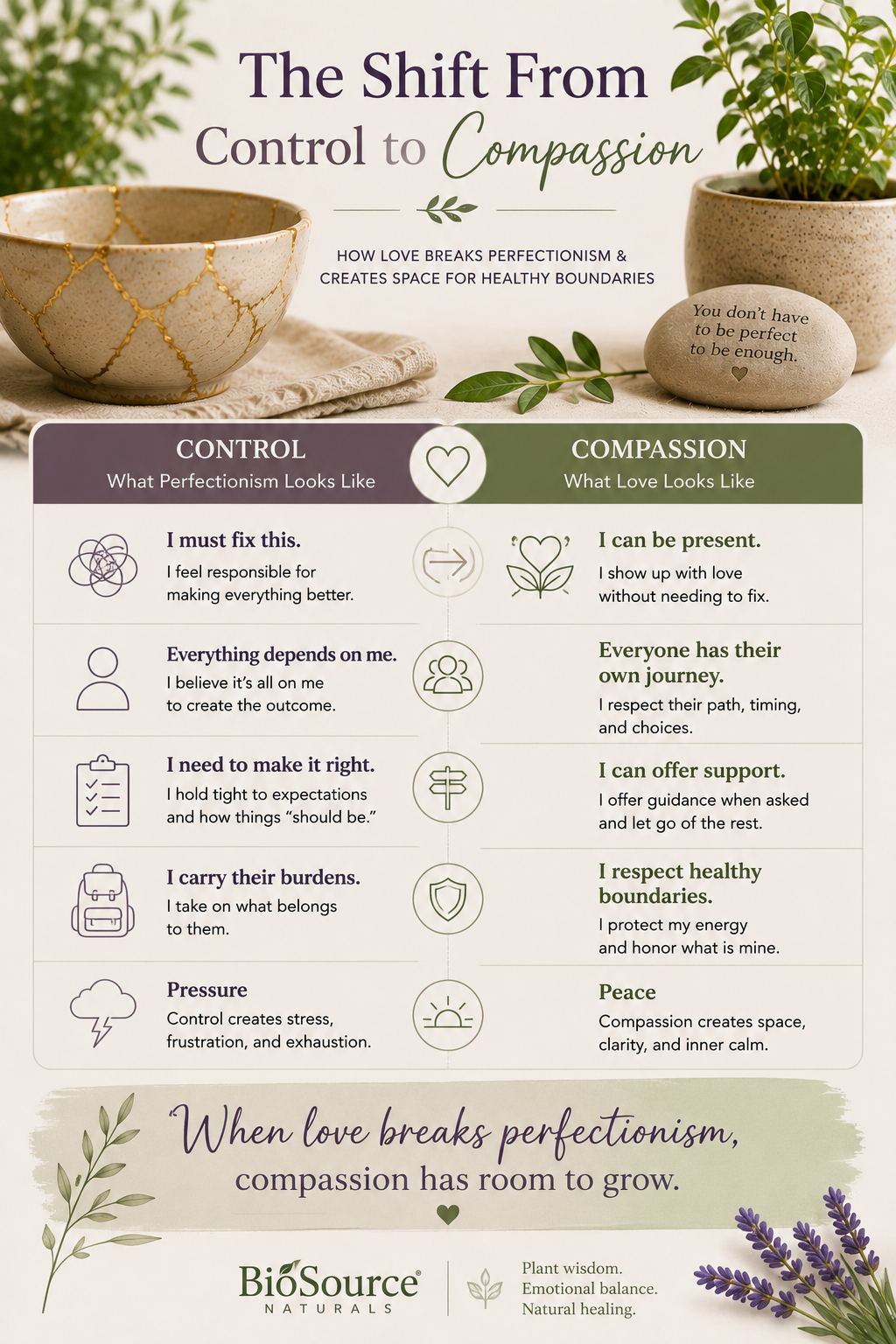
Perfectionism is sometimes a nervous system strategy used to create a sense of safety, predictability, or control. When you love someone who is struggling, you may try to help by fixing problems, preventing consequences, or managing the outcome.
Healthy support does not require you to take responsibility for another person’s choices, emotions, or growth. You can love someone, recognize their limitations, and still maintain clear boundaries.
Softening perfectionism means releasing the belief that everything depends on you. It does not mean tolerating harmful behavior, repeatedly rescuing someone, or neglecting your own needs.
💠 When Love Breaks Perfectionism
For me, that framework began to shift when love required something different.
Not performance.
Not improvement.
Not doing everything “better.”
Love asked for presence, acceptance, and a willingness to stop measuring the relationship by a particular outcome.
That did not mean ignoring harmful behavior or taking responsibility for someone else’s life. It meant seeing the person clearly, recognizing what was and was not within my control, and allowing them to carry what belonged to them.
In that moment, something became clear:
👉 Perfection was never the point.
Love could remain present without becoming responsible for fixing everything.
💠 Perfectionism Is Often a Nervous System Strategy
Perfectionism is not always about wanting everything to look perfect.
Sometimes it develops as a way of feeling safer.
If you have spent years being the responsible one, you may have come to believe that staying alert, anticipating problems, and doing everything correctly will keep life from falling apart.
Your nervous system may associate control with:
- safety
- predictability
- stability
- protection from disappointment
This can also affect how you help the people you love. You may step in quickly, solve problems before you are asked, or try to prevent someone from experiencing difficult consequences.
These responses may come from love, but they can gradually become over-functioning.
You may begin carrying responsibilities that do not belong to you while the other person has less opportunity to make choices, face consequences, or grow.
Releasing perfectionism does not mean becoming careless or withdrawing your support.
It means recognizing that you can care deeply without believing everything depends on you.
👉 You can offer support without taking control.
The American Psychological Association also offers information about building resilience and adapting to life’s challenges.
You can read more in this related guide, How to Regulate Your Nervous System Naturally, where you can explore aromatherapy, EFT tapping, somatic practices, emotional wellness, and other supportive mind-body approaches.
💠 When Love Interrupts Control
When you deeply love someone who is struggling, limited, or making choices you would not make, you may feel pulled to step in.
You may want to fix the situation.
You may try to show them a better way.
You may work harder, explain more, or take on additional responsibility in hopes of creating a better outcome.
But some things cannot be controlled, even with the best intentions.
In these moments, your nervous system may respond in one of two ways:
- Tighten through control, frustration, or resentment
- Soften into acceptance, clarity, and appropriate boundaries
Softening does not mean becoming responsible for another person’s wellbeing. It also does not mean excusing harmful behavior or protecting someone from every consequence.
It means accepting what you cannot control while deciding what you can offer without abandoning yourself.
You can care.
You can be present.
You can offer support when it is appropriate.
And you can allow another person to carry the responsibilities that belong to them.
👉 Love does not require you to manage the outcome.
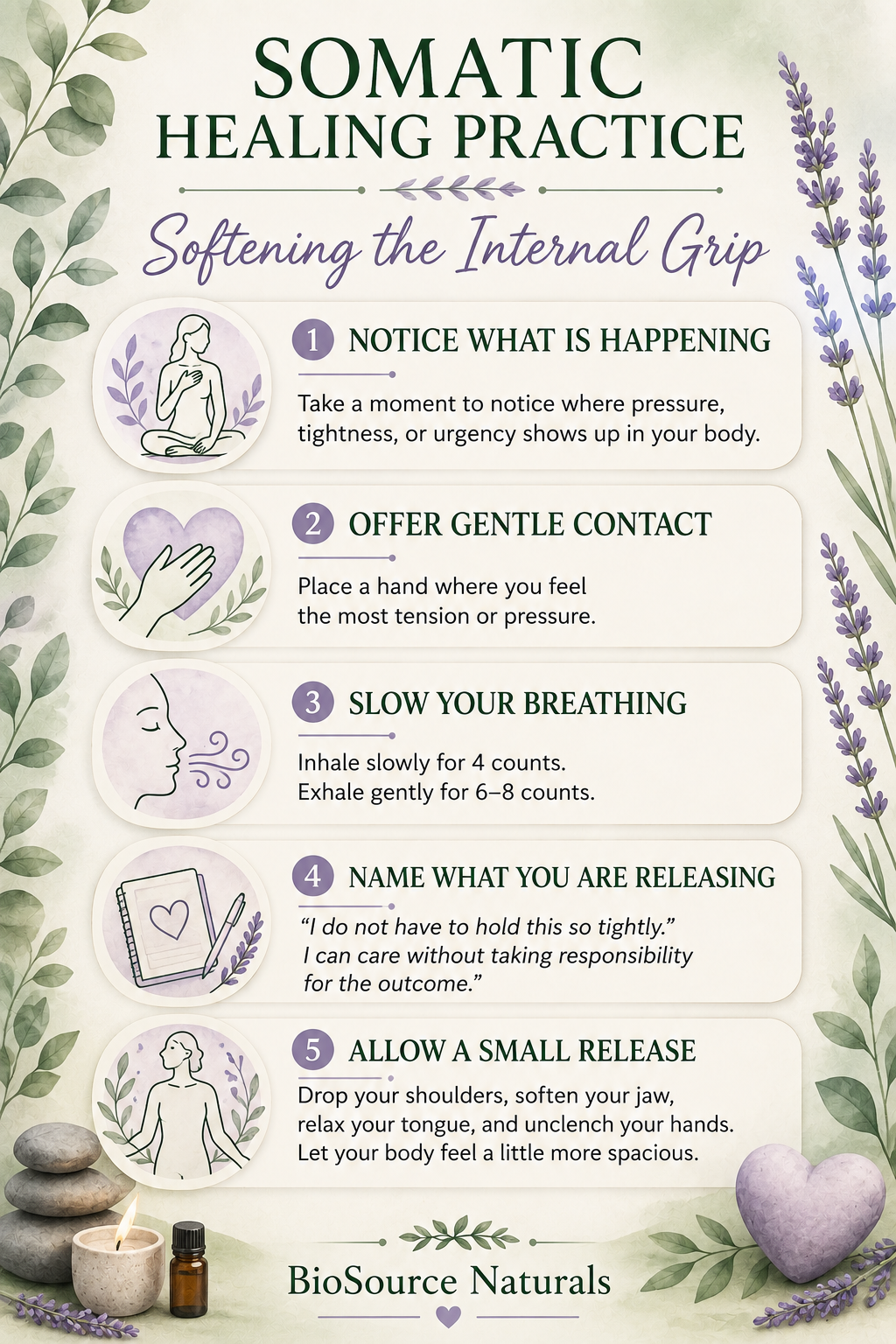
Use this tapping practice when you notice pressure to fix, manage, or control an outcome.
Setup: Karate Chop Point
Repeat each statement three times:
Even though I have held myself to very high standards for so long, and part of me believes that is what keeps everything together, I am open to softening into a new way of being.
Even though I have expected so much from myself and from others, I honor where that came from, and I allow myself to release what is not mine to carry.
Even though part of me is afraid of what might happen if I stop managing everything, I am open to caring without abandoning myself.
Tapping Points
Eyebrow:
I have carried so much responsibility.
Side of Eye:
I believed I had to get everything right.
Under Eye:
To keep things safe.
Under Nose:
To prevent things from falling apart.
Chin:
I have held others to those same standards.
Collarbone:
And stepped in when they could not meet them.
Under Arm:
That created pressure in me.
Top of Head:
And in my relationships.
Eyebrow:
But love is showing me another way.
Side of Eye:
Love does not require control.
Under Eye:
I can be present without fixing.
Under Nose:
I can care without carrying everything.
Chin:
I am allowed to soften.
Collarbone:
I am allowed to release this pressure.
Under Arm:
I can let others carry what belongs to them.
Top of Head:
And remain connected to myself.
Eyebrow:
I can still have boundaries.
Side of Eye:
I can still speak honestly.
Under Eye:
I can choose compassion without rescuing.
Under Nose:
I can offer support without taking over.
Chin:
I release what is not mine to manage.
Collarbone:
I choose compassion with clarity.
Under Arm:
I choose softness with strength.
Top of Head:
I choose love without self-abandonment.